
Background
As both the head of design and brand I had wanted to get my hands on our emails for YEARS. Our stakeholder team was sensitive to change, concerned that changing our emails would result in a negative impact to CTOR and click rate.
original email

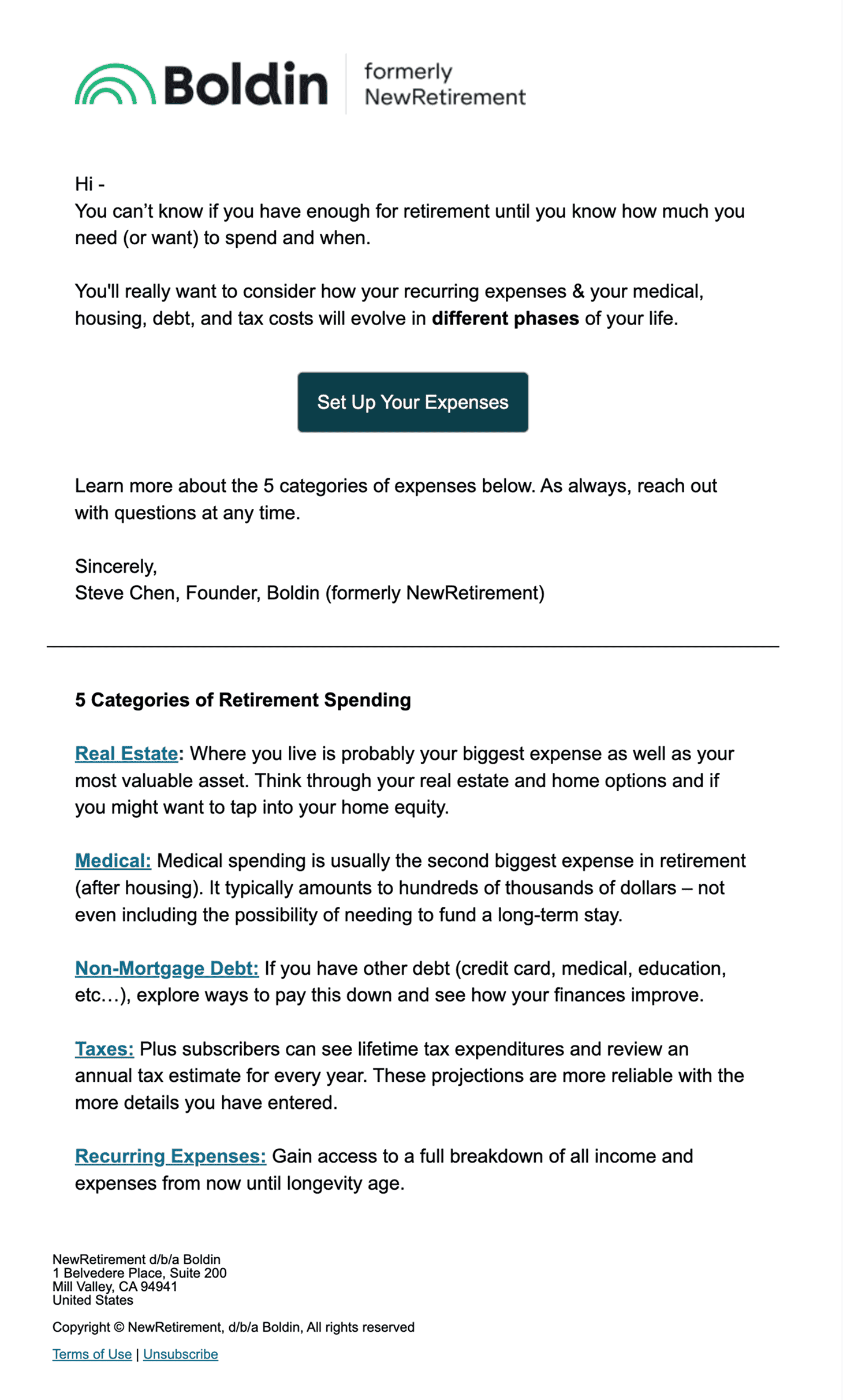
They also believed that text based emails would perform better. Shortly after launching Boldin, and a successful test for Black Friday where we tested a more visual format for a promo email. I decided it was time to invest in changing hearts and minds about the potential of email to increase engagement and create a strong brand moment.
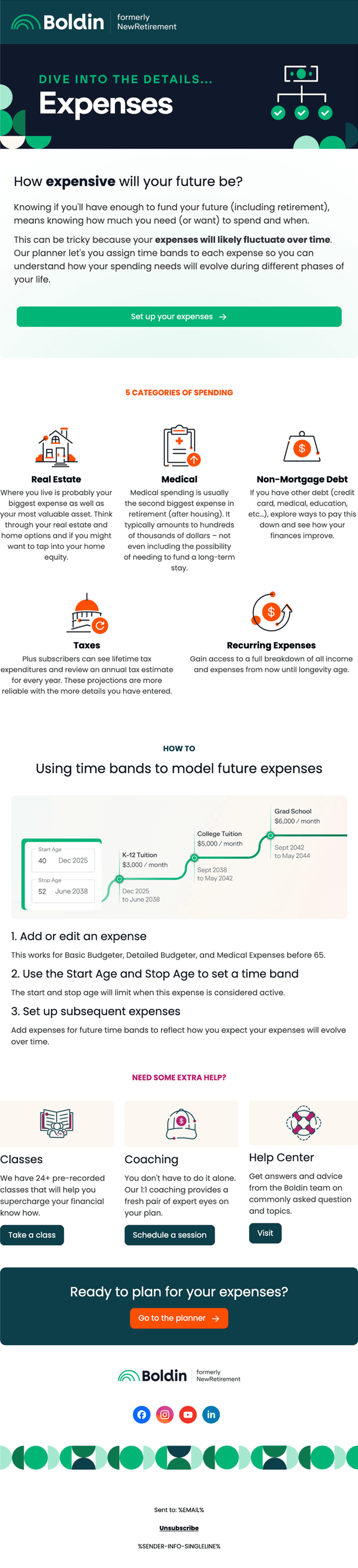
I designed a spec email based on existing content to show our founders and head of marketing how we could better bring our content to life, express our brand, and help customers deepen their understanding of our product.
SPEC EMAIL
After some discussion, the team agreed to run an A/B test on our Welcome email drip which was sent to every user who signed up. I partnered with our head of marketing to create a new welcome email sequence.
Audit
Our first step was auditing the existing email drip sequence. Assessing where there was opportunity and where we could cut.
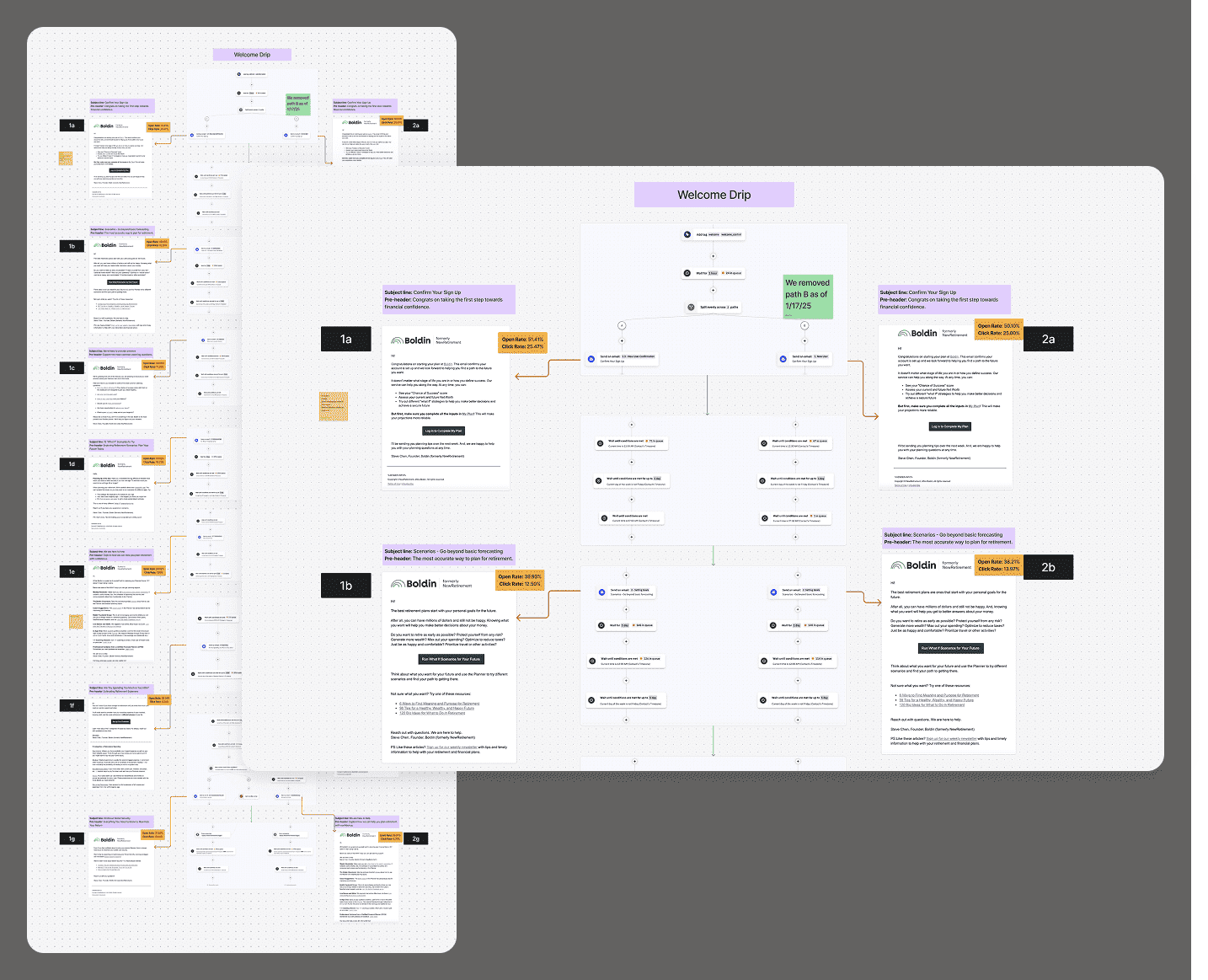
The existing sequence was 7 emails long. 😬
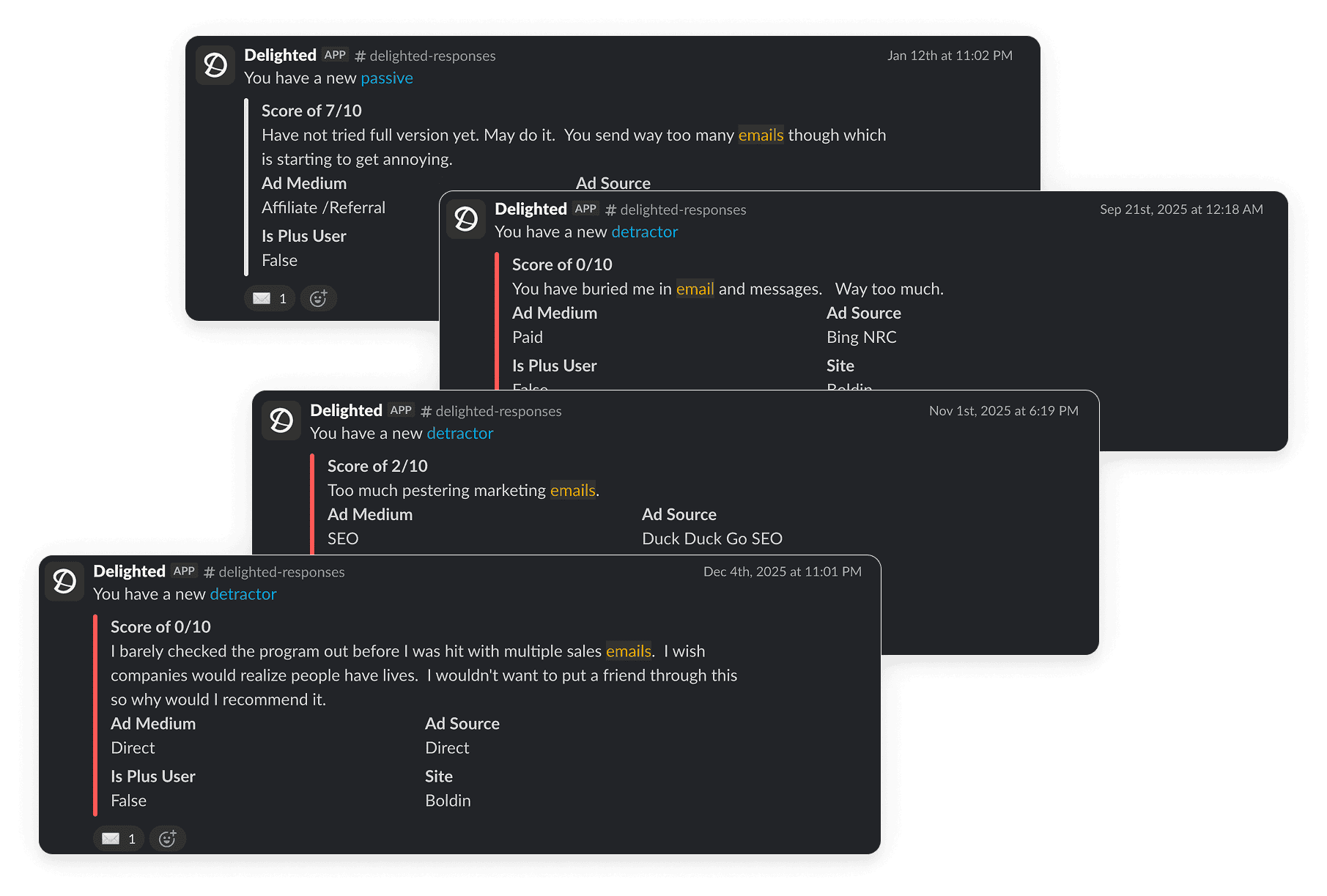
After some discussion, looking at the performance of the existing sequence and reading our NPS feedback about email we got our stakeholders to agree to reduce the number of emails to 5.
Content Strategy
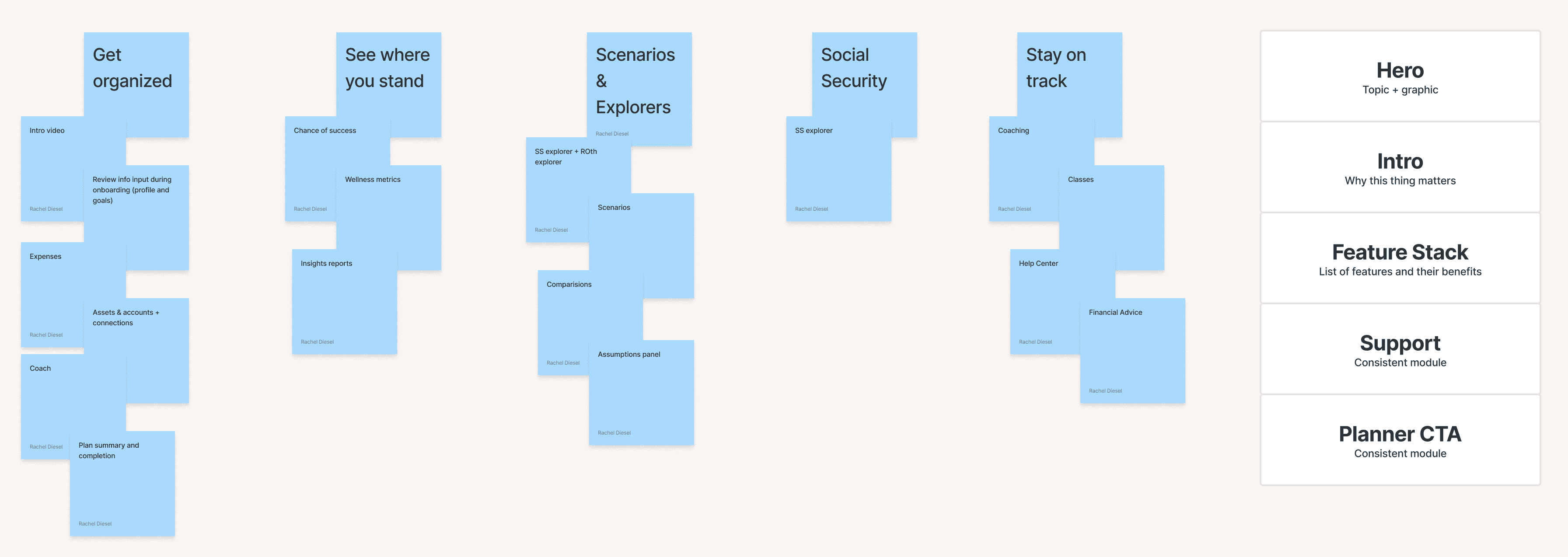
The head of marketing and I worked together to define the high level content categories we wanted to communicate. I also prepared a schematic for the structure of the emails we agreed to.
From there, I began wireframing. I wanted to nail the content before even touching the design. Using our existing emails as input, I worked to trim up the old content, and rewrite it to better reflect our bolder tone of voice.
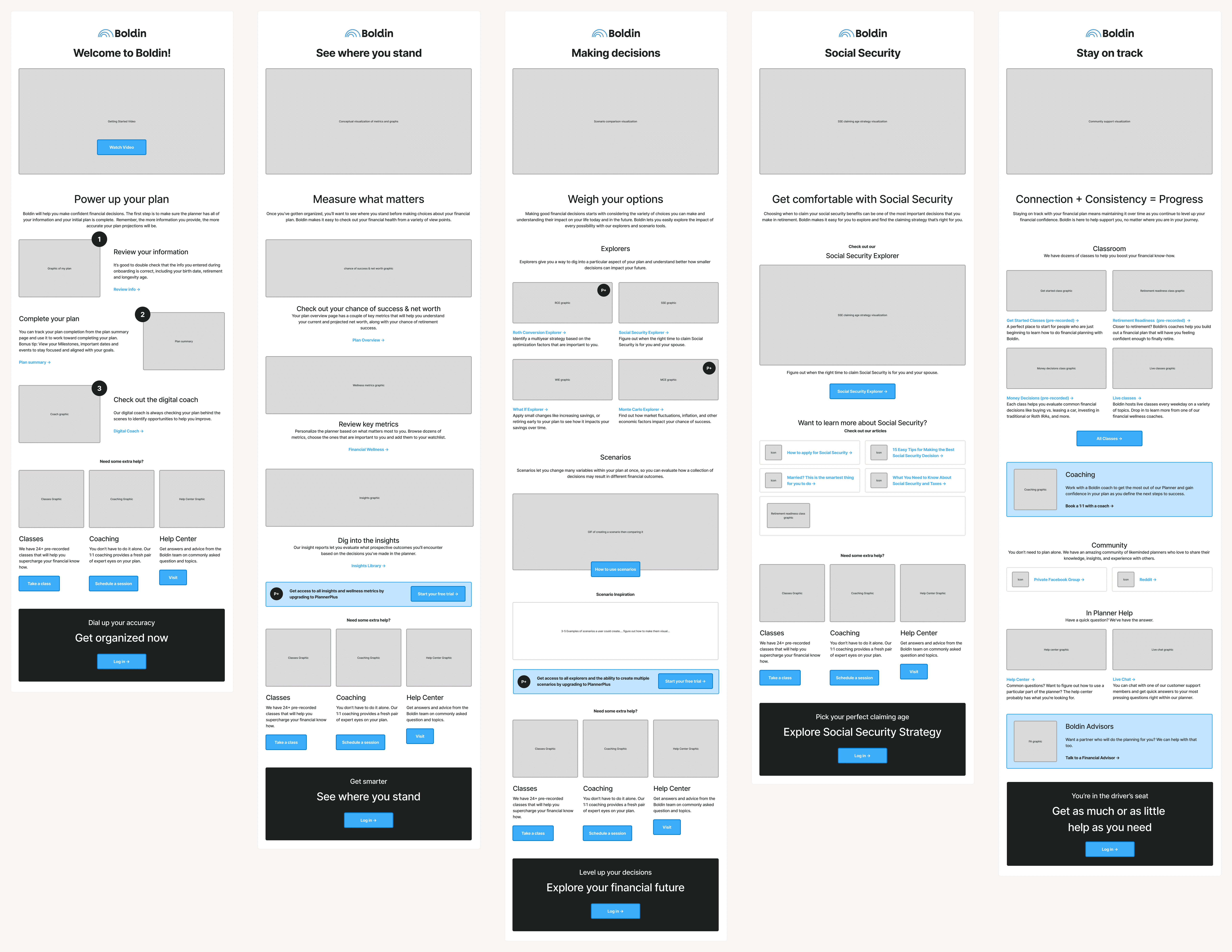
The head of marketing and I collaborated in a live session to tune up any areas where she wanted to dial up or down certain messaging. After an hour we were ready to design.
Design
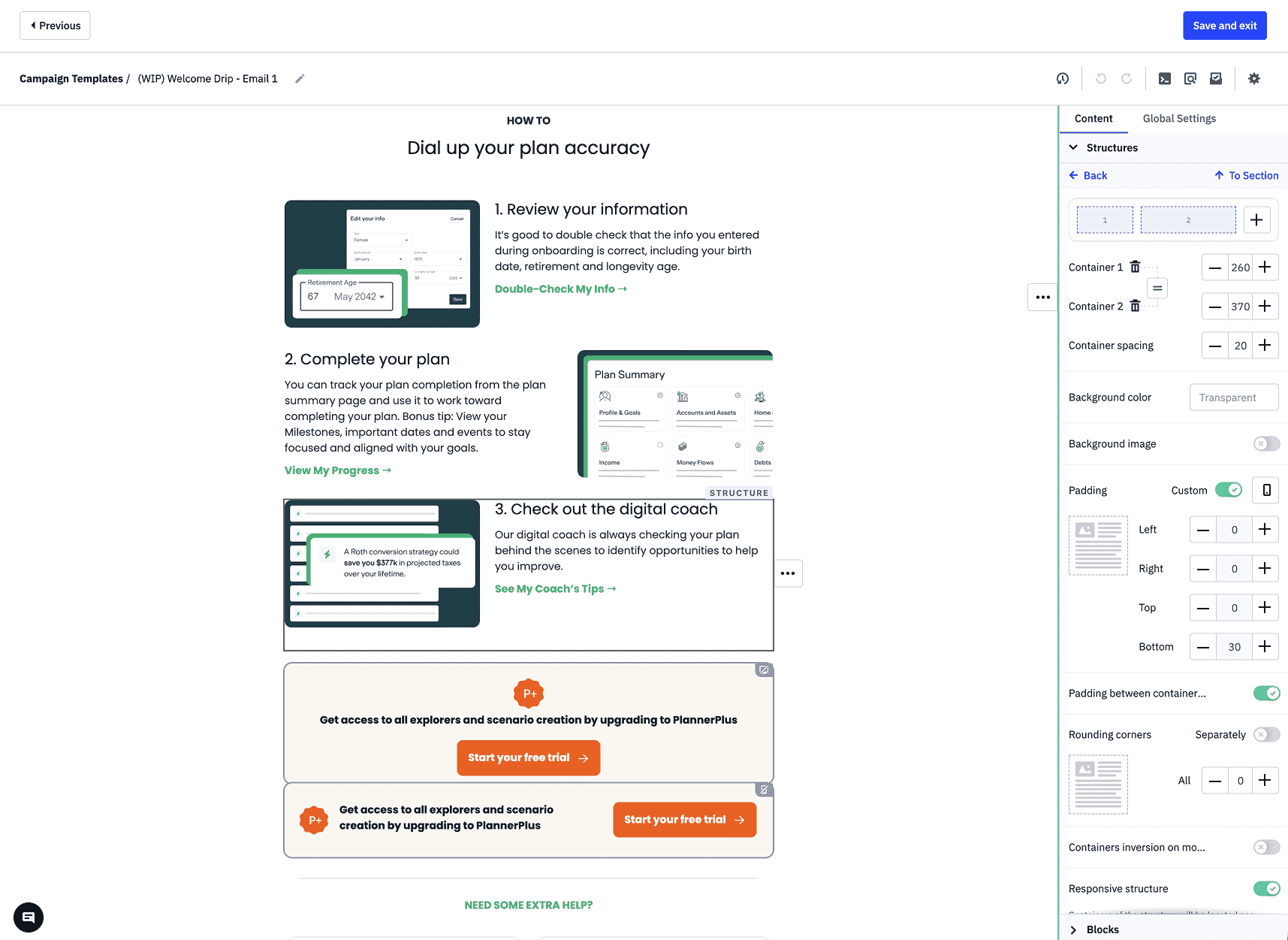
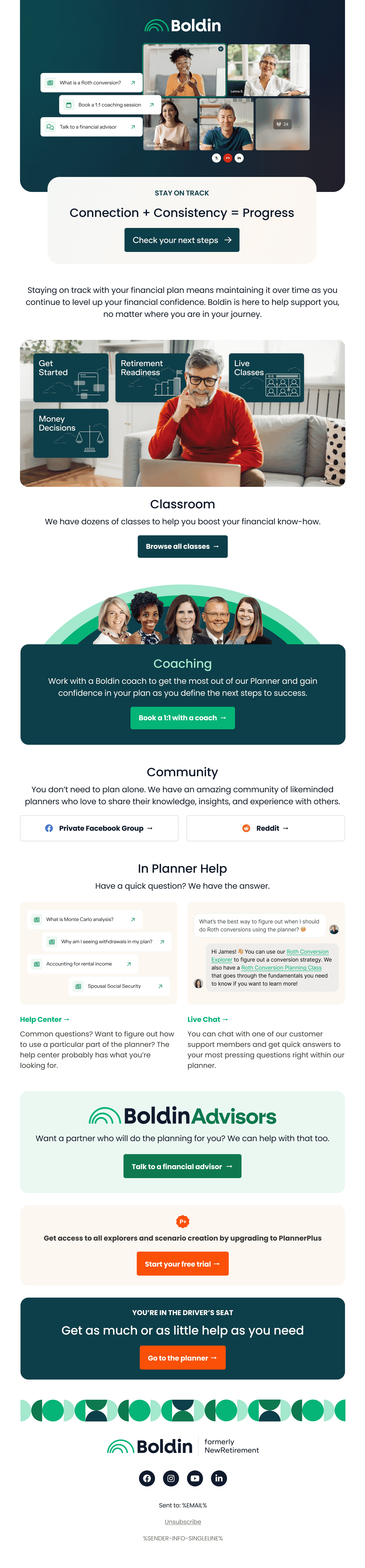
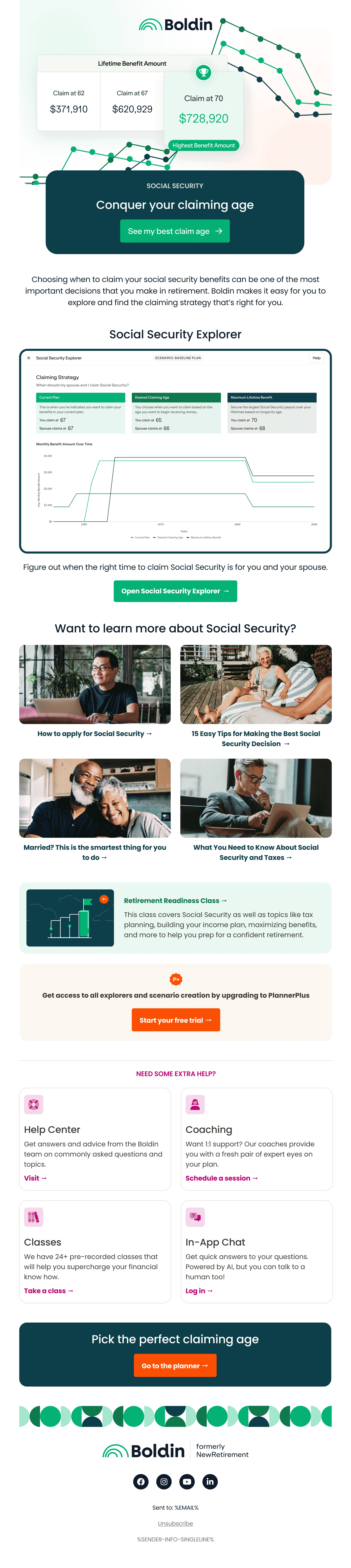
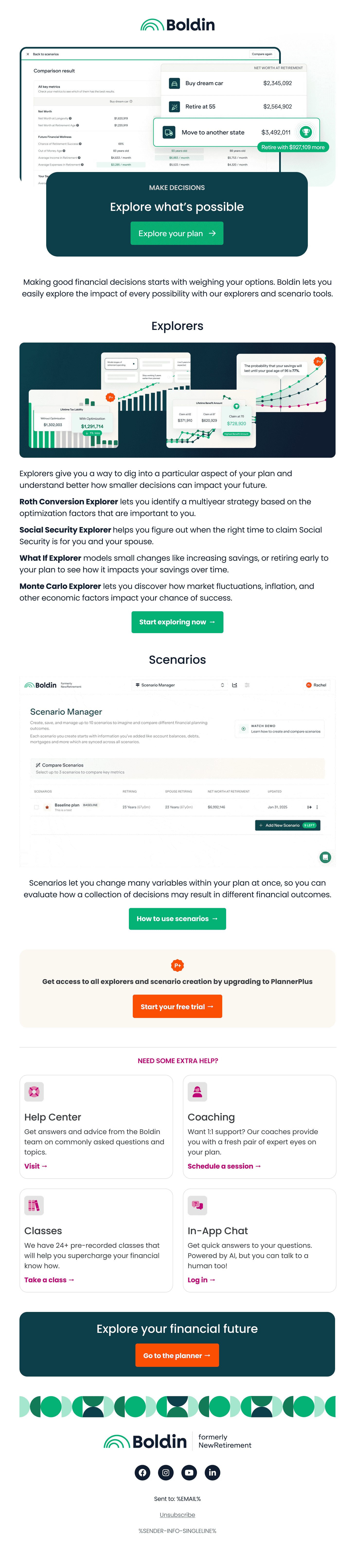
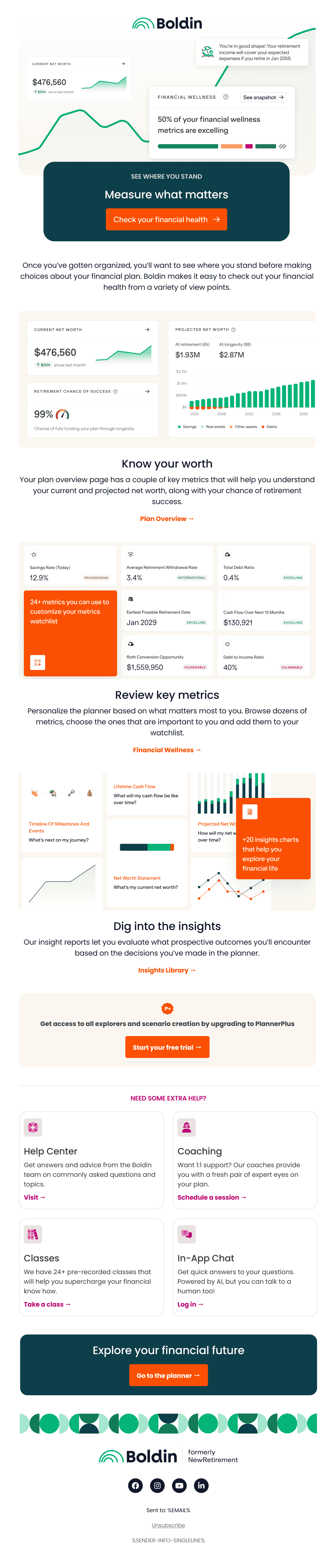
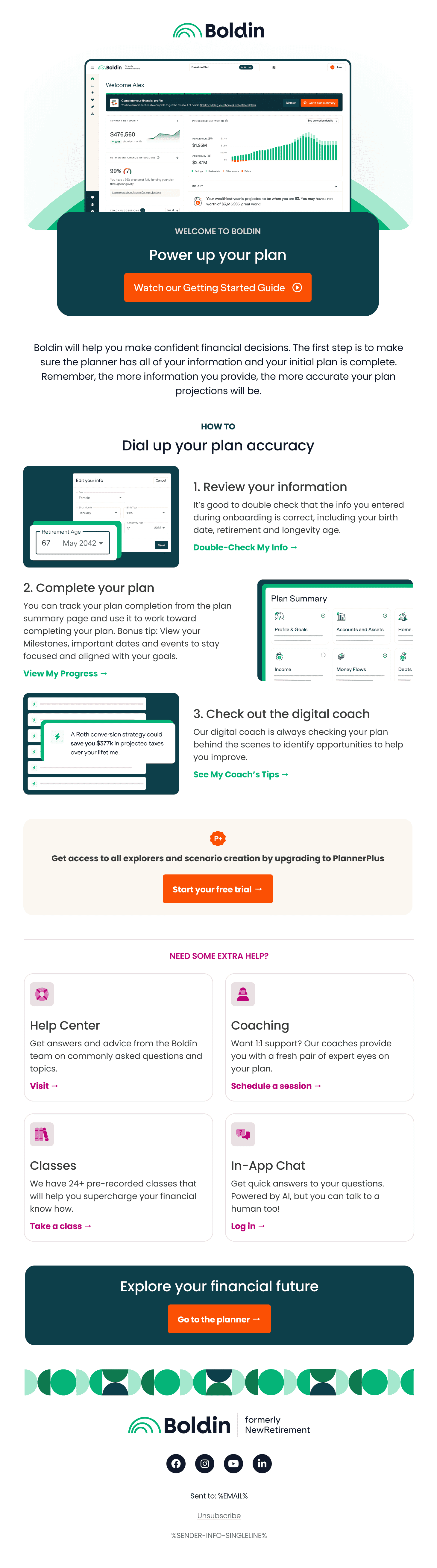
This was our first time testing out the Boldin branding in email, beyond changing button colors. The designs stayed close to the wireframes layout wise, but I was able to push graphically to show our product in fun and inviting ways. Because content and layout had been agreed upon, rather than doing the visual design only in Figma, I designed the emails in ActiveCampaign. This avoided having to make adjustments due to technical constraints, and accelerated our path to testing.
Testing
We did an even split, half our new users getting the older text based version of our welcome sequence, the other half getting our new visual format welcome emails.
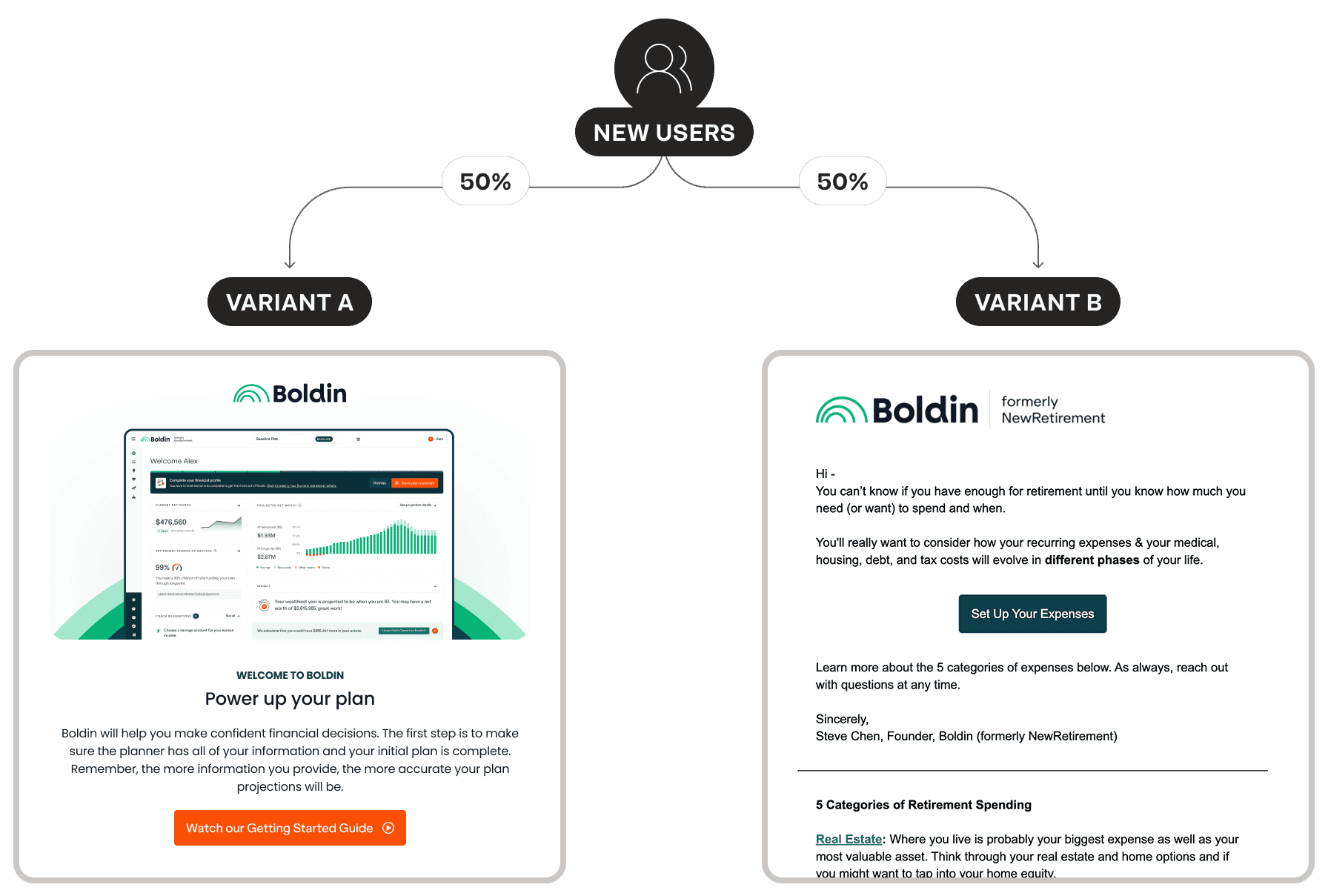
Iteration 1
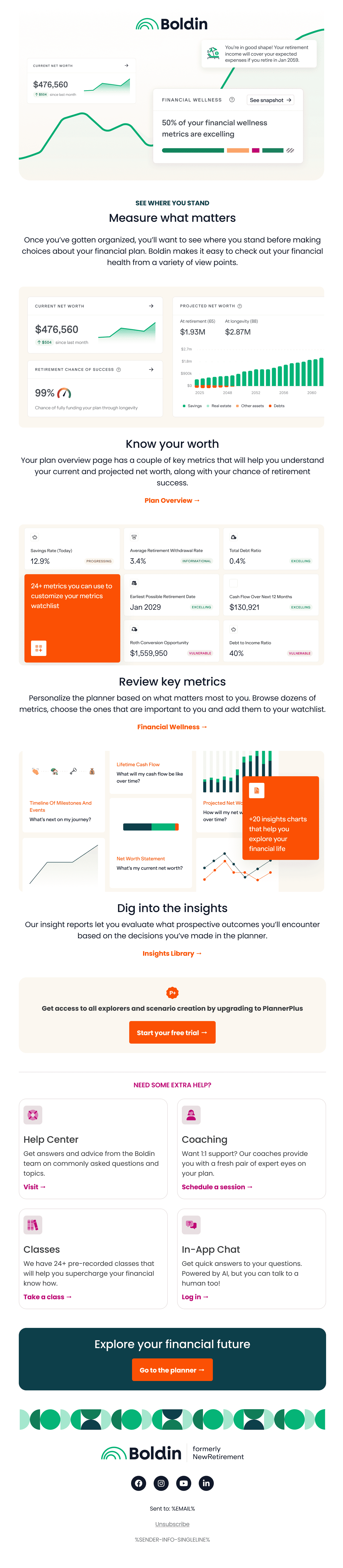
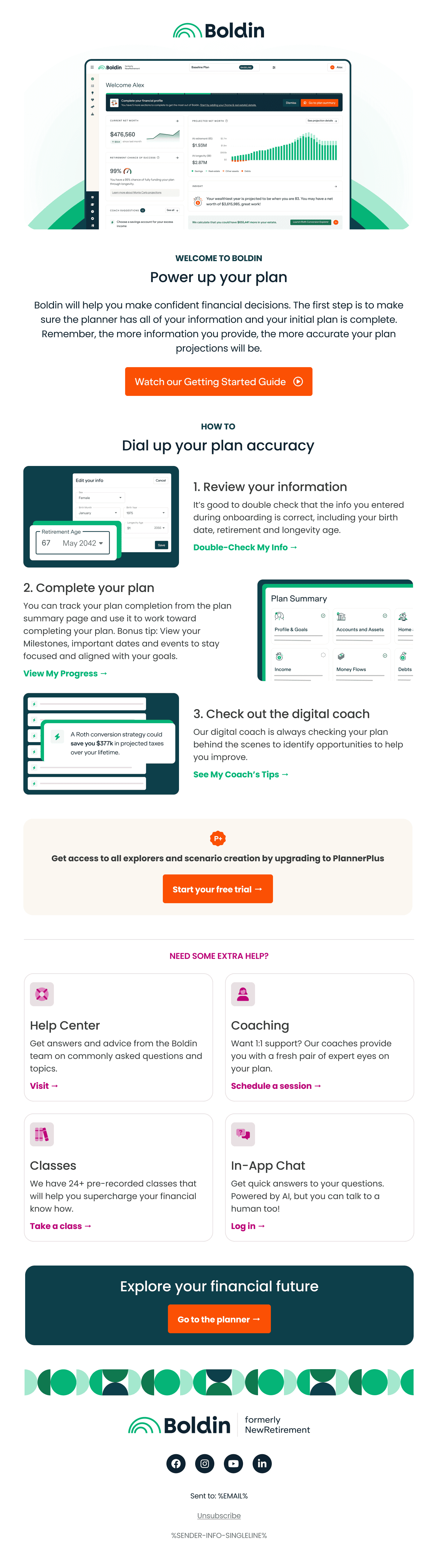
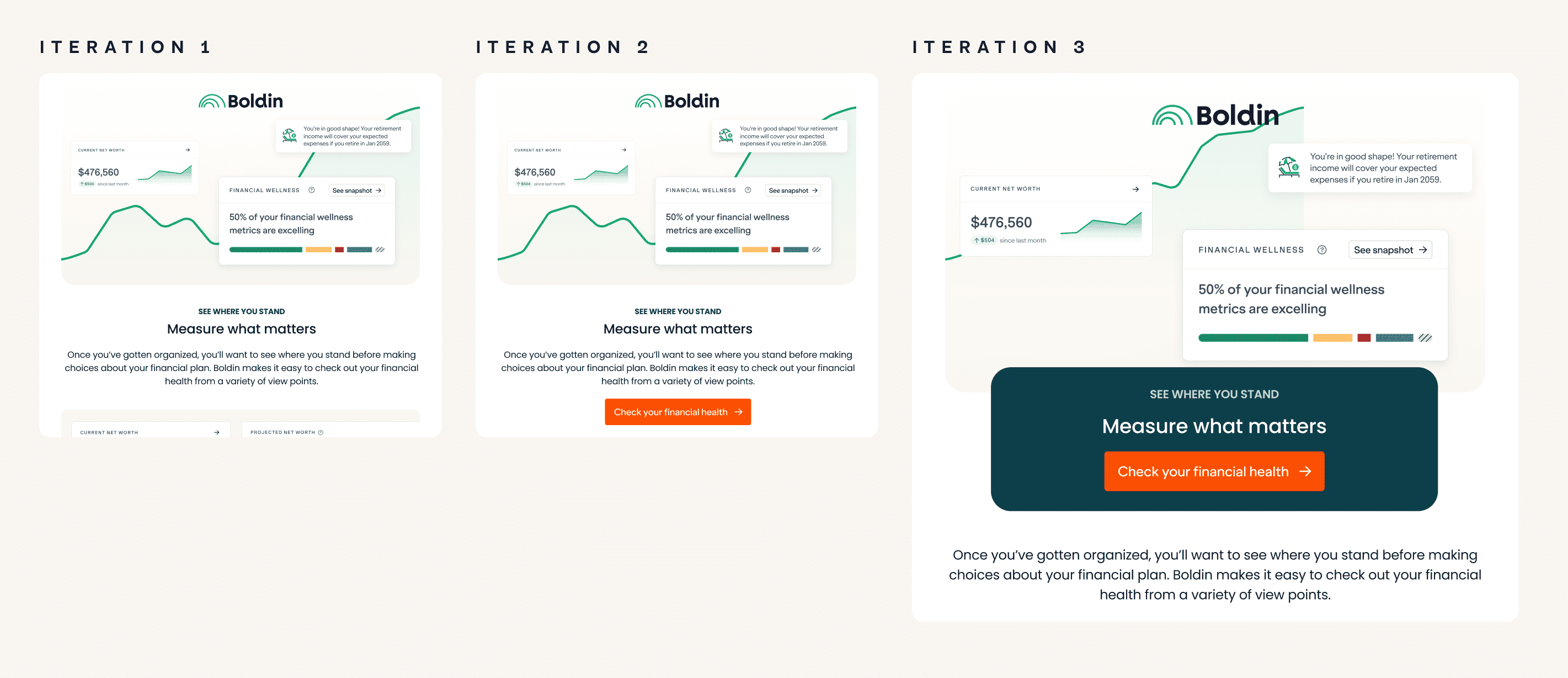
Our first version of the visual emails did well, but not as well as we wanted them to perform. The performance between the two email versions was essentially neck and neck.
Old emails
4.5%
click rate
New emails
2.7%
click rate
Iteration 2
After observing that the top CTA on email 1 was getting more clicks, we decided to add a stronger CTA at the top of the emails to drive more traffic and lean more heavily into text where we felt it would be advantageous.
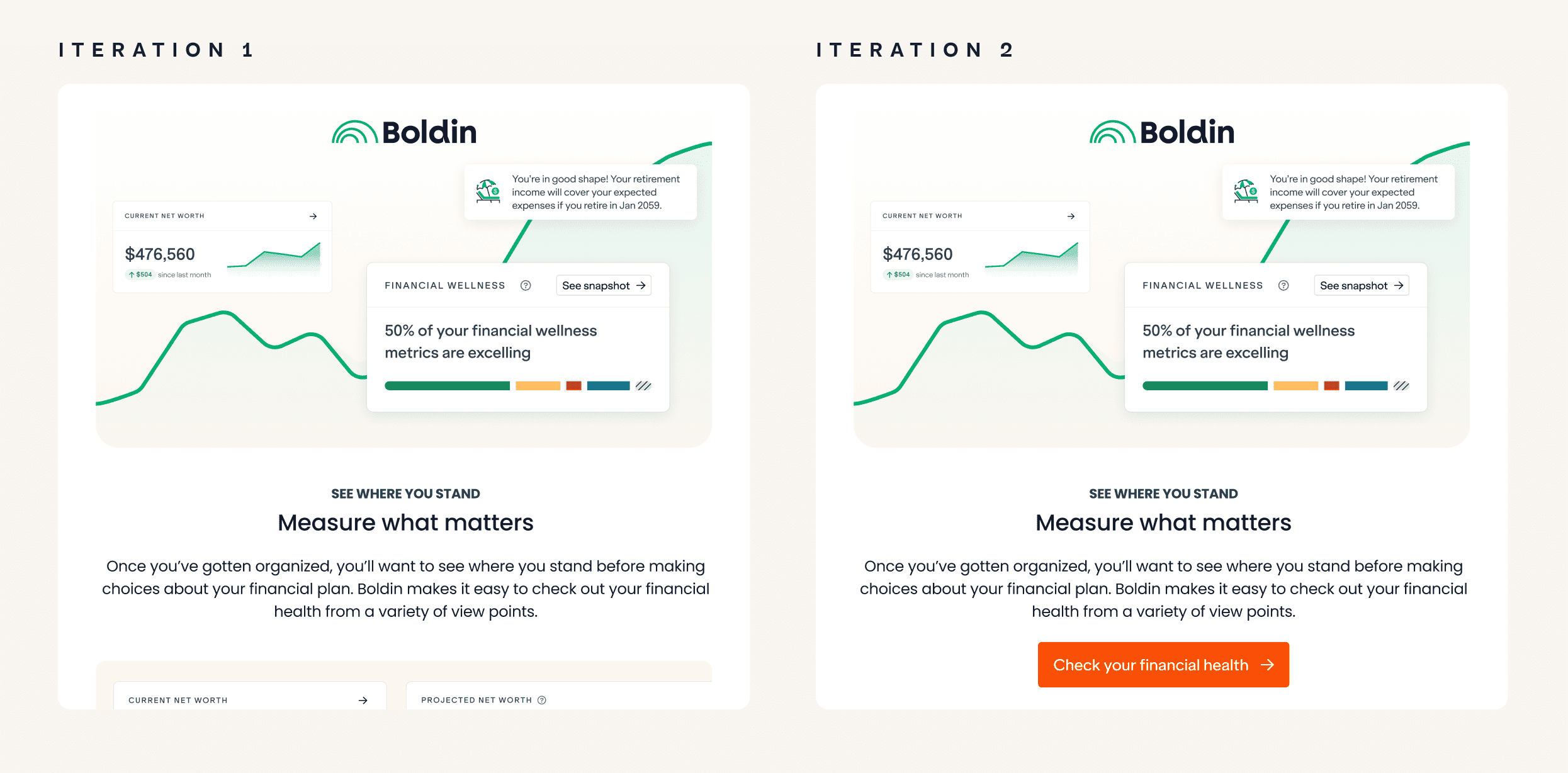
After testing we started to see the new email sequence deliver a higher click rate. We also saw that the top and bottom CTAs of the emails were driving a lot of traffic.
Old emails
4.6%
click rate
New emails
5.1%
click rate
Iteration 3
At this point we had finally hired an Email Marketing Manager (YAY!). He showed us some work he’d done with a previous client where the hero section has a more explicitly highlighted CTA. I designed a stronger hero CTA area and we tested again.
Old emails
4.4%
click rate
New emails
5.5%
click rate
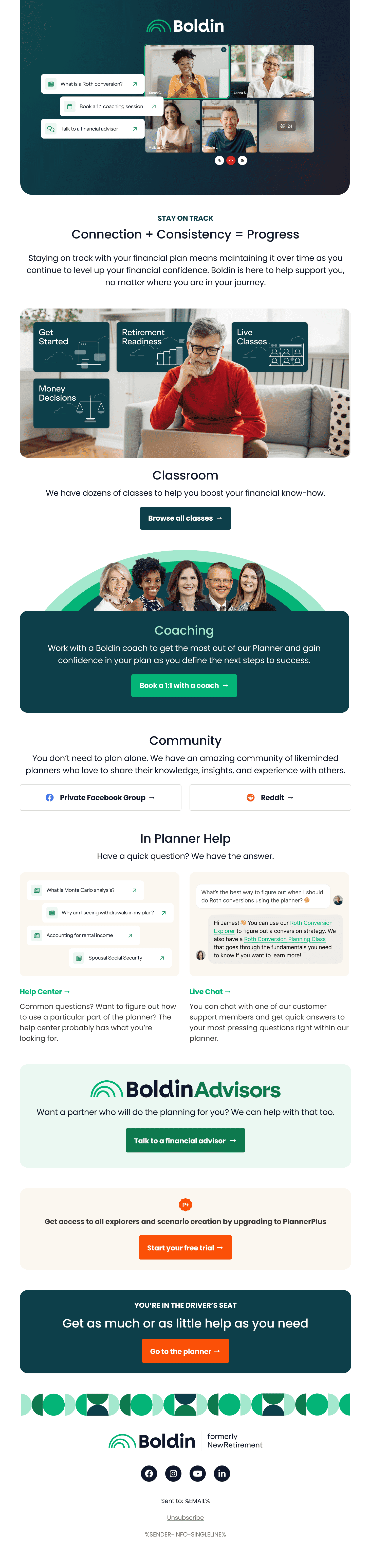
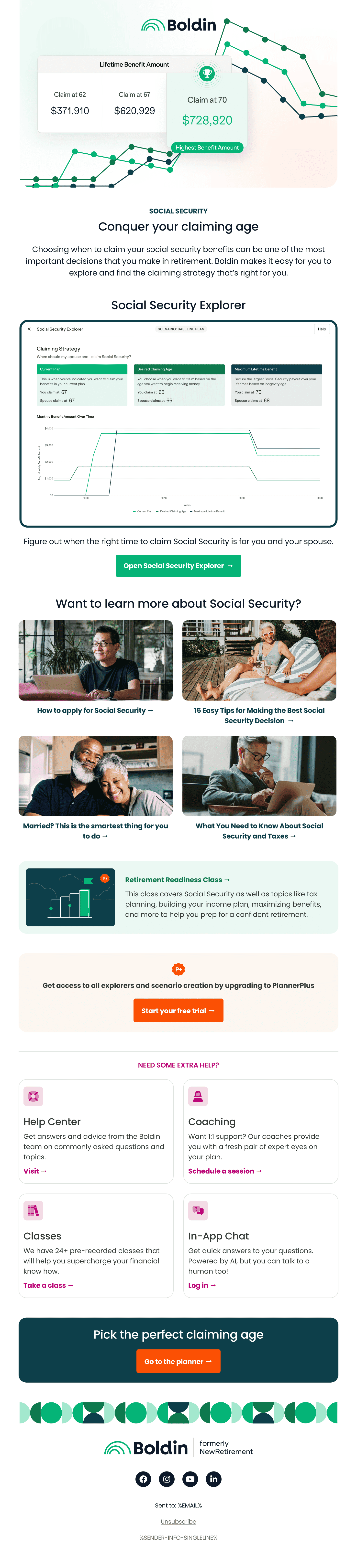
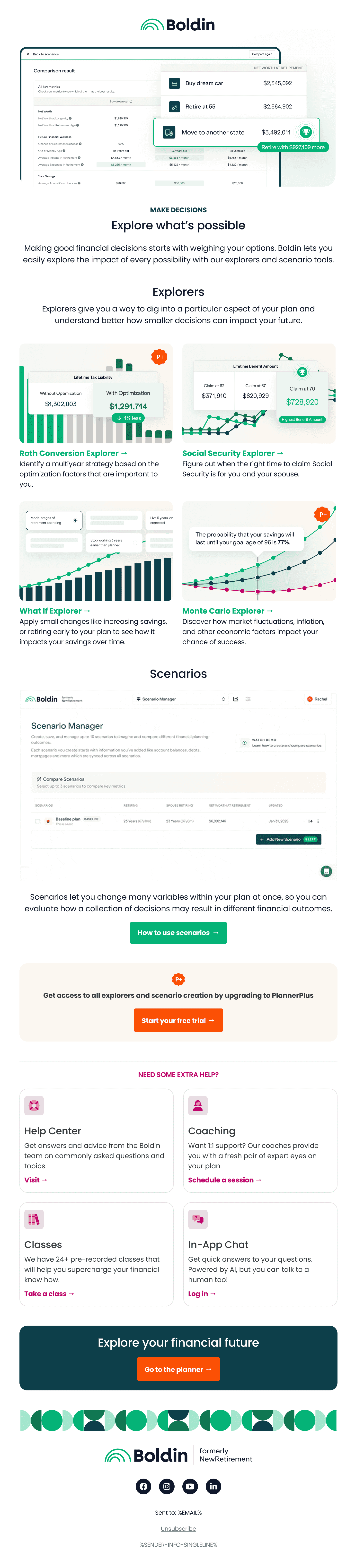
We saw even better performance with that iteration, the new emails performed 23% better than the old sequence.
We switched over to using the new design for all new users and began A/B testing more discreet changes like button colors, text changes, and subject lines.
Final Designs
Impact on emails overall
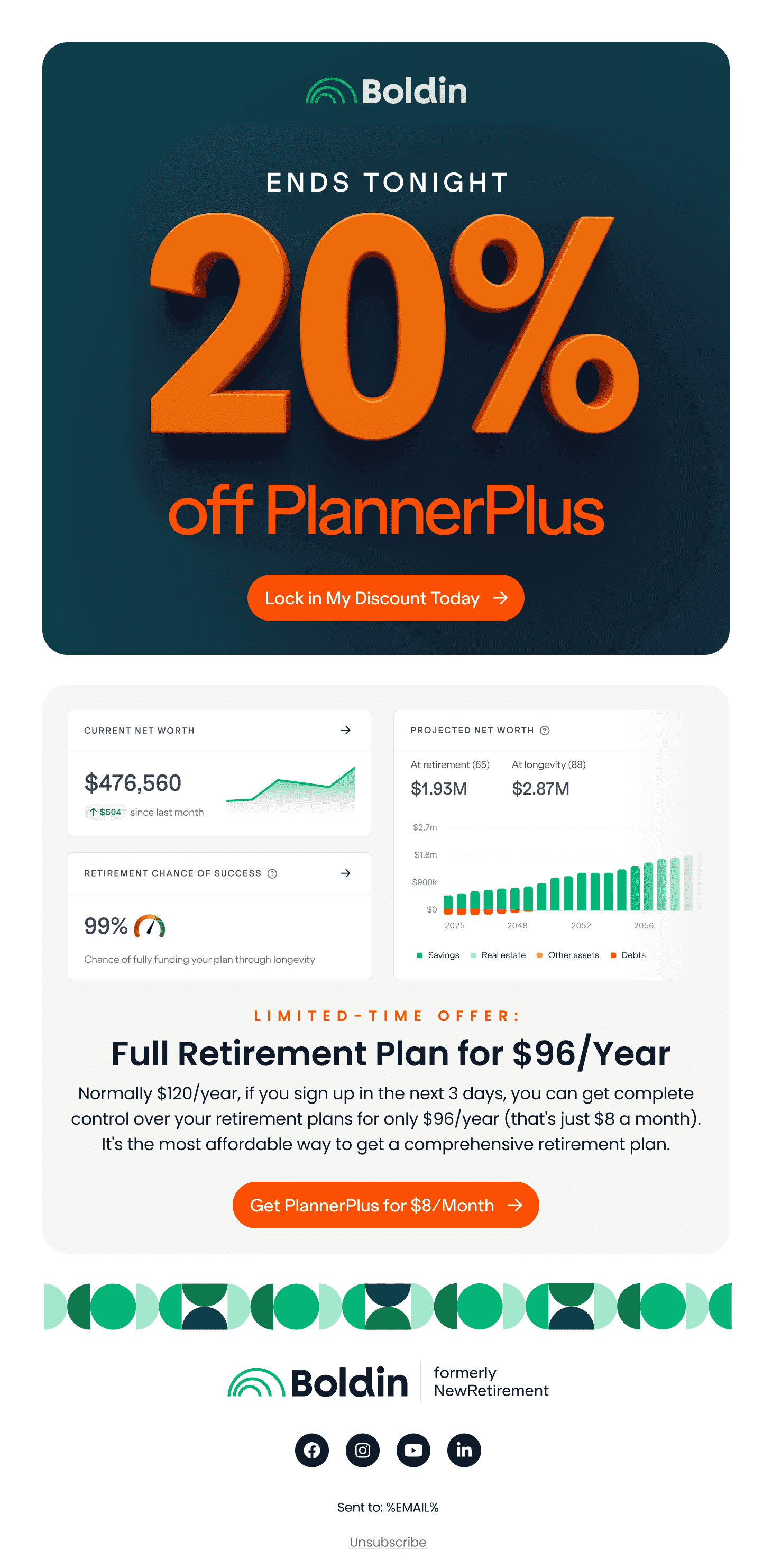
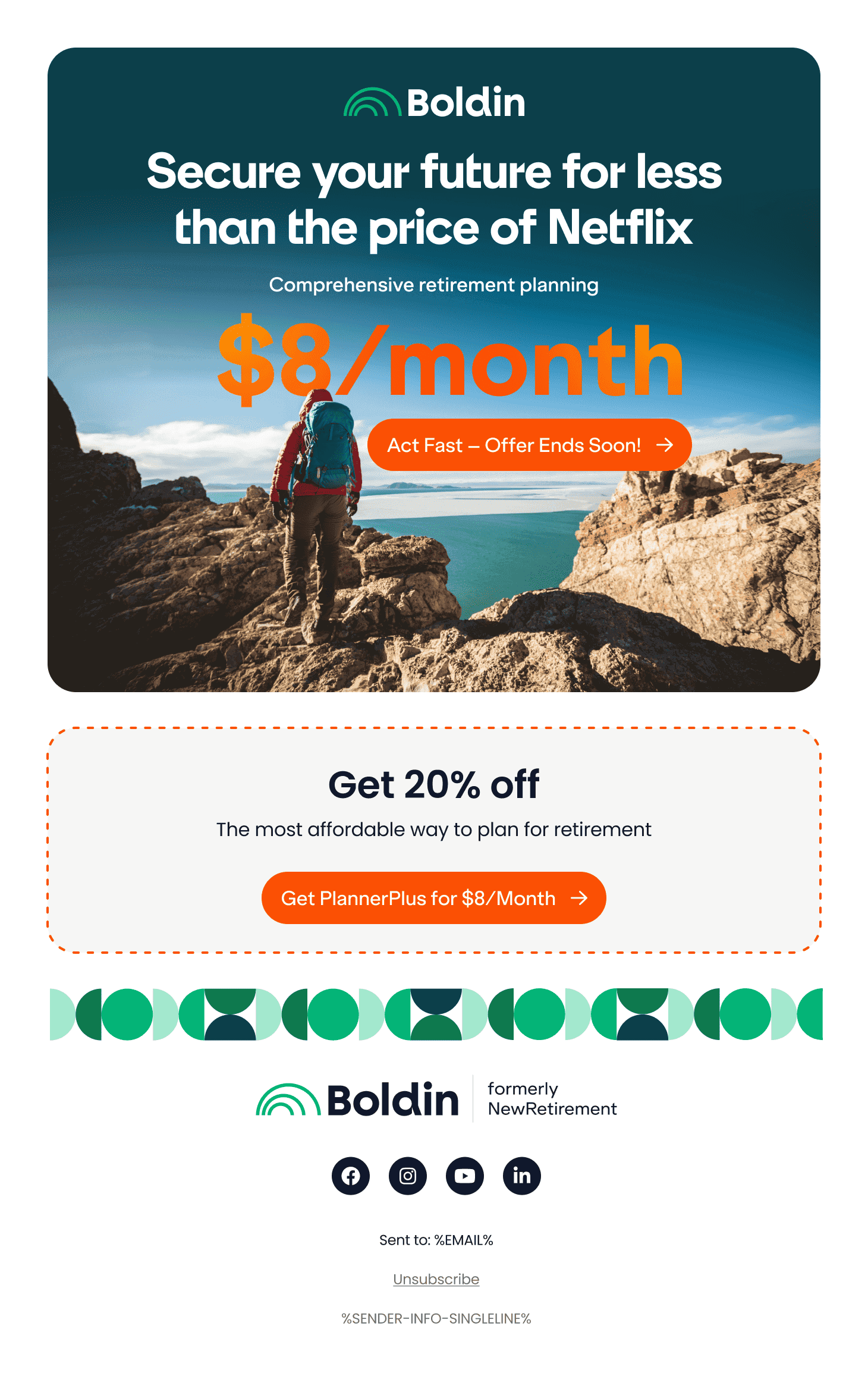
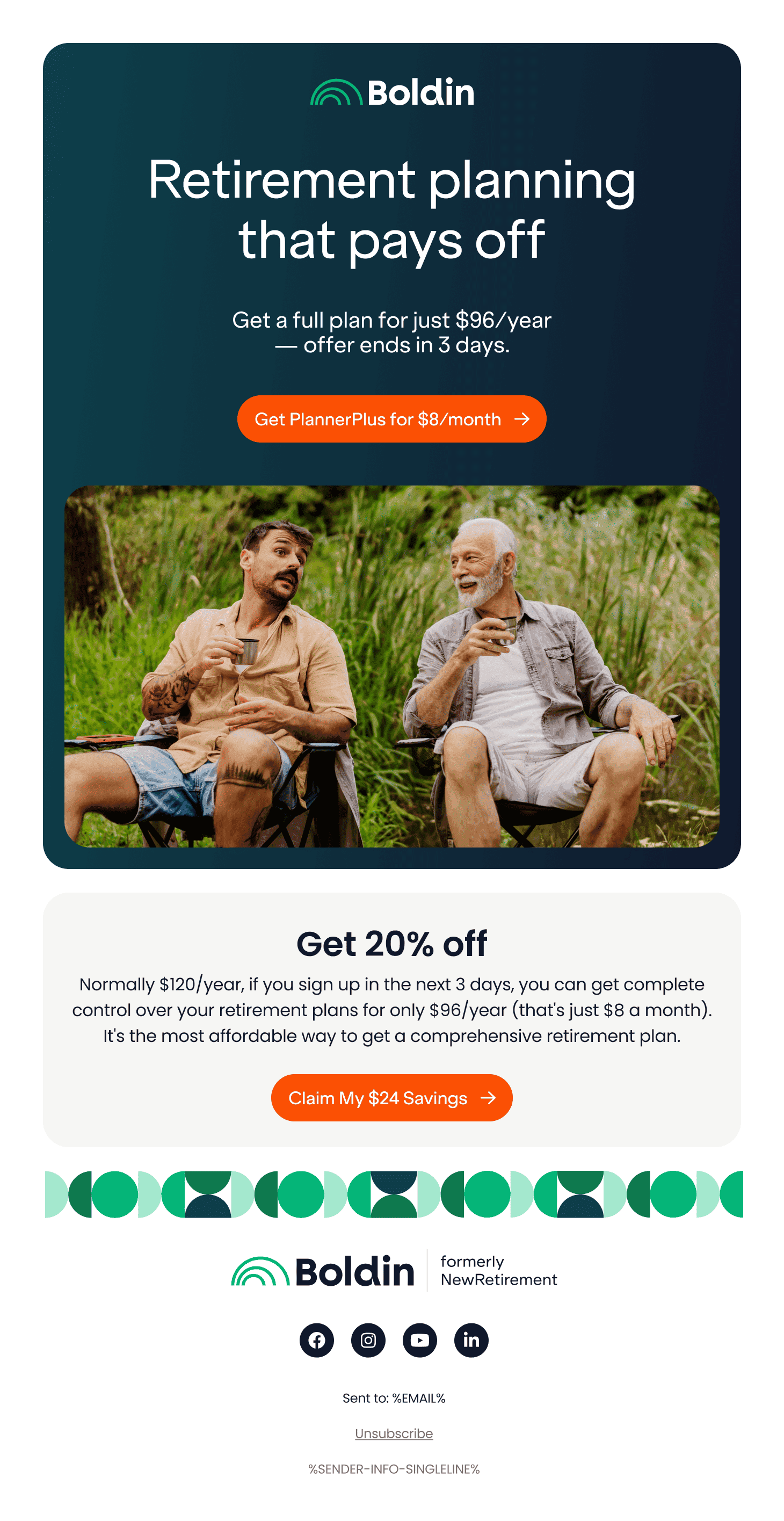
The success of the welcome email drip and hiring our first Email Marketing Manager led to greater stakeholder buy in to run other experiments like redesigning our PlannerPlus promo email sequence which lead to 10-15% lift.
Welcome drip
18% increase
click rate
Promo emails
15% increase
click rate