Background
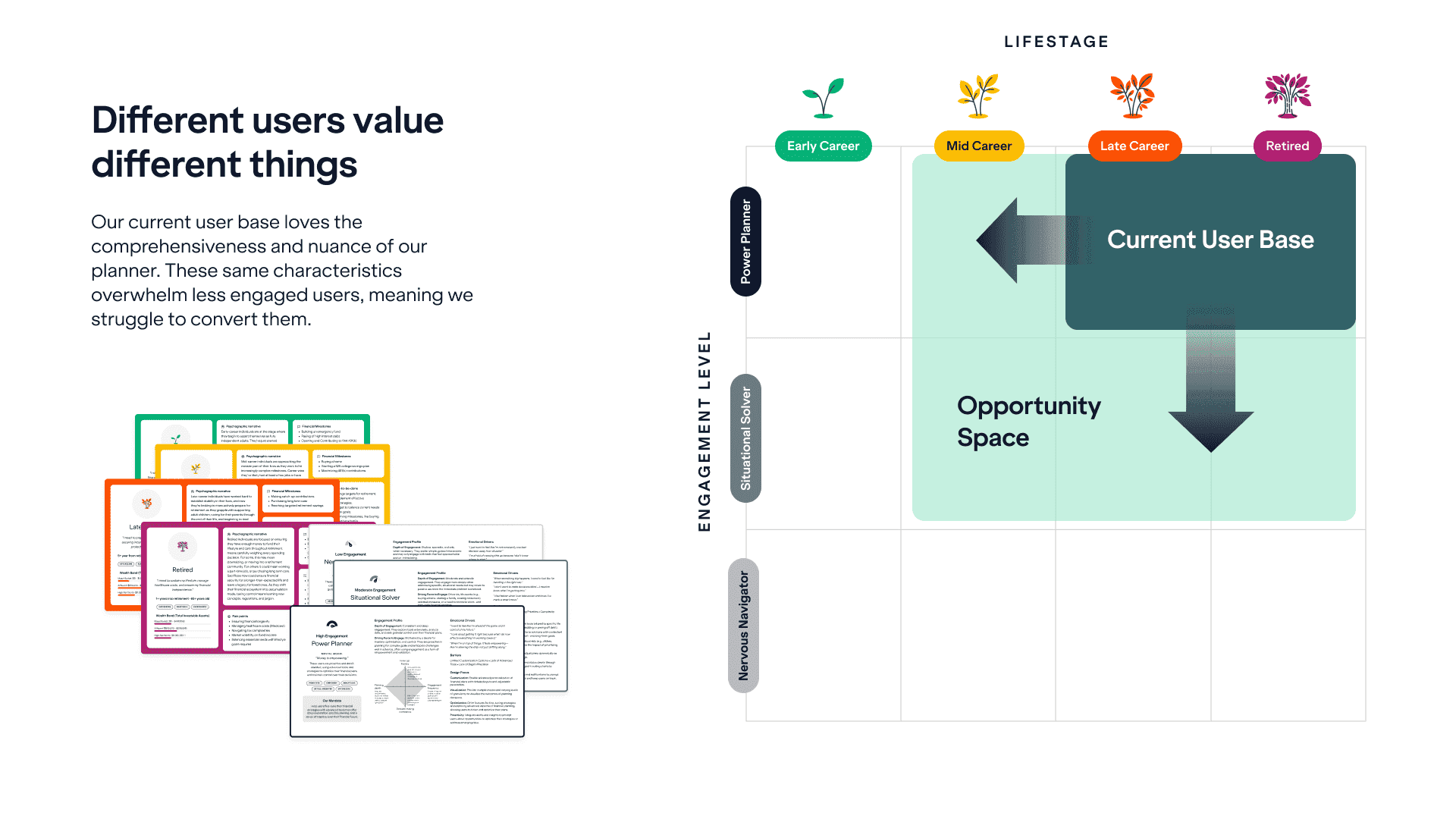
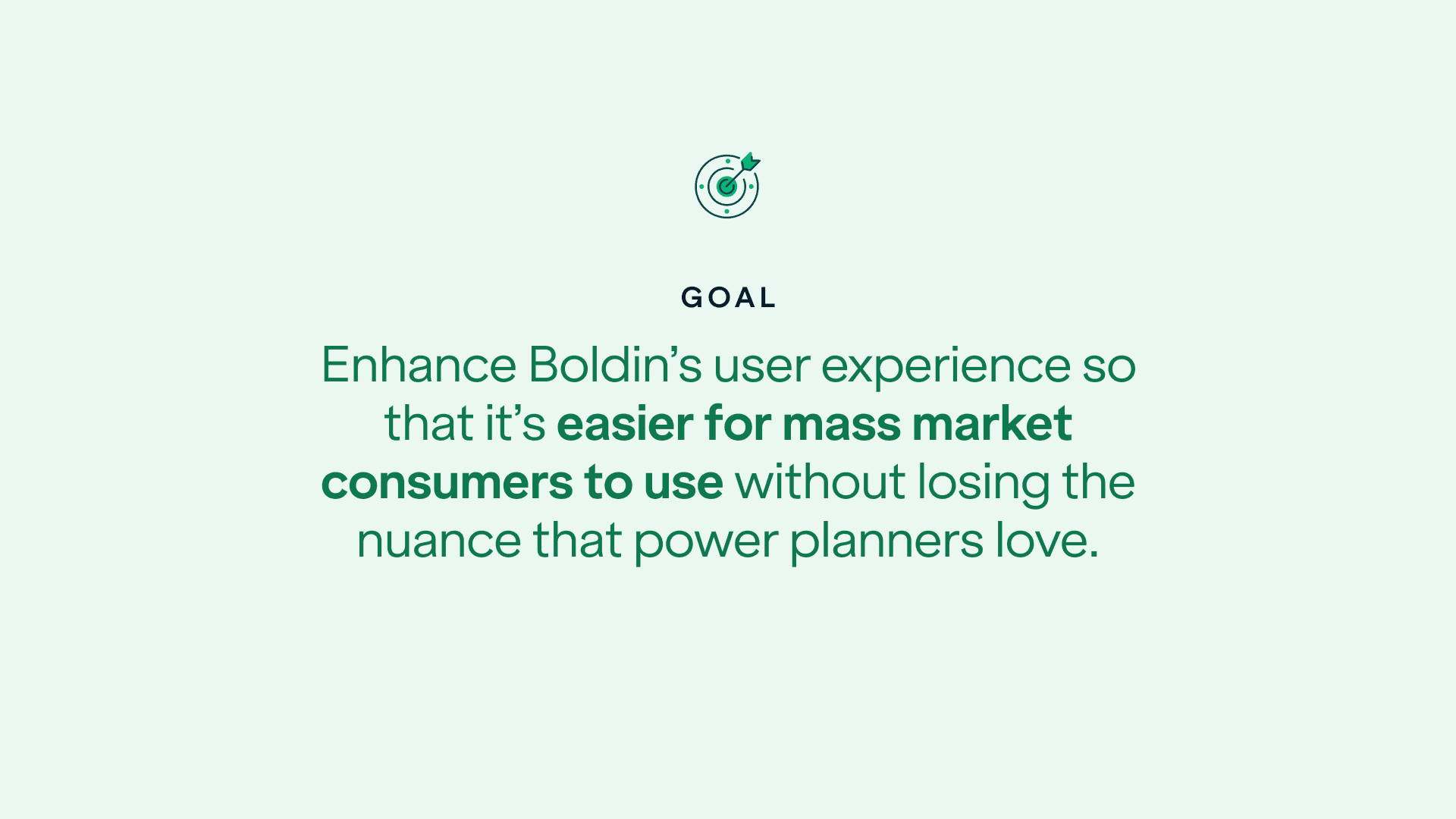
In early 2025, everything shifted: a new Chief Product Officer, a new brand, new personas, and a new OKR—move to the mainstream. Historically, we’d built for Power Planners: people who love spreadsheets and genuinely enjoy nerding out on retirement planning. But to grow, we needed to resonate with a broader audience—people who want clarity and confidence, not a new hobby. The brand helped signal that shift, but the product experience still spoke Power Planners.
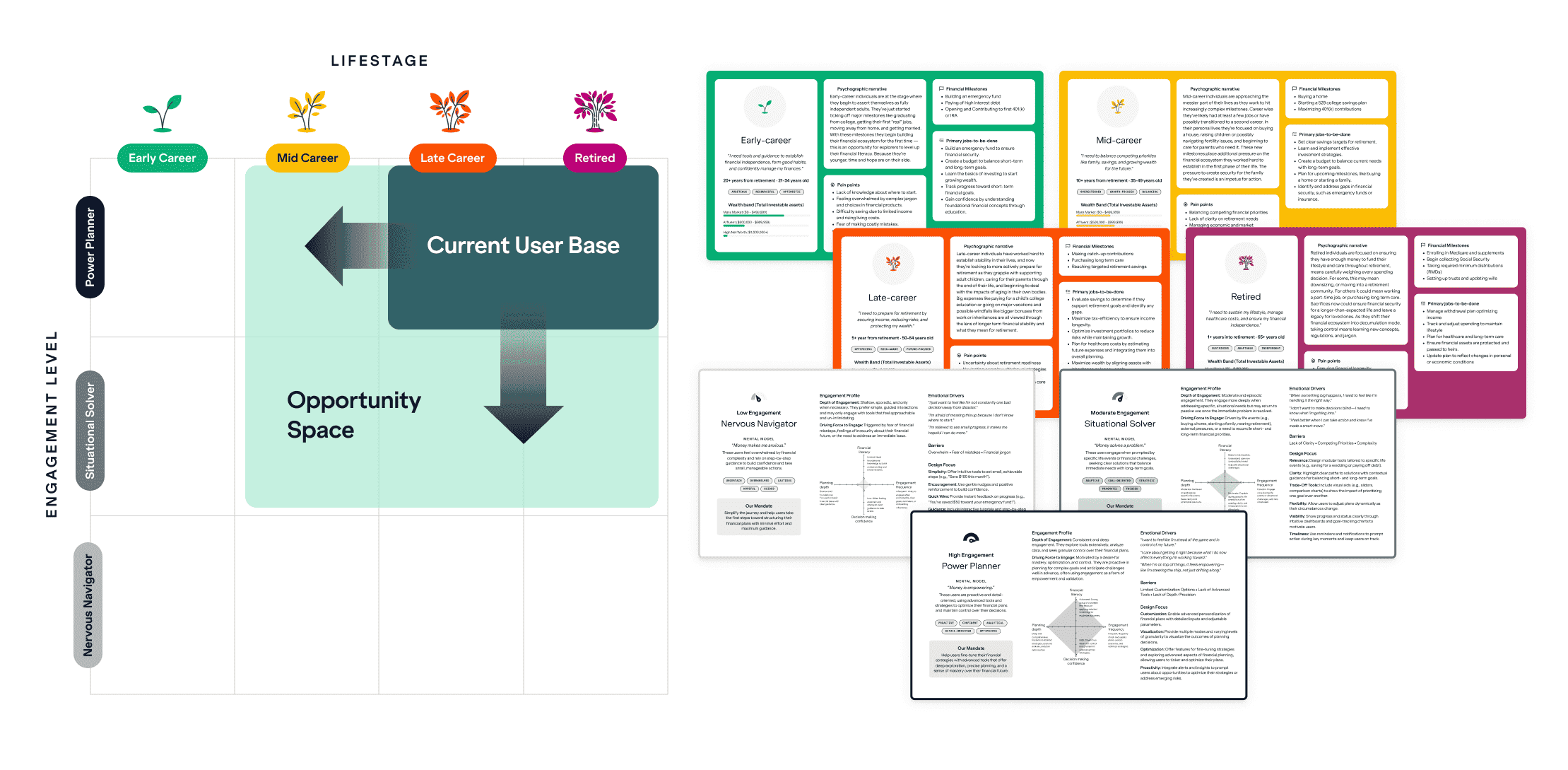
That tension was amplified by our culture. The founders were (understandably) protective of the loyal customer base we’d earned, but the downside was stagnation. The new CPO wanted bigger swings—less fear of change, more focus on impact.
I was asked to identify concrete ways to simplify the product. We briefly considered a full rebuild, but quickly realized it risked alienating the customers who loved us most. Instead, we chose a pragmatic path: a set of smaller, high-impact initiatives that addressed the most obvious friction and cleanup opportunities—giving us a sturdier foundation to build on while we expanded to a more mainstream audience.
Research
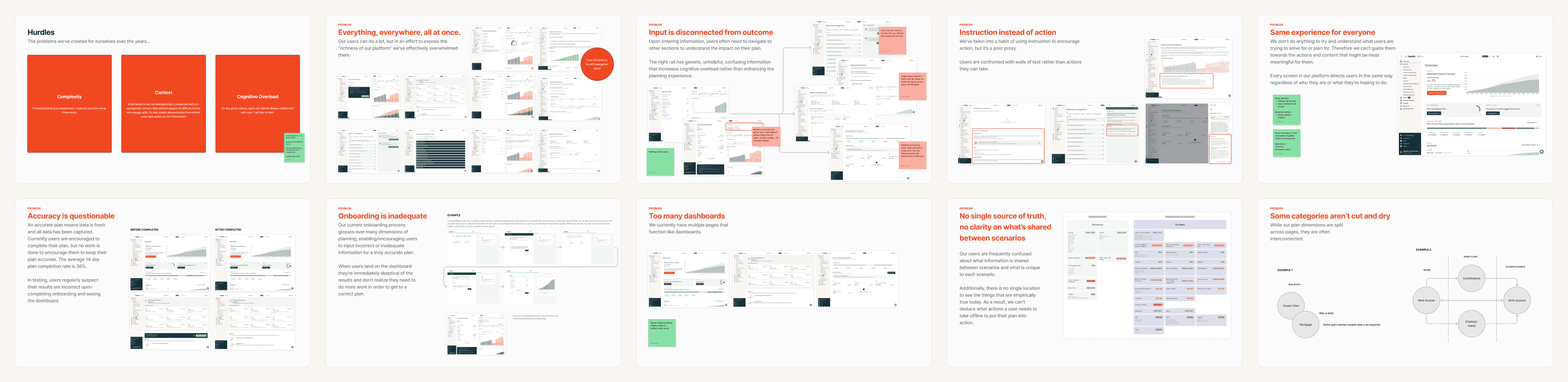
We were sitting on a mountain of insights: hundreds of research sessions, tens of thousands of NPS responses, ideas from across the team, and daily anecdotes from our planners and coaches. I synthesized it into a handful of themes that were creating friction for both customers and the internal team. I brought those themes to our CPO to validate alignment, and he added the macro context we needed to shape the work.
Designing
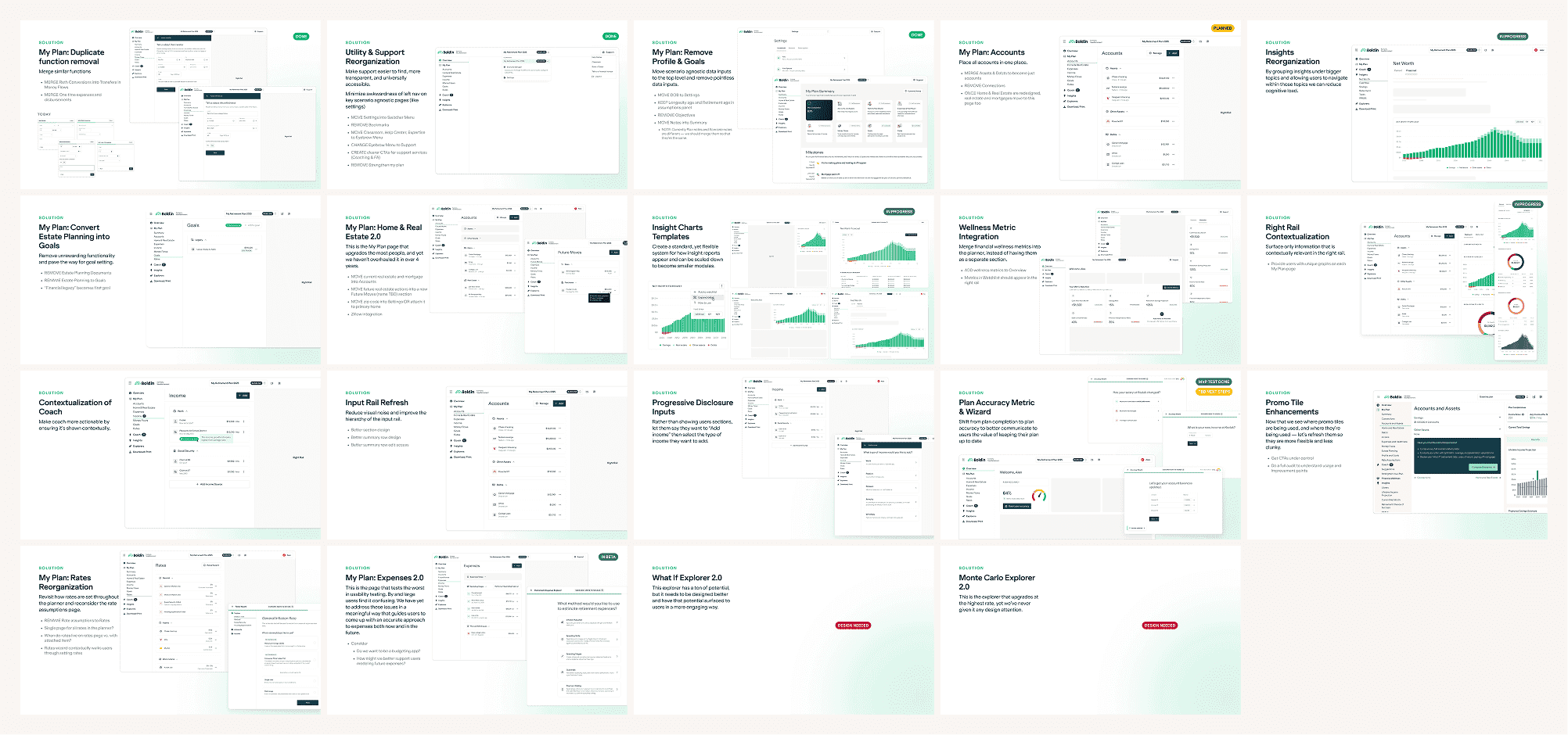
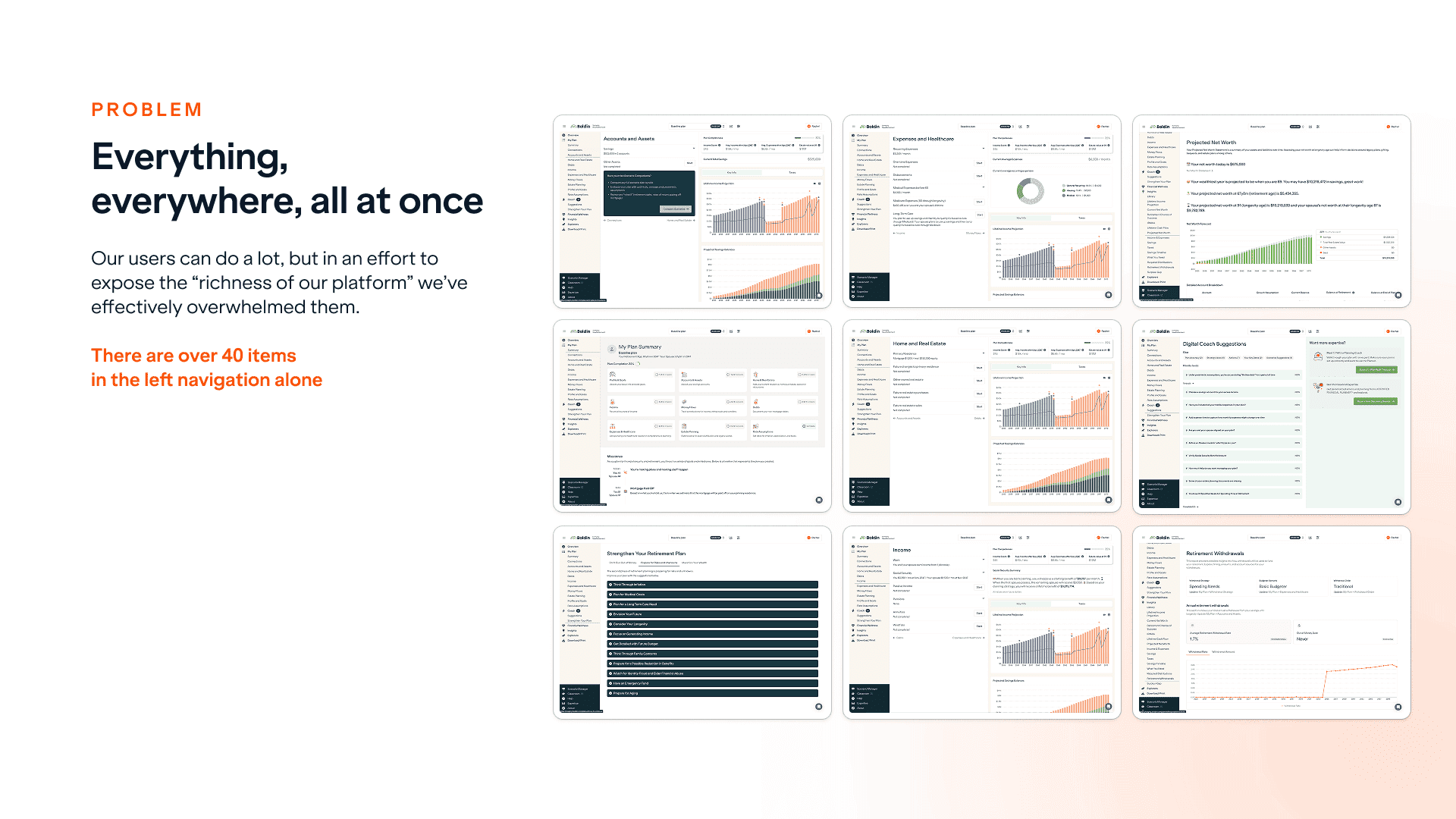
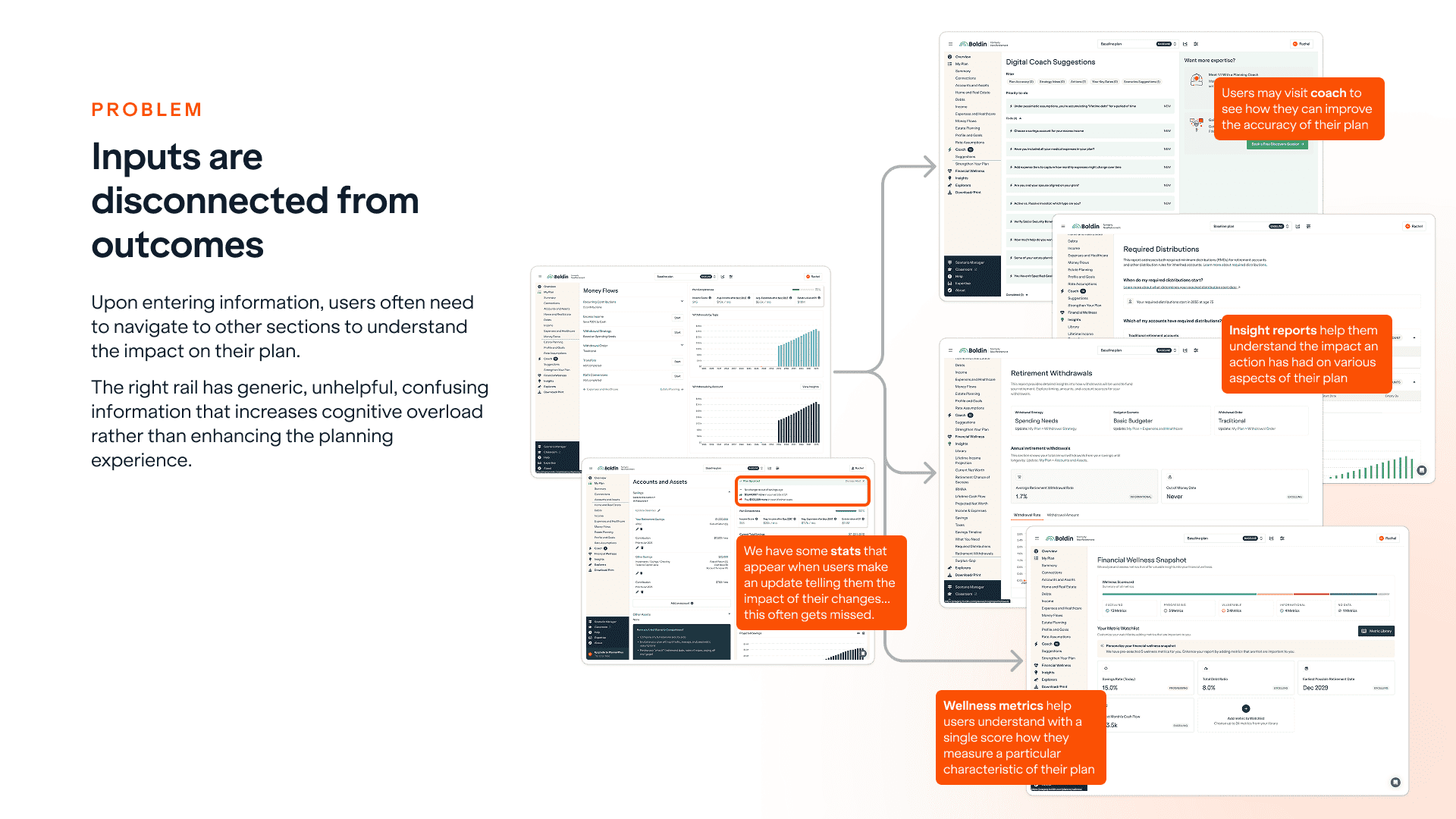
Over two weeks I did conceptual designs for 19 initiatives derived from the problems we identified during our research phase.
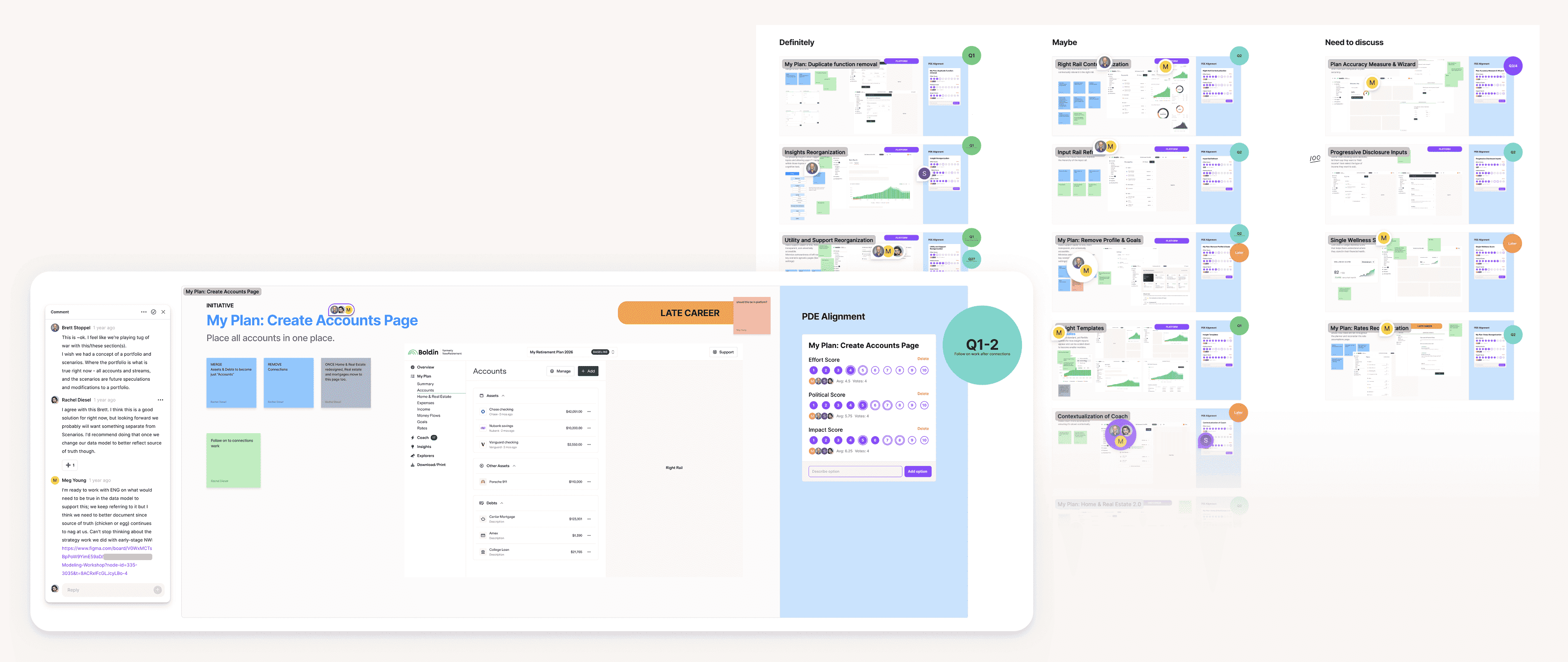
From there we took it to the VP of Engineering and Director of Product. Together, the four of us did an alignment activity where we:
Identified the squad the initiative would most likely be assigned to
Surfaced key nuances, risks, and dependencies
Ranked initiatives by effort, impact, and stakeholder complexity
Discussed where each initiative might sit on the roadmap
A setback
Behind the scenes, the executive team was planning a reduction in force (RIF) to reach break-even. By the end of February, Product, Design & Engineering had been cut in half. Morale hit the floor. We still had an ambitious list of initiatives, now with half the capacity to deliver them. If we wanted momentum, we first had to rebuild clarity, trust, and energy.

So the CPO, VP of Engineering, and I pivoted from “what to ship” to “how we ship.” We reworked team structure and ownership to give people purpose again. When we realized most of the team would already be in or near NYC in early March, we asked the CEO for a two-day onsite to reset, build morale, and lock Q2 planning. He approved, and we got to work.
Restructuring the team
Together with the CPO, and VP of Engineering I built a deck that laid out the new team structure and operating model. We also aligned on the cultural shifts we’d need to make the restructure work with a smaller staff.
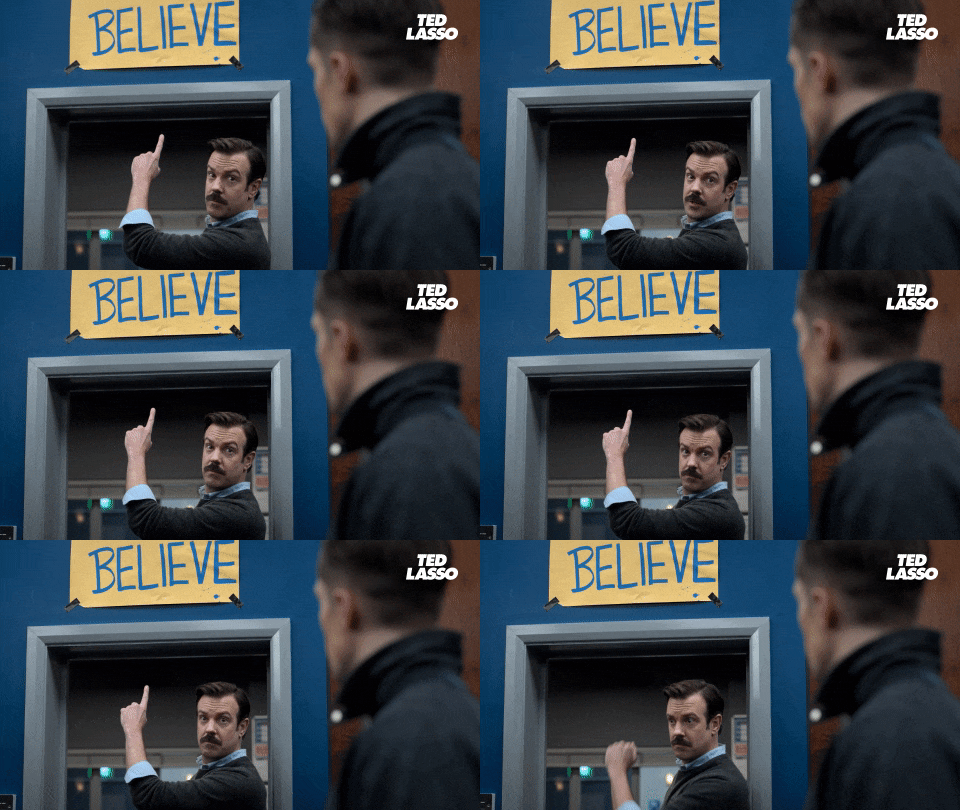
As the newest leader, the CPO brought fresh eyes—and surfaced a few unhelpful norms that had crept in over time: lower engagement, less curiosity, and fewer people speaking up. We saw those behaviors as symptoms of broader company patterns, not individual failings. And we were committed to changing them.
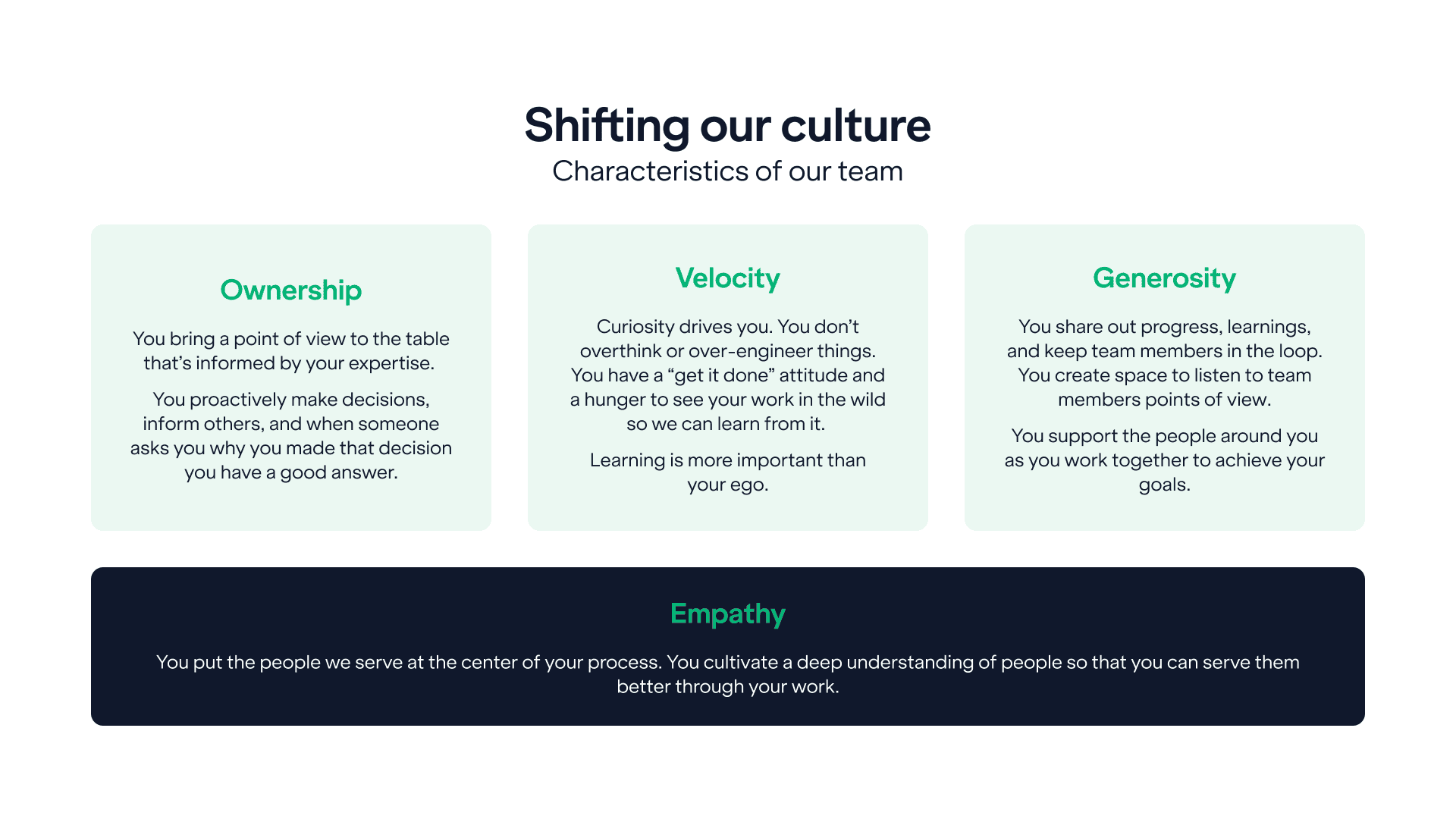
To make the shift concrete, we introduced four team characteristics to guide how we think, work, and show up.
What about that simplification work?
Rather shelving the work, we decided to bring the simplification initiatives to the PDE team in NYC to see if it could help them get excited.
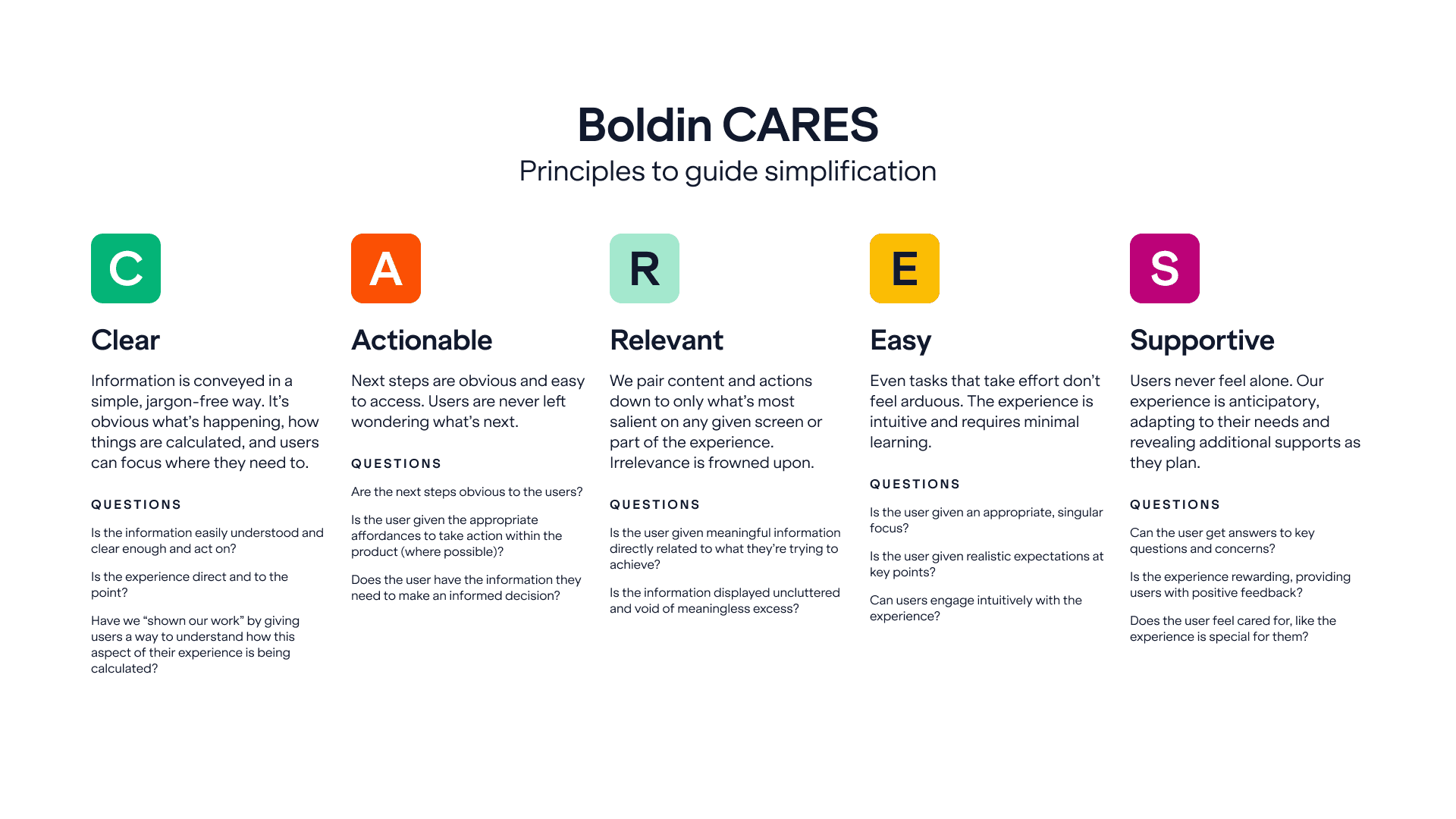
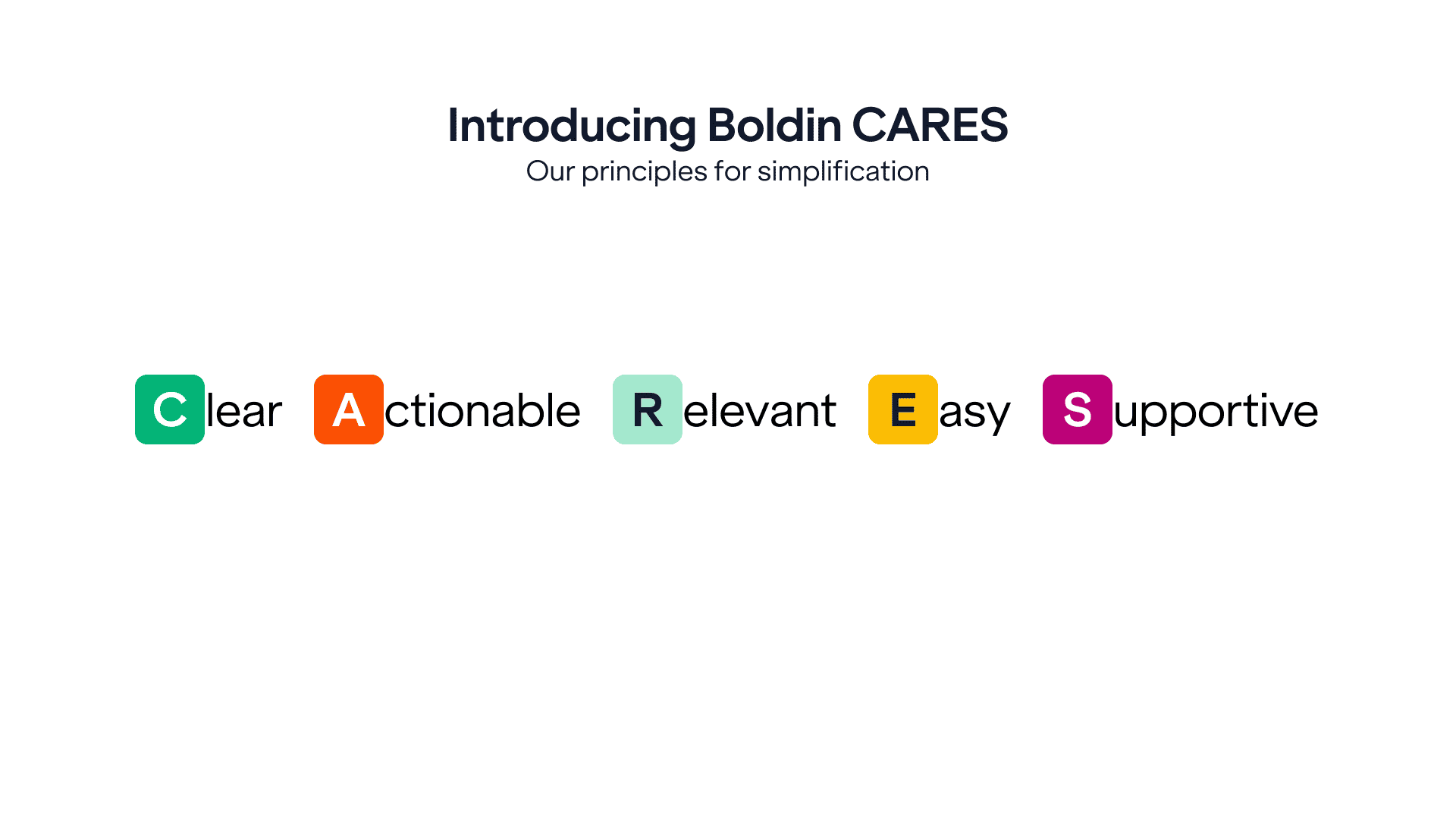
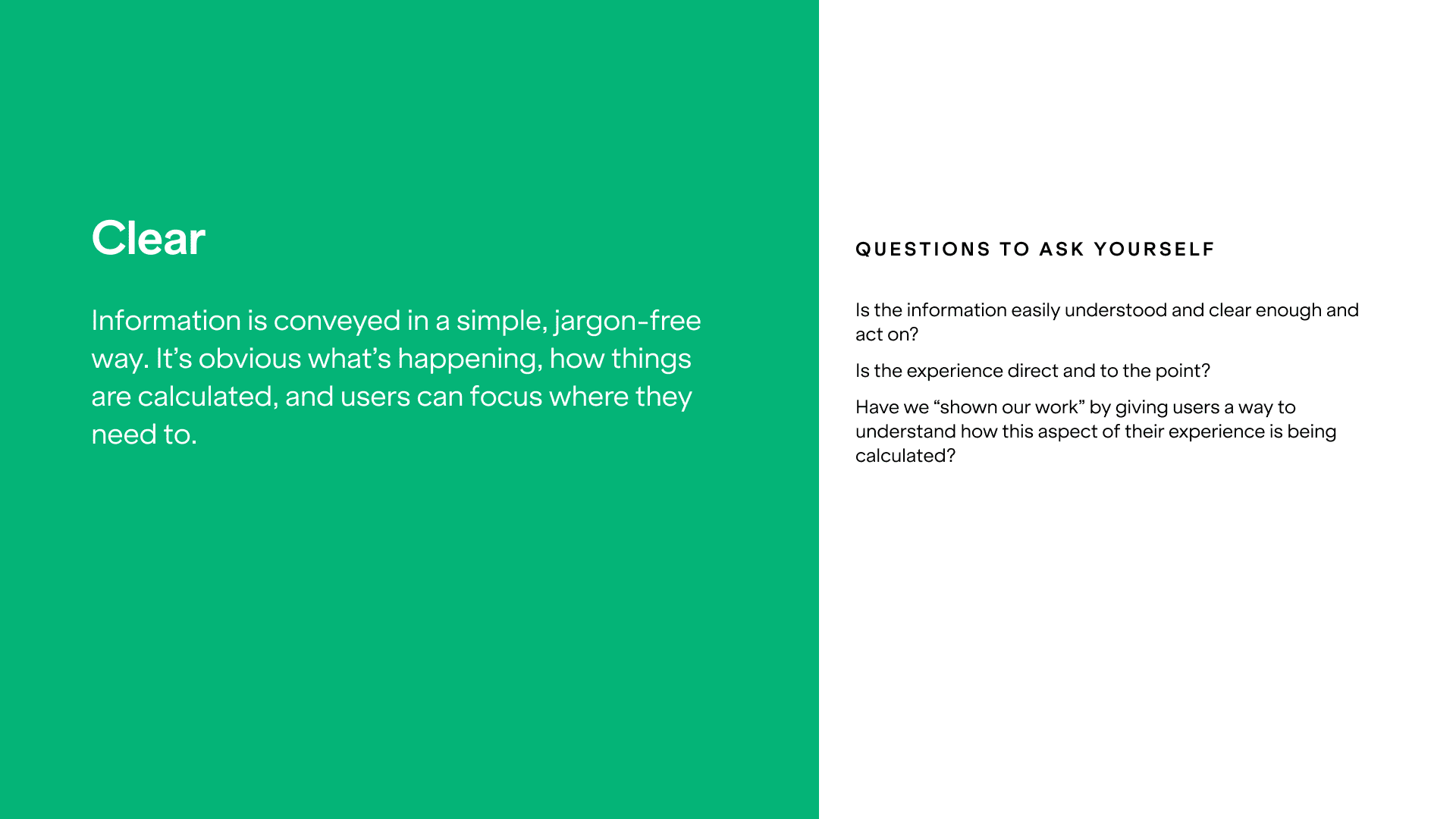
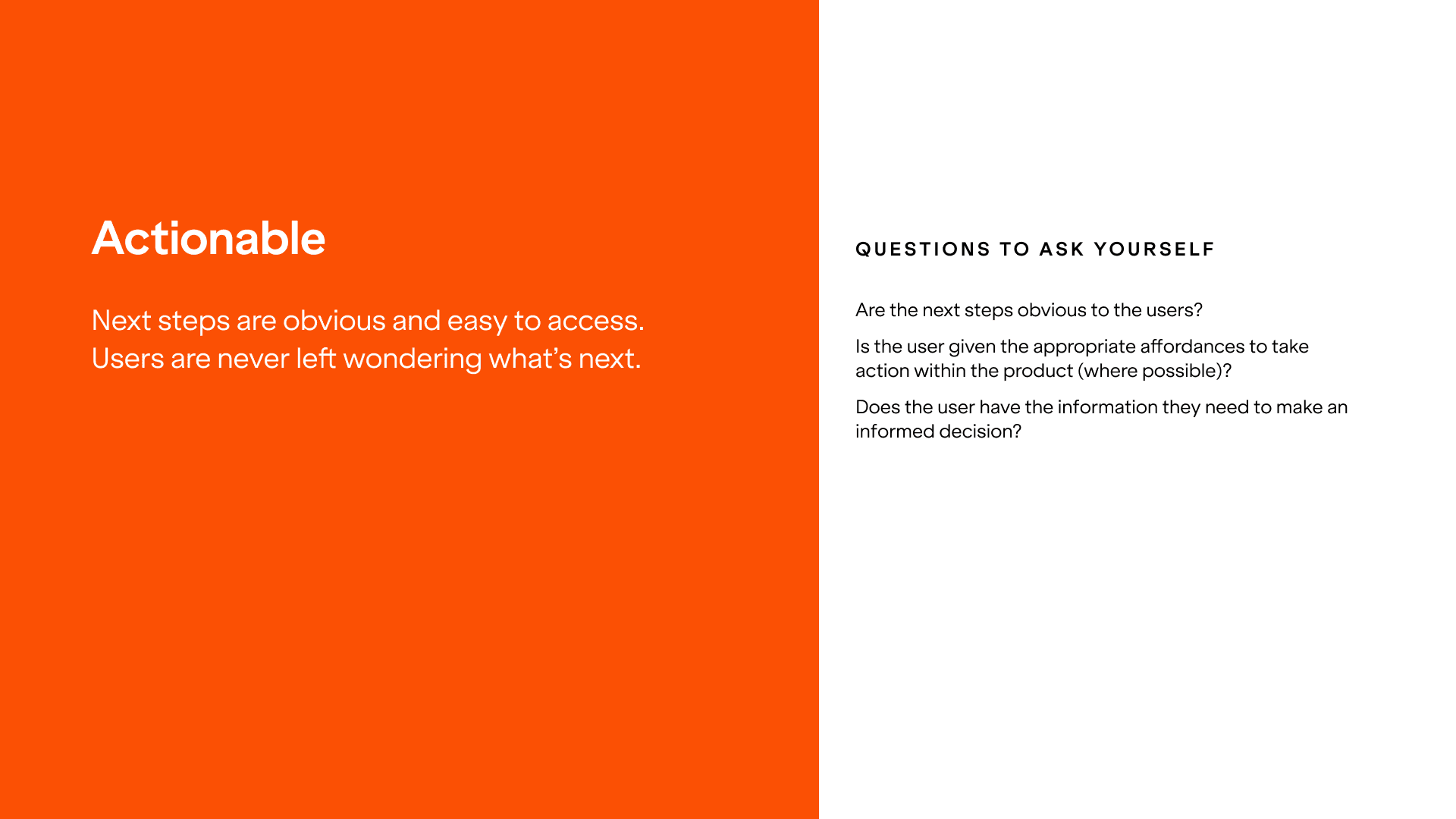
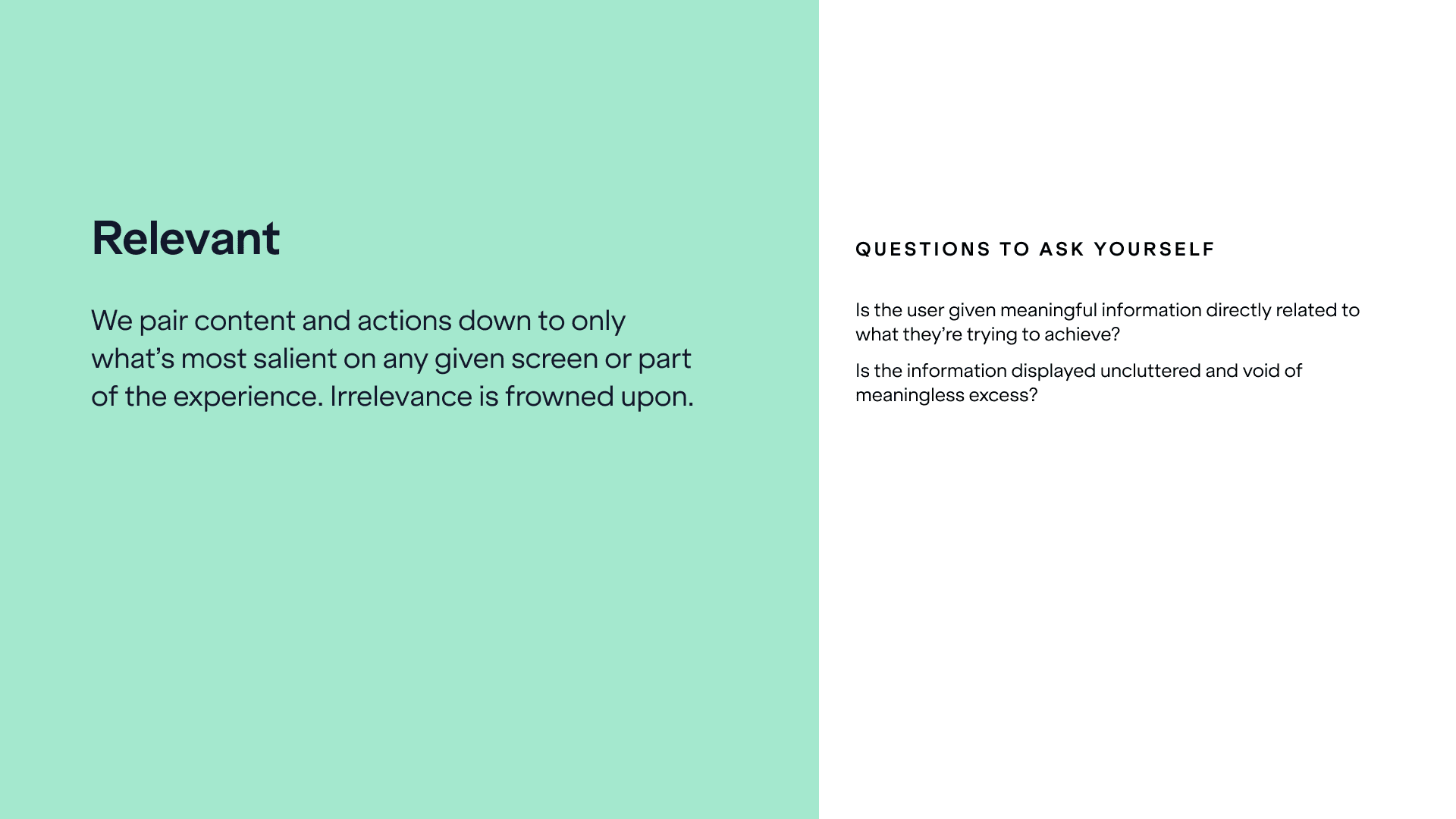
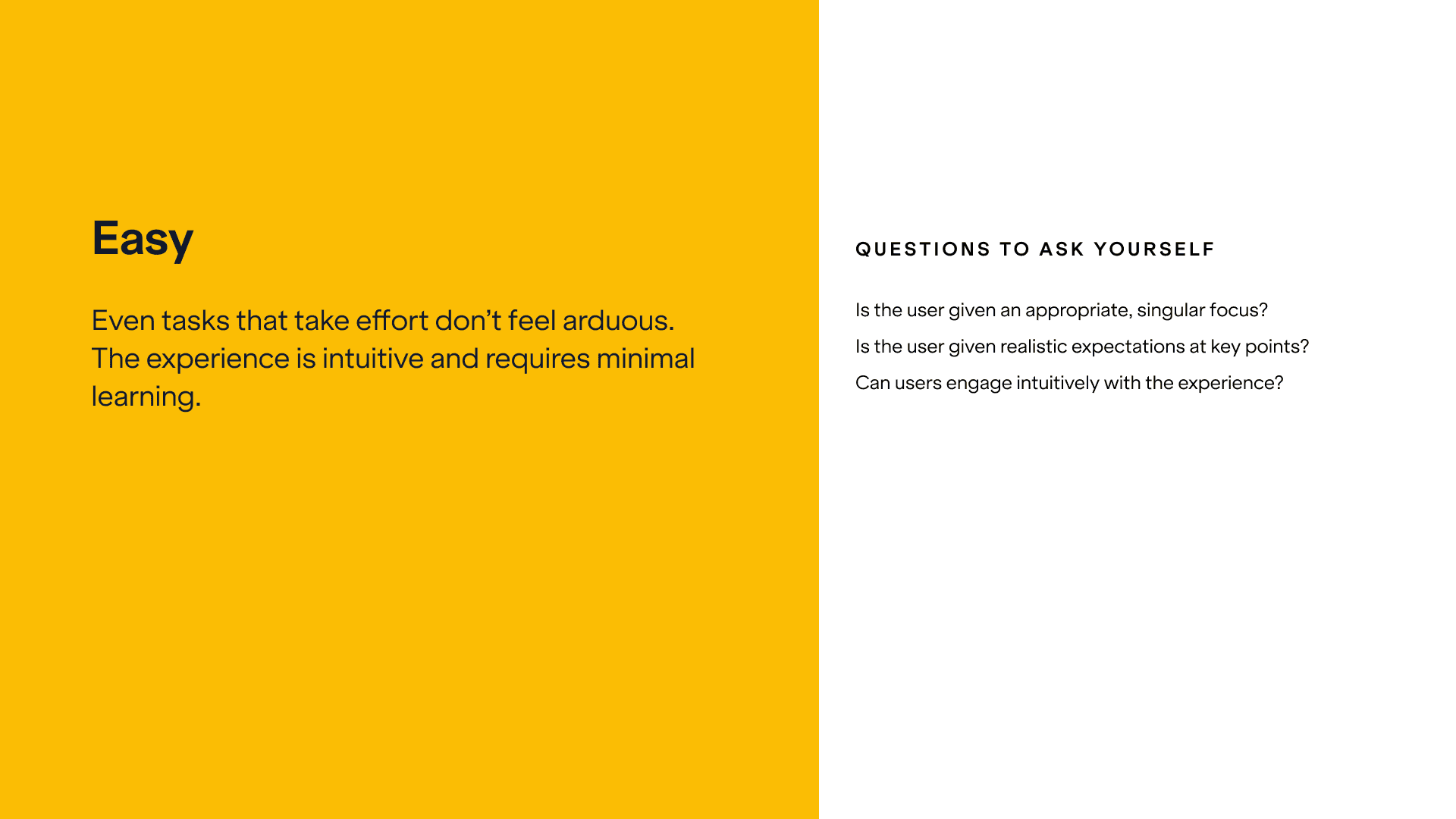
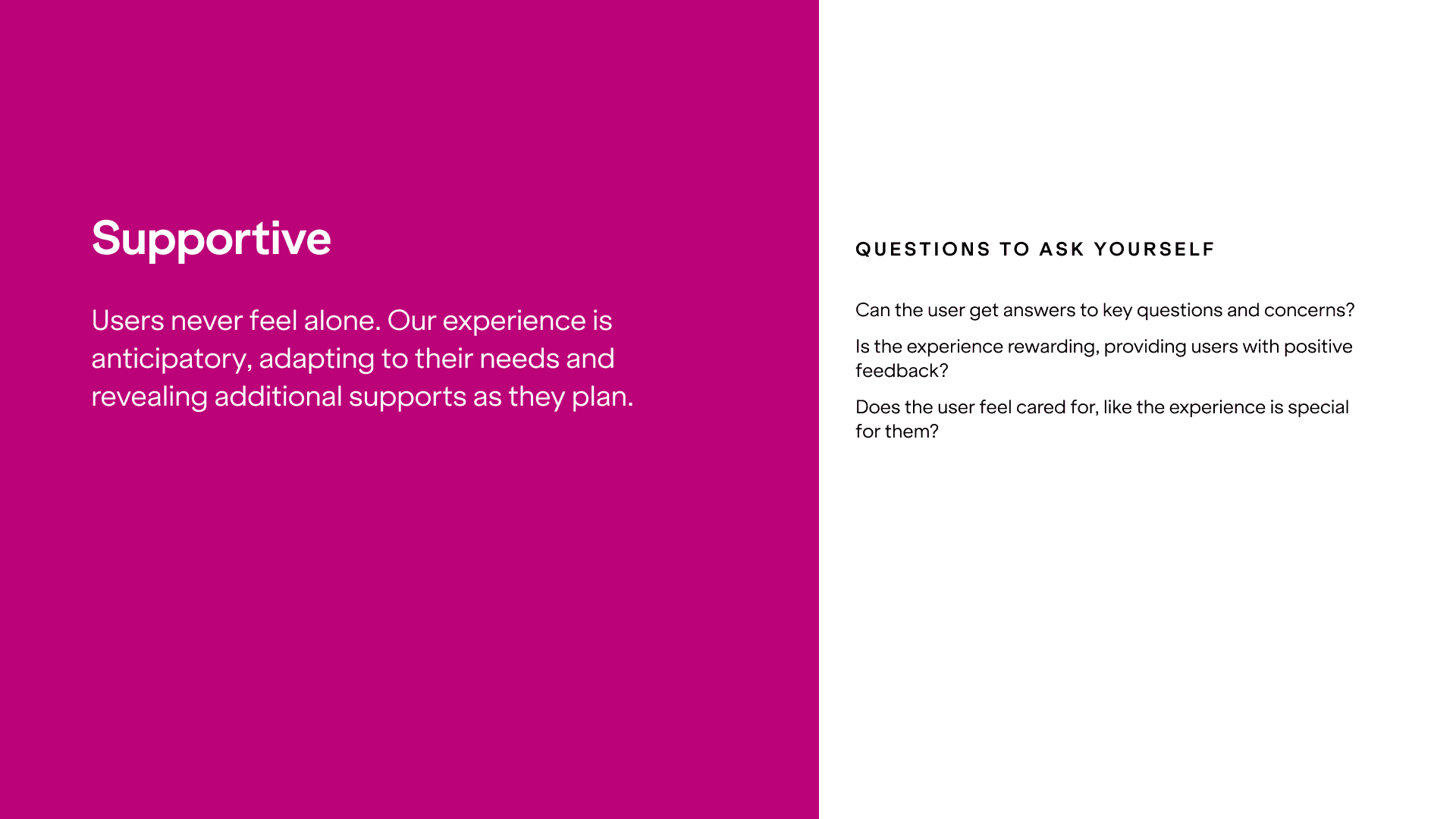
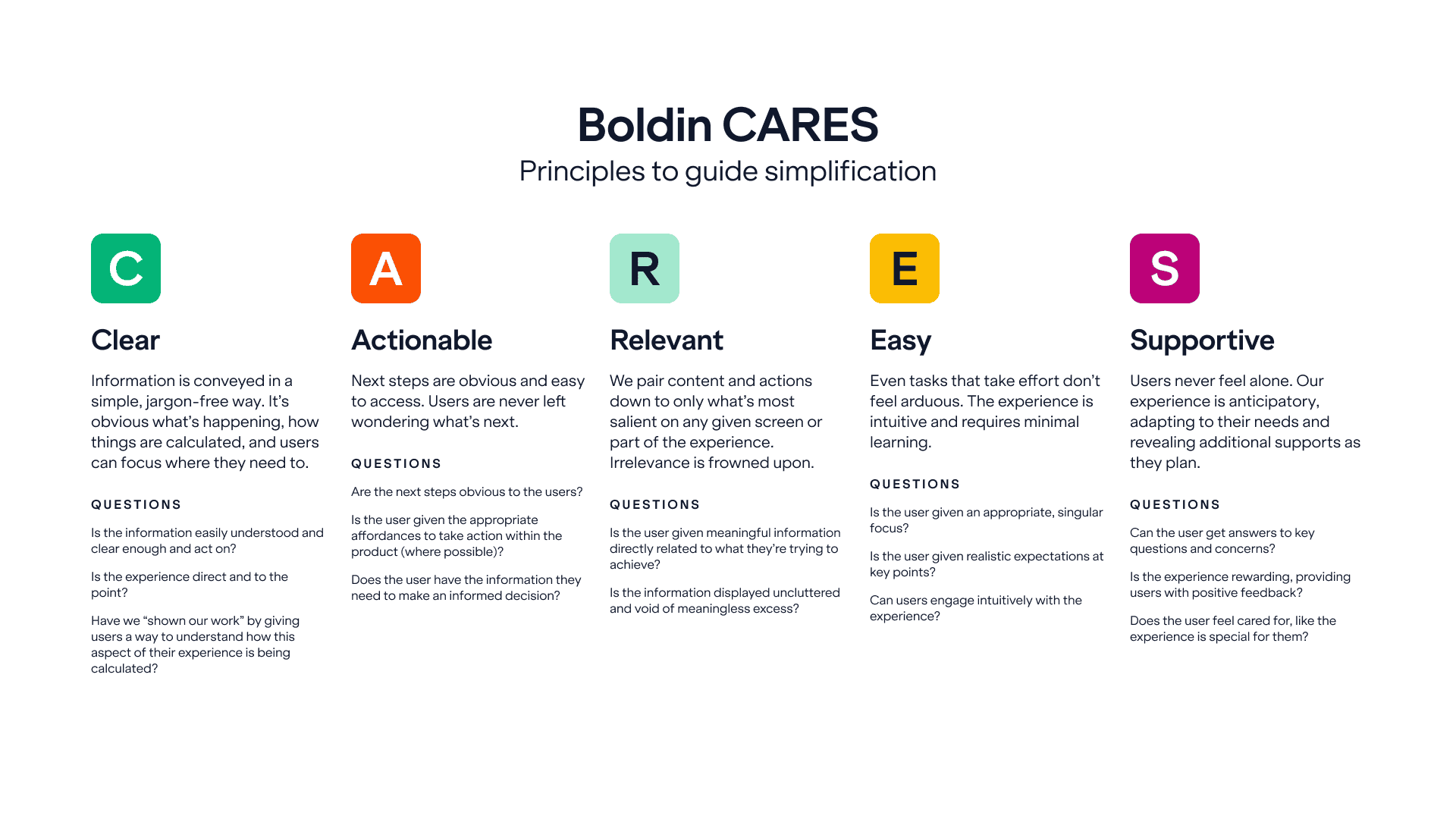
I wanted it to feel like fuel for better thinking, not a top-down mandate. I created the Boldin CARES principles to complement the simplification effort—so teams could make cleaner tradeoffs and improve the product with more consistency over time.
The onsite
In early March, PDE converged in NYC for a two-day onsite.
Day 1: Alignment + shared context
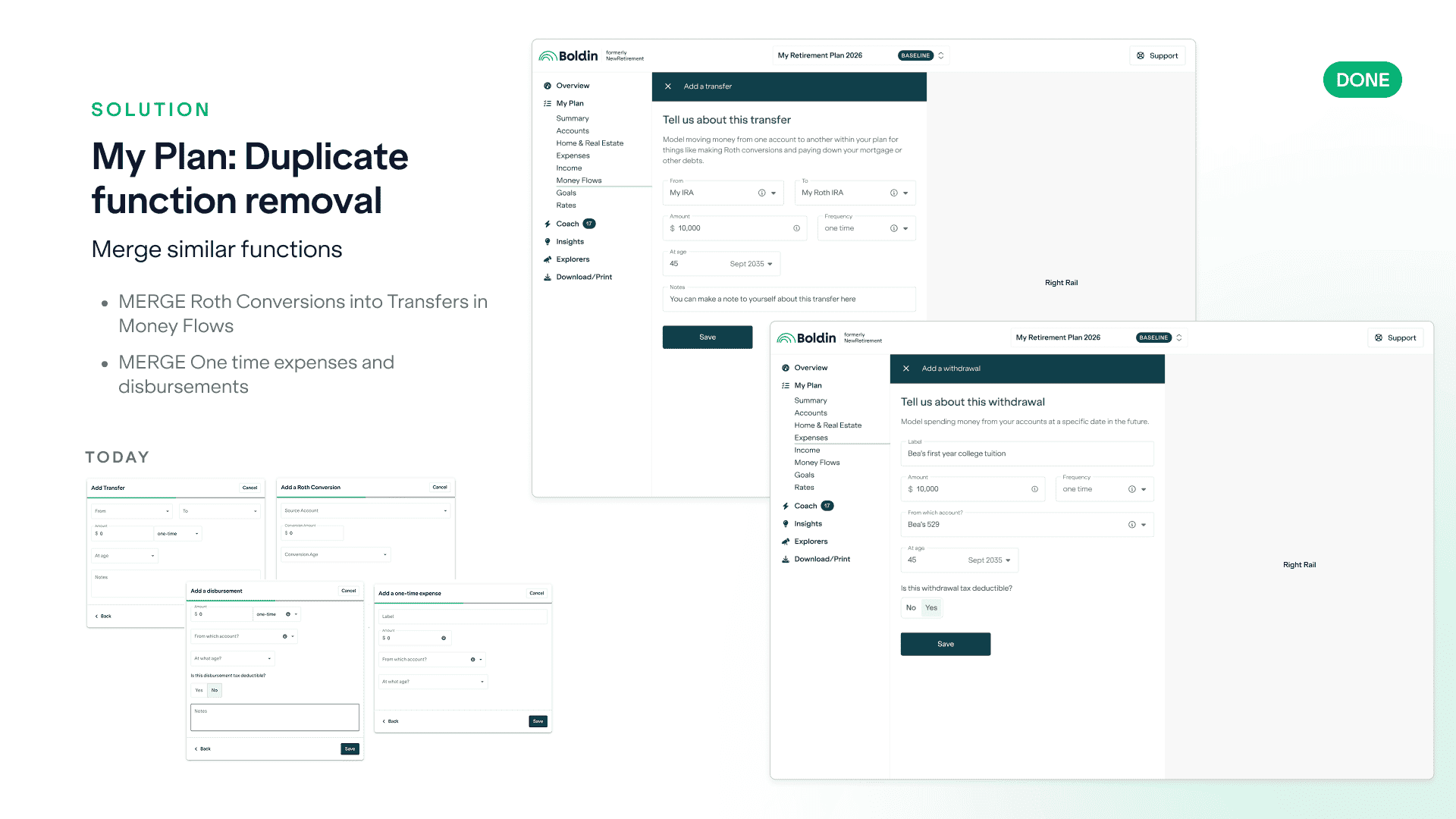
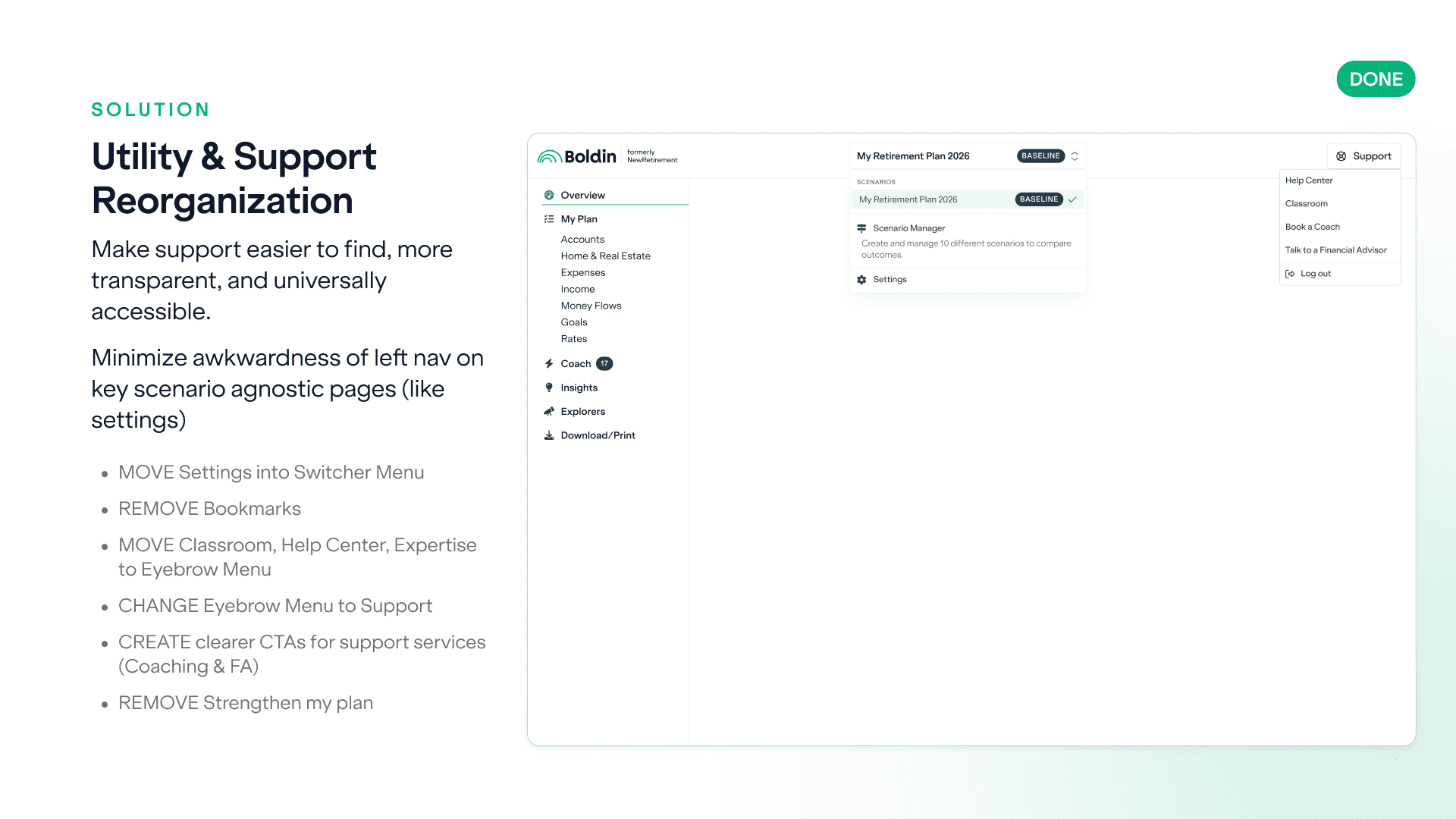
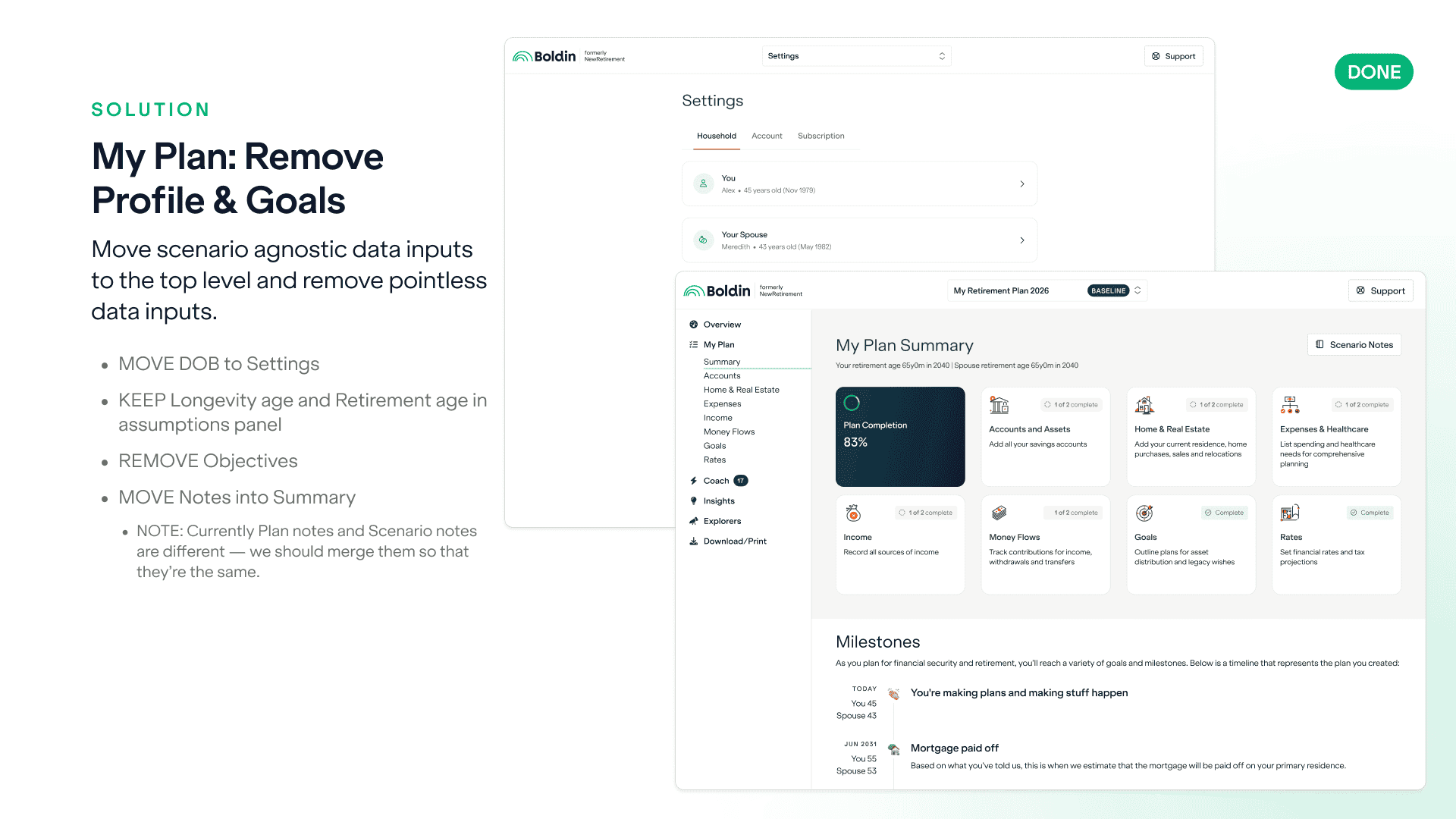
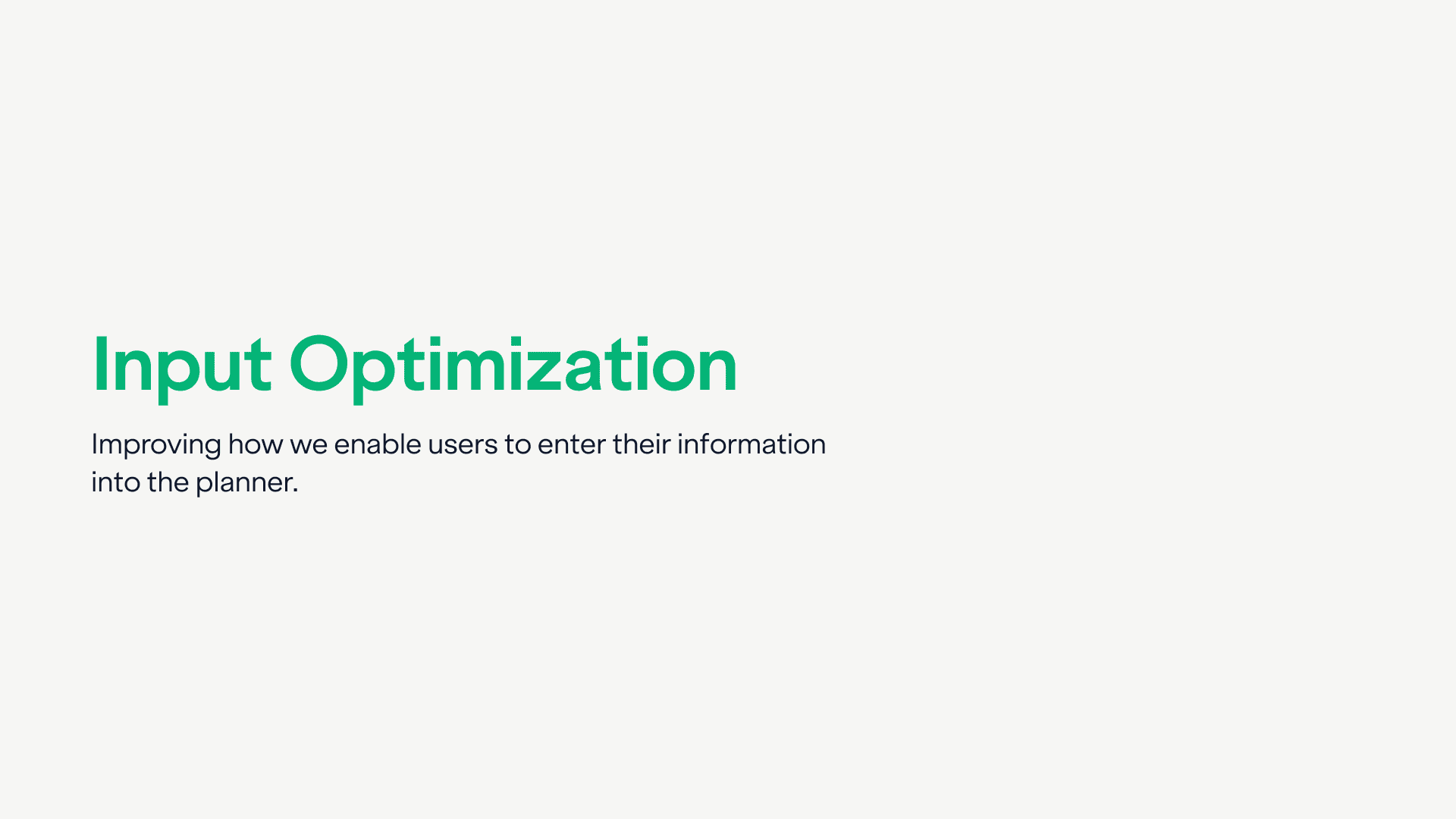
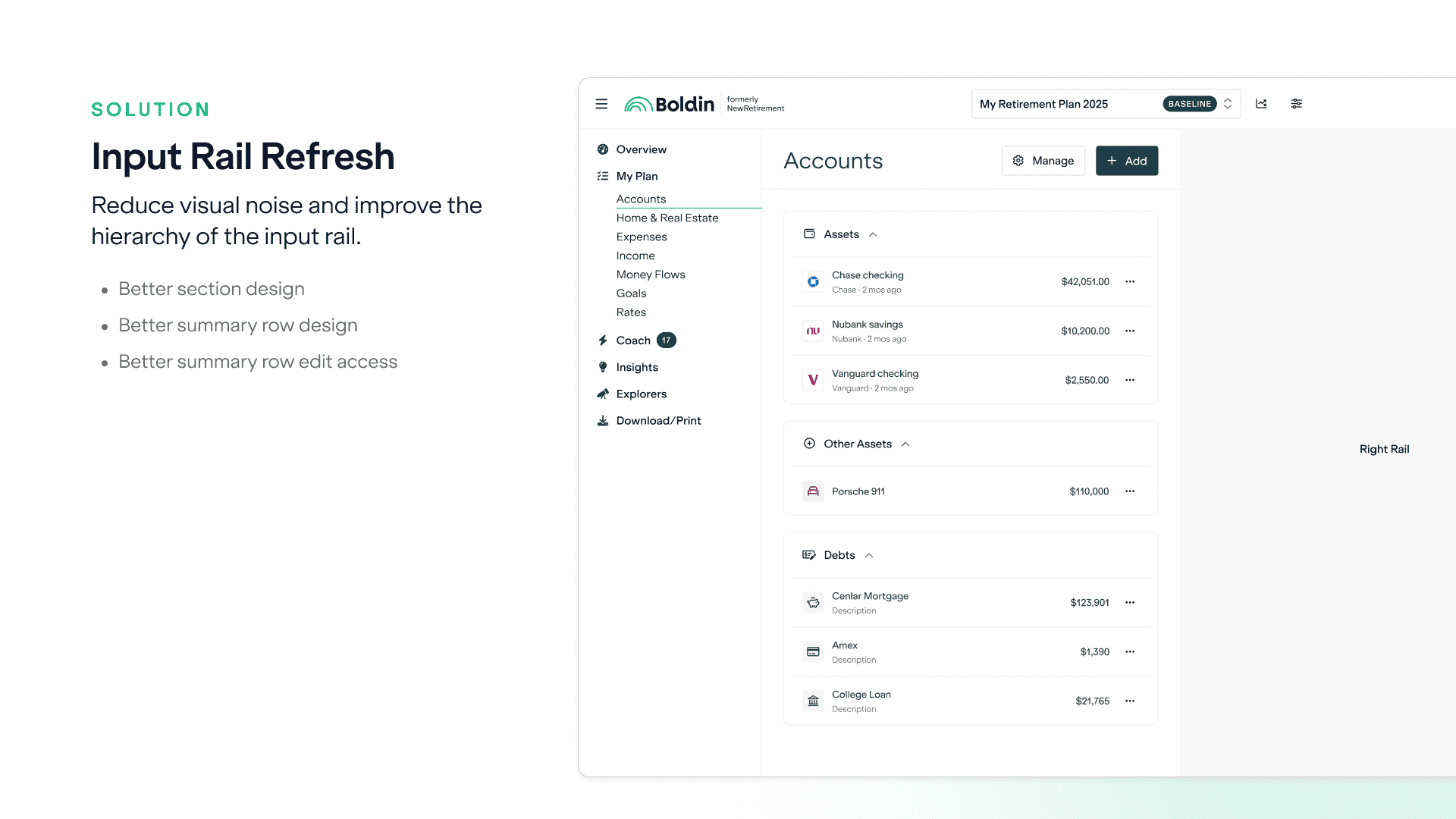
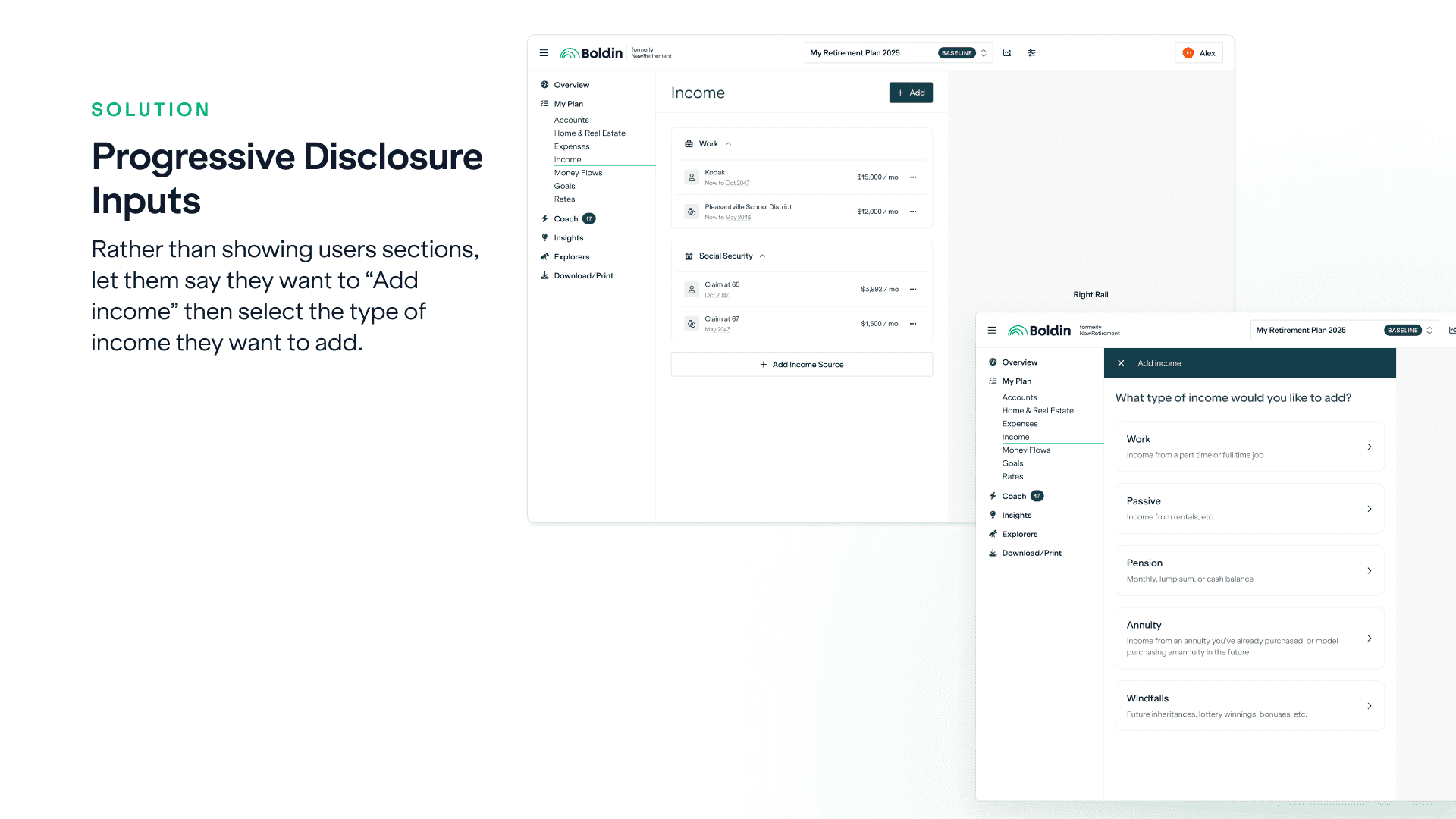
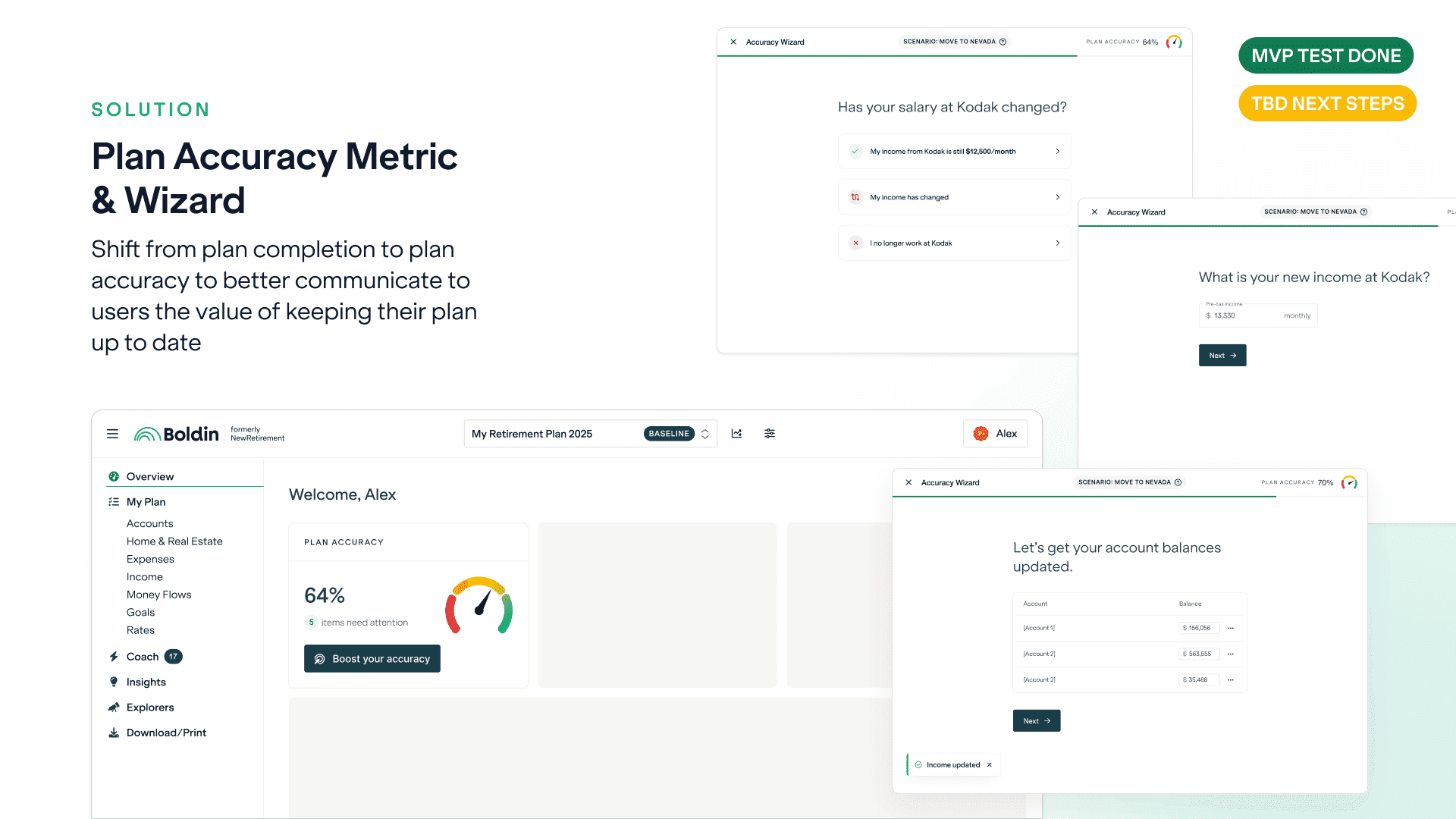
Day 1 was about rebuilding a shared foundation. The CPO walked the team through product strategy and introduced the new team structure. I shared the simplification work and the Boldin CARES principles.
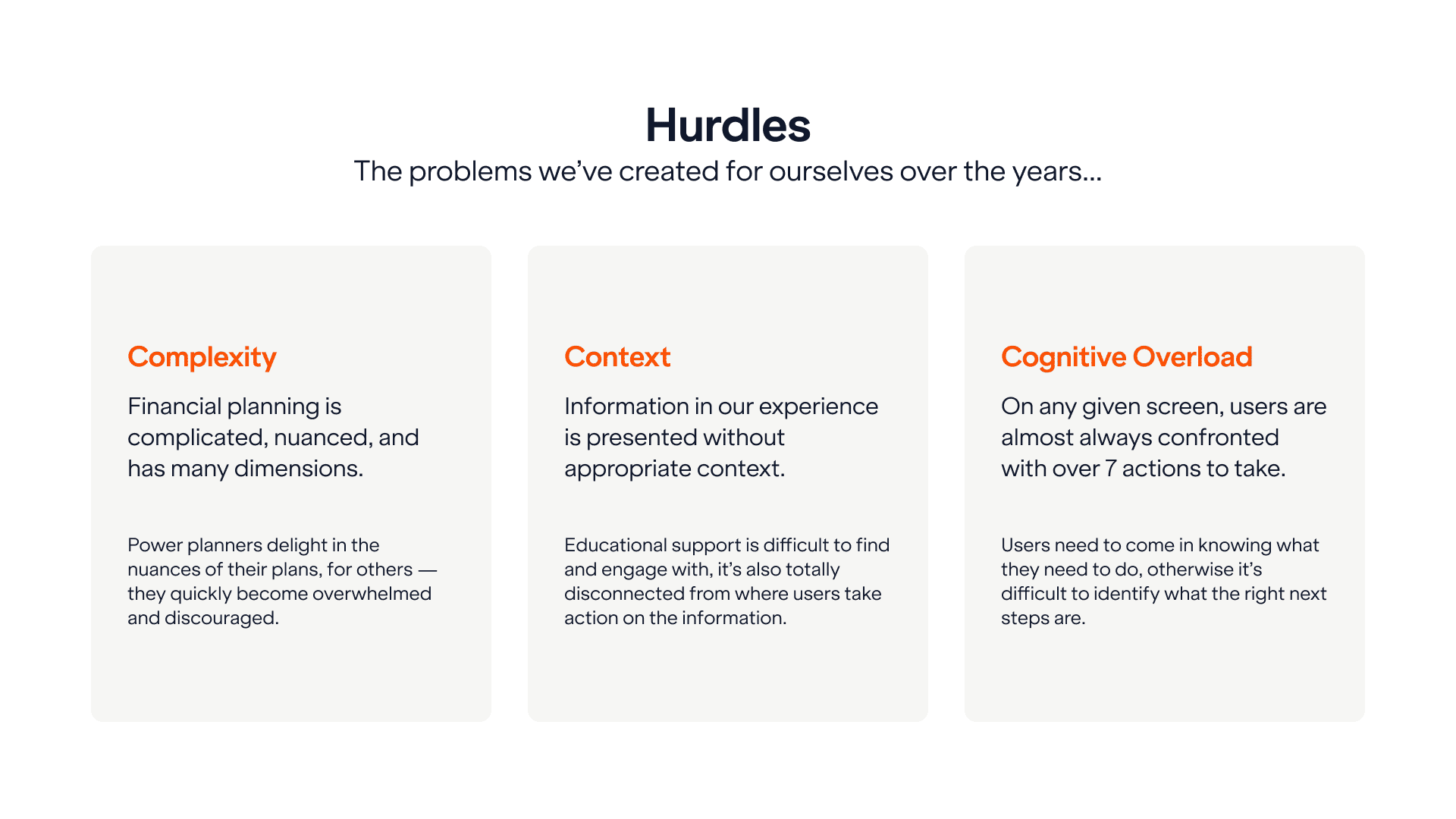
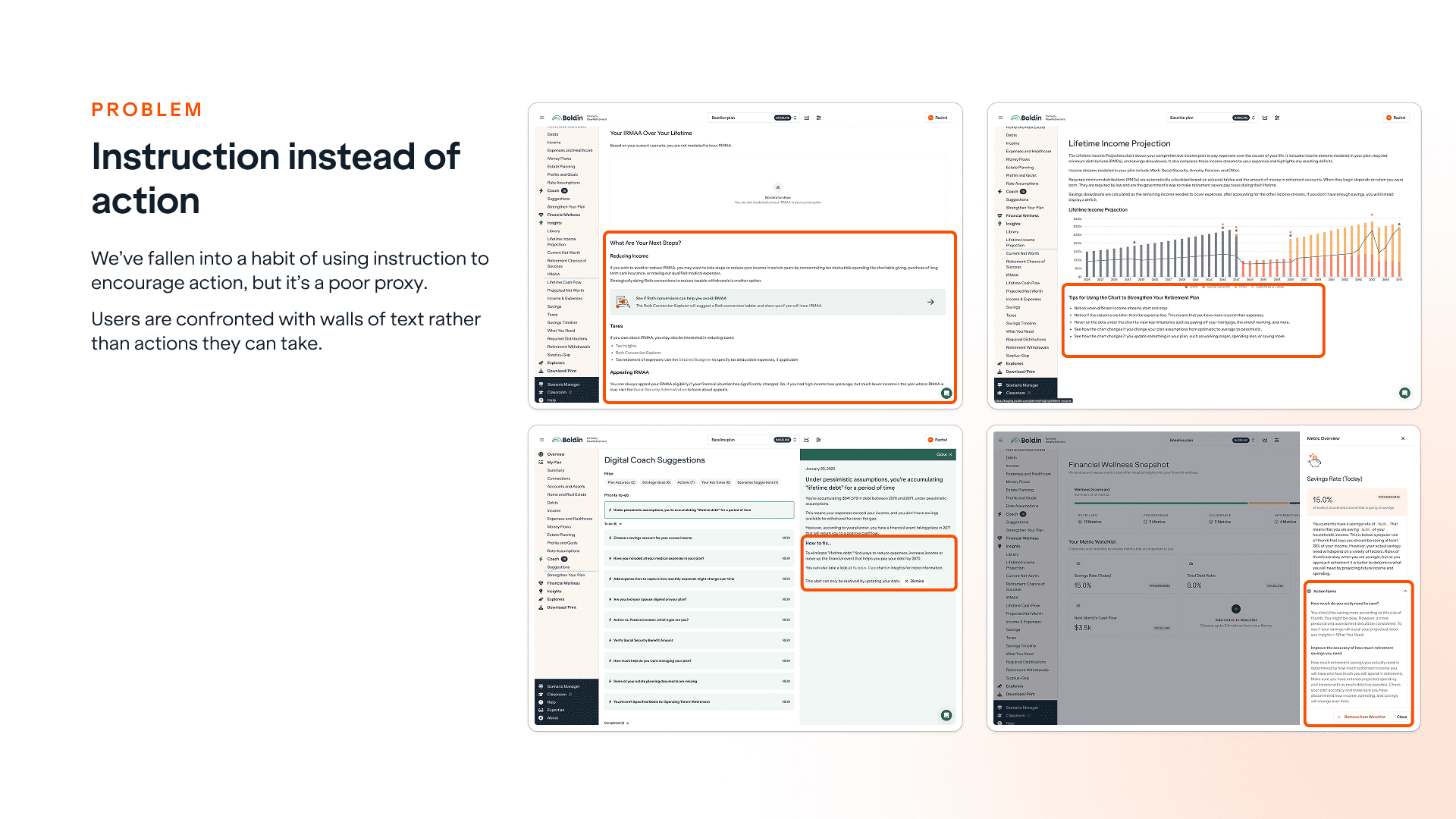
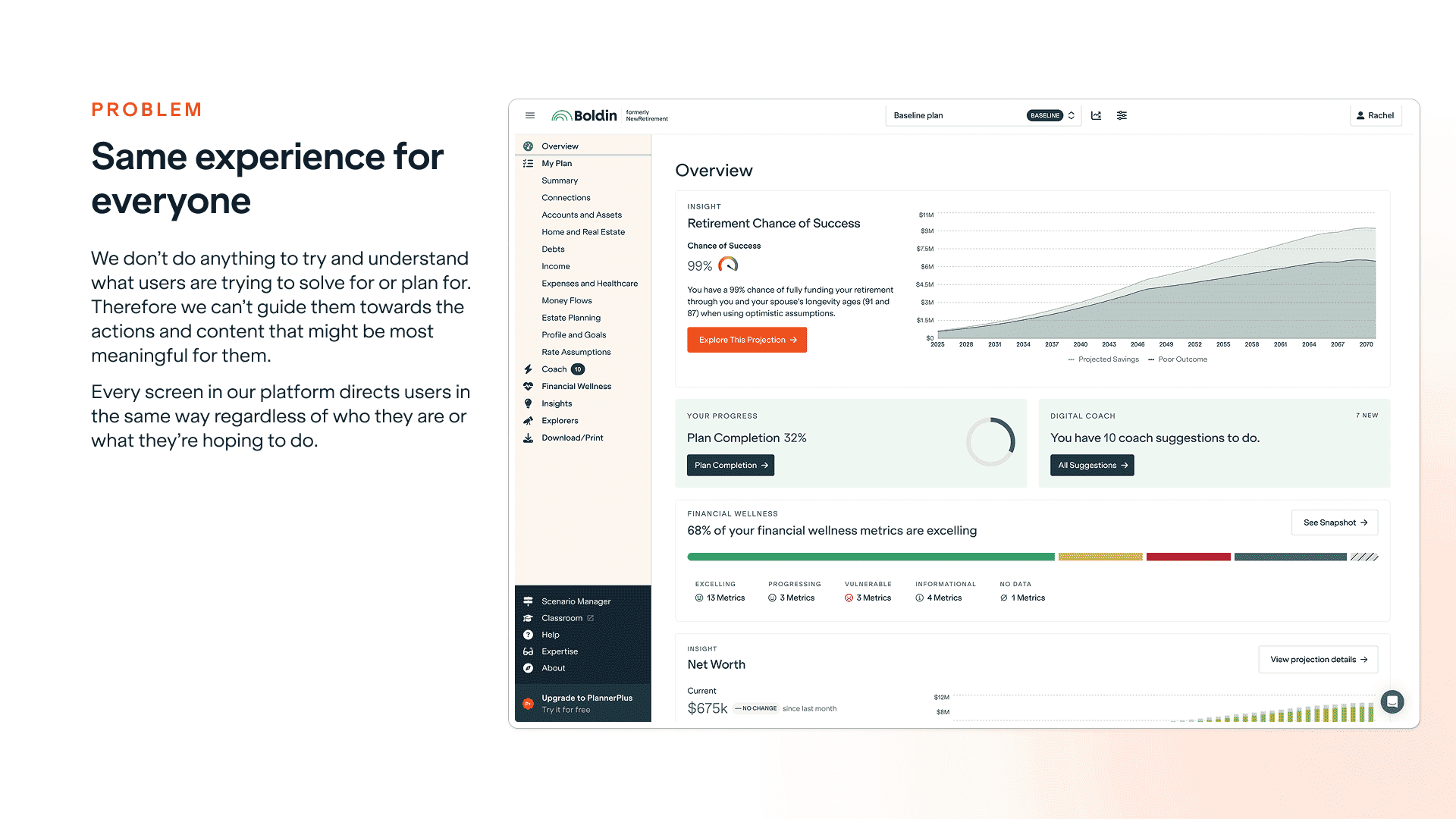
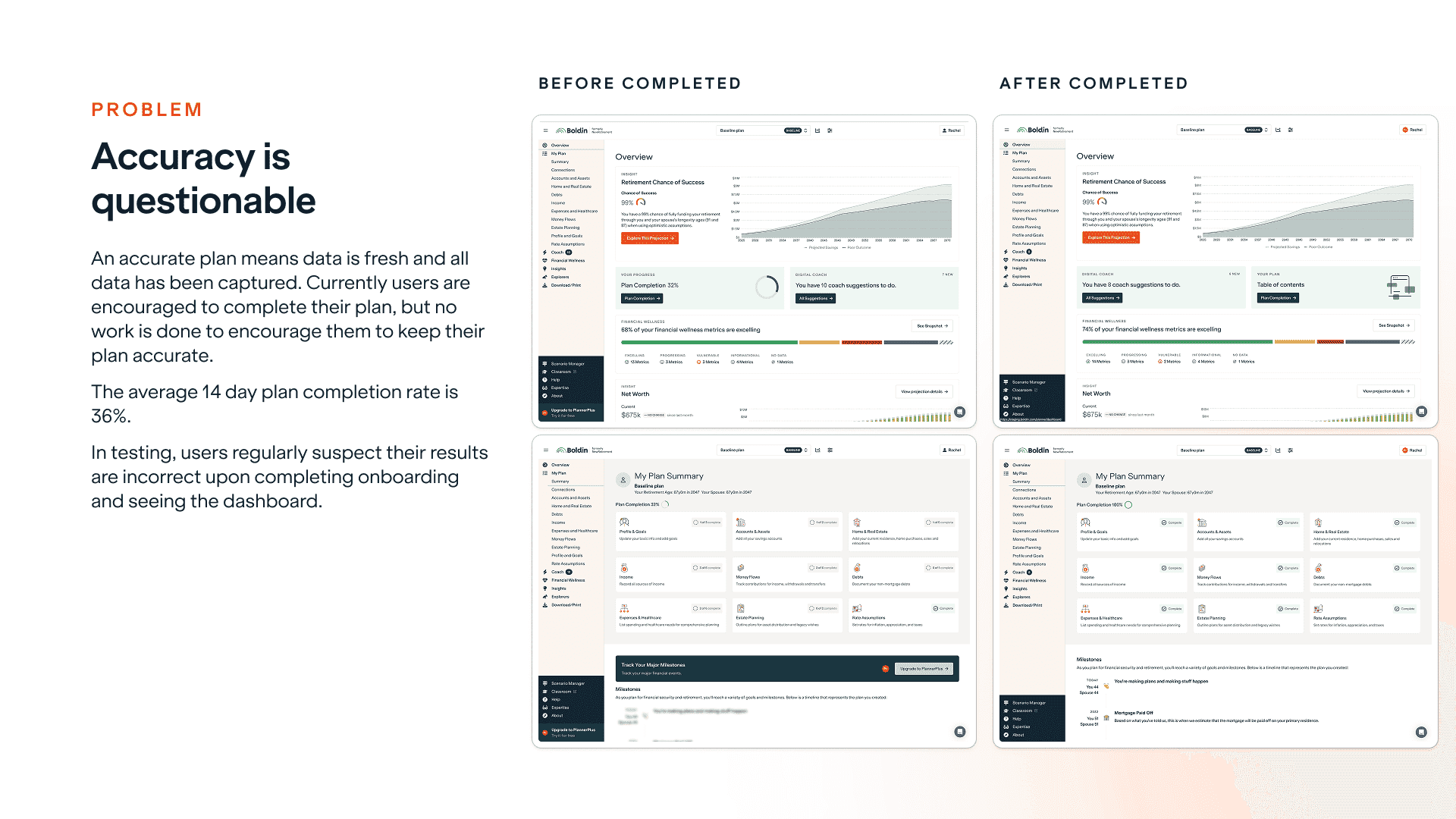
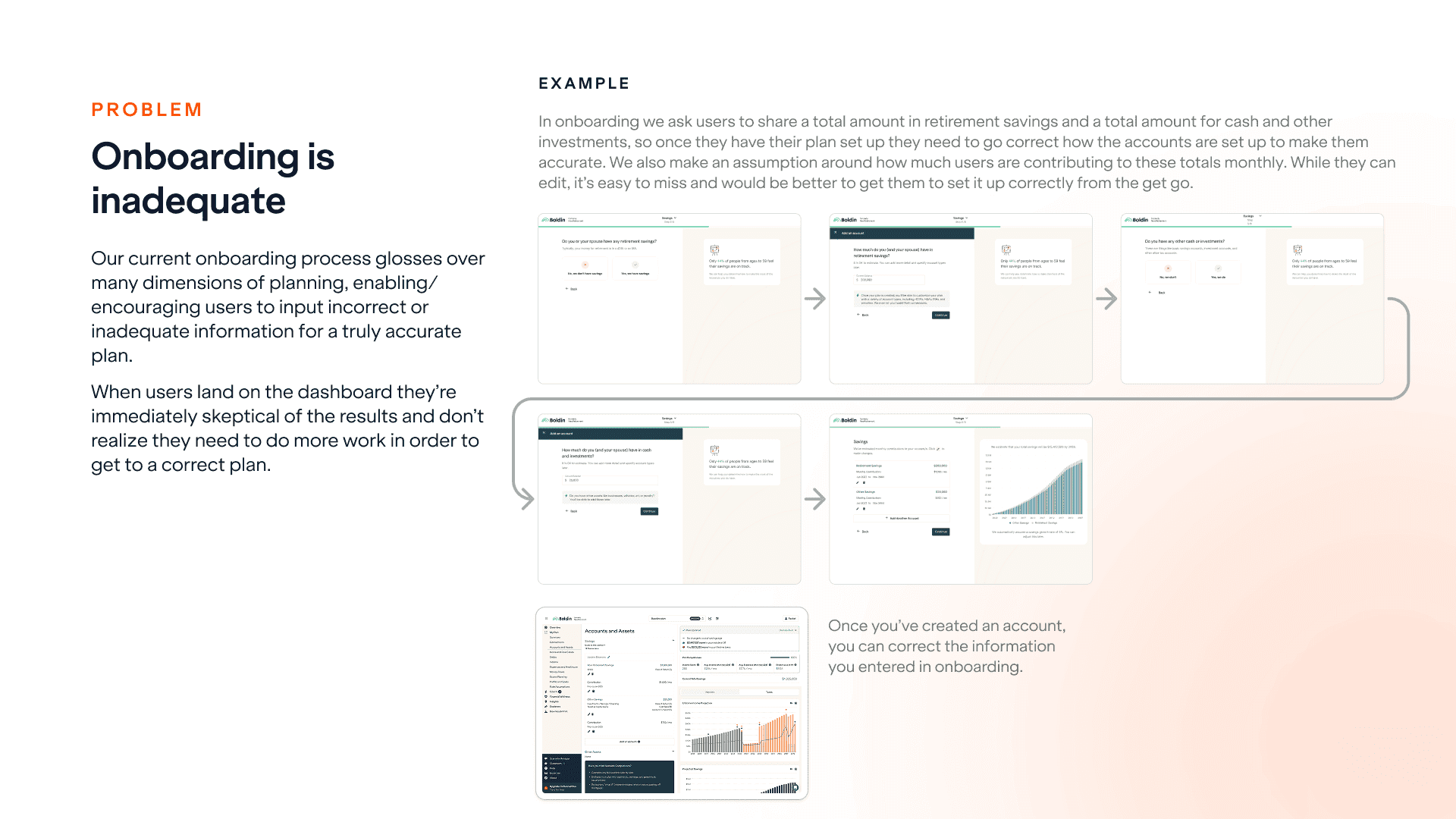
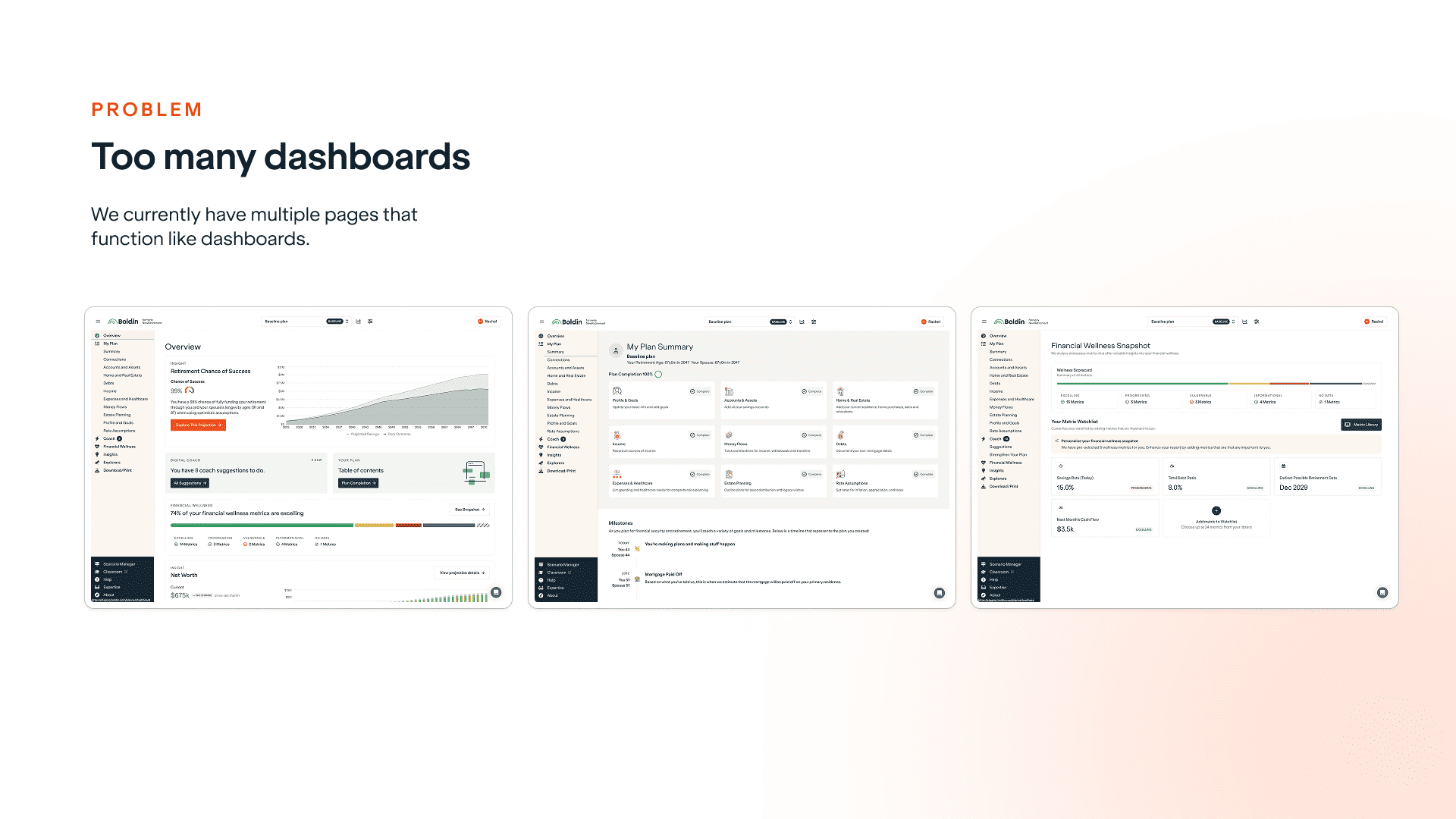
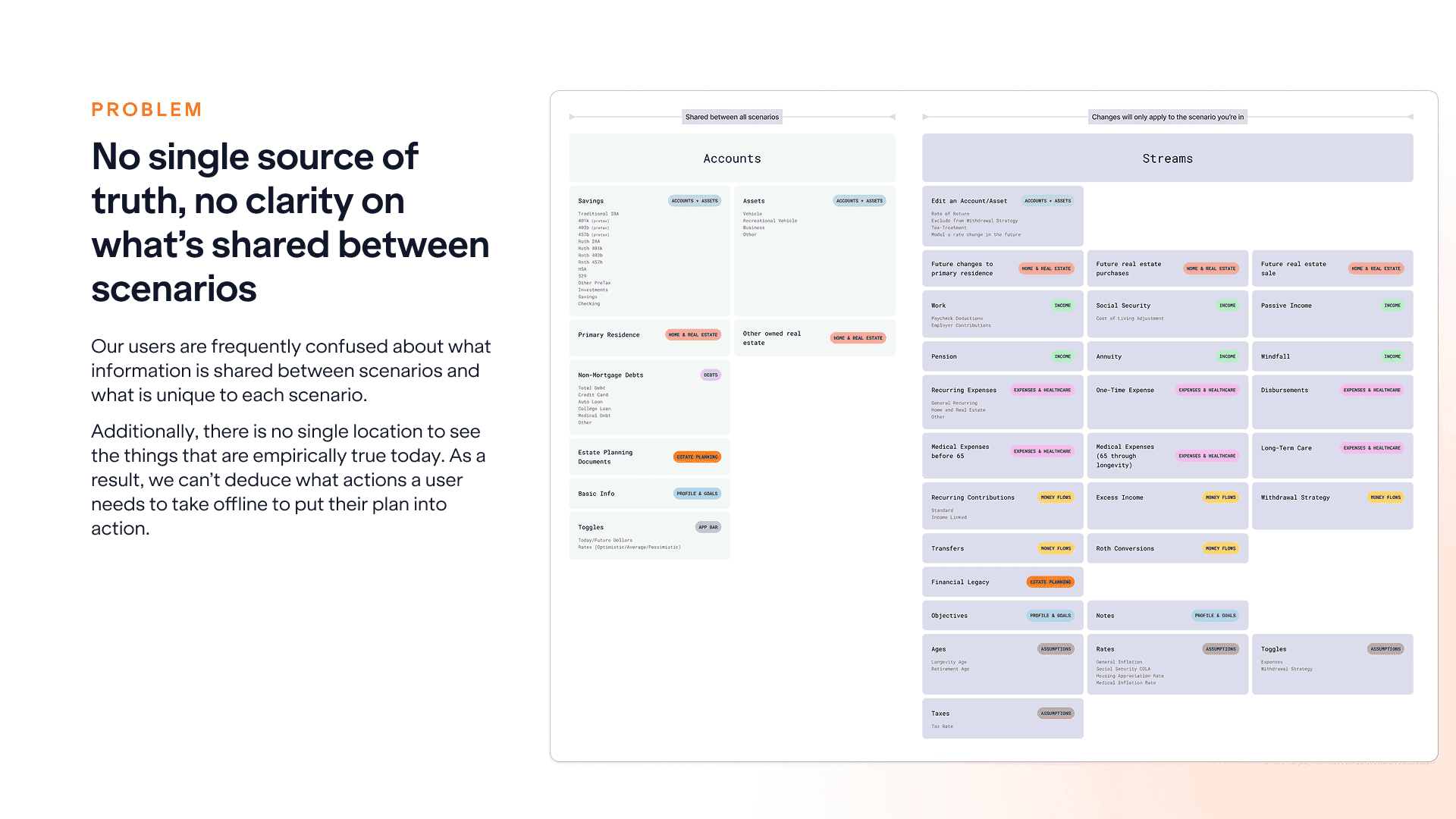
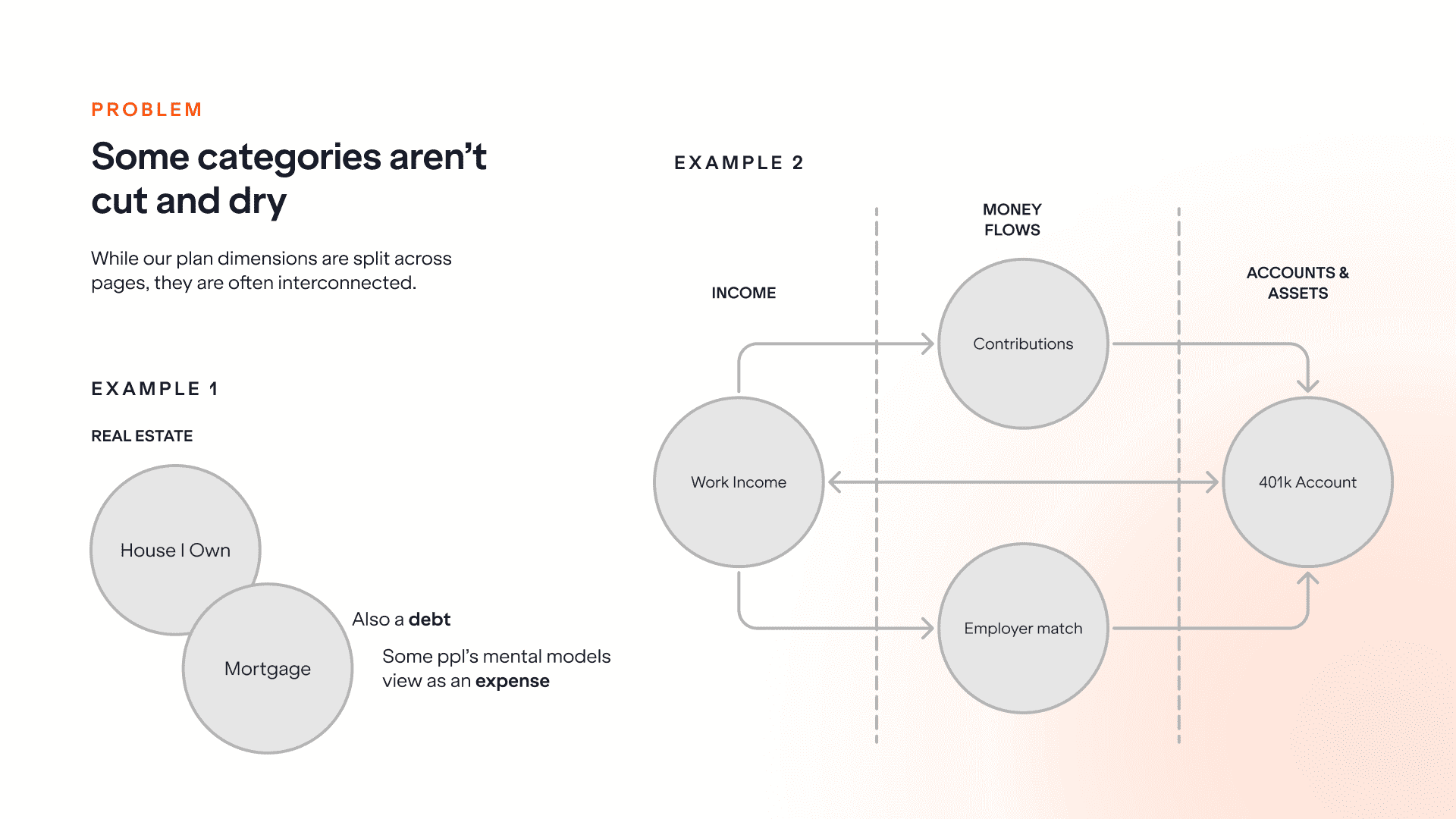
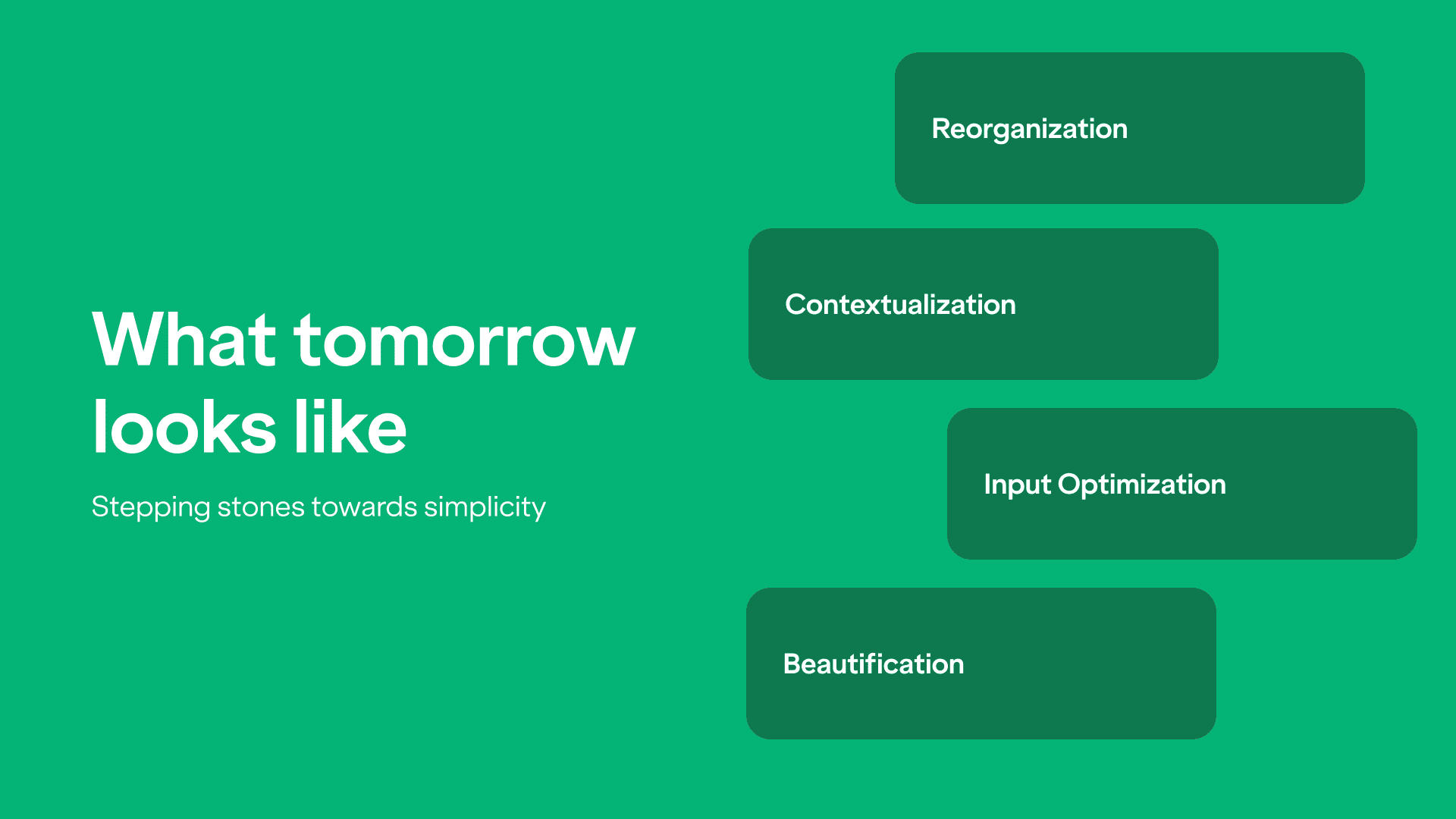
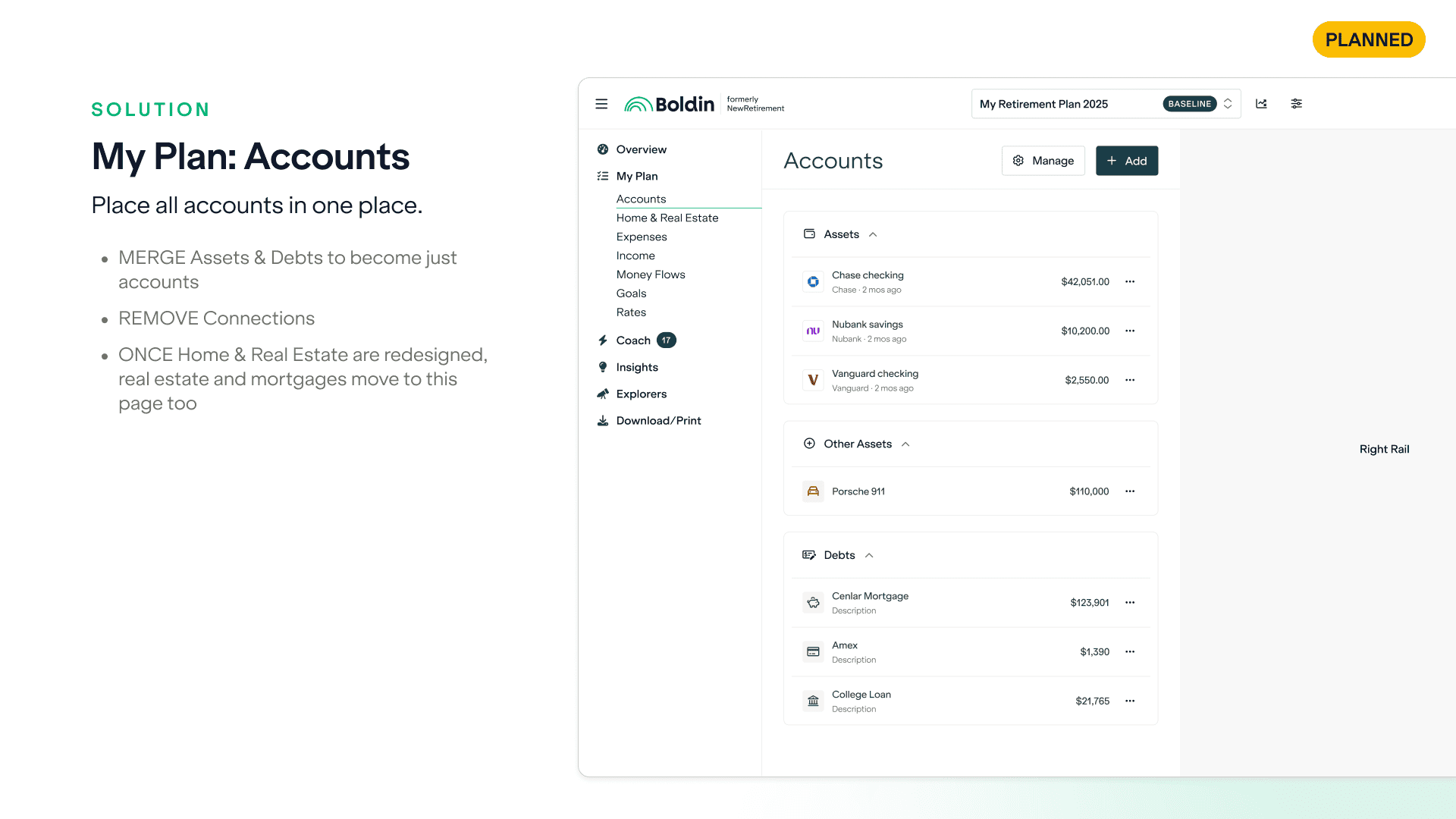
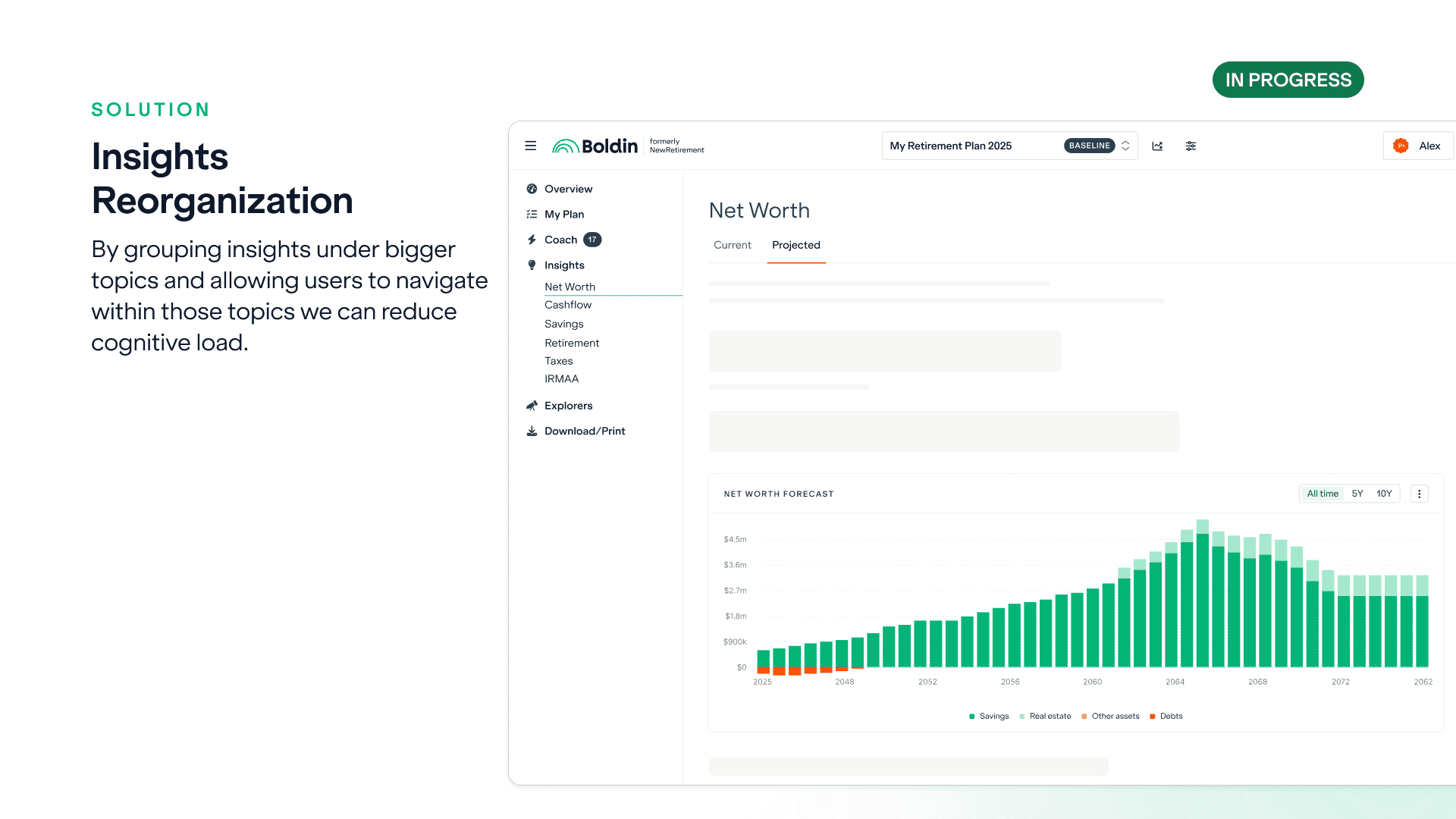
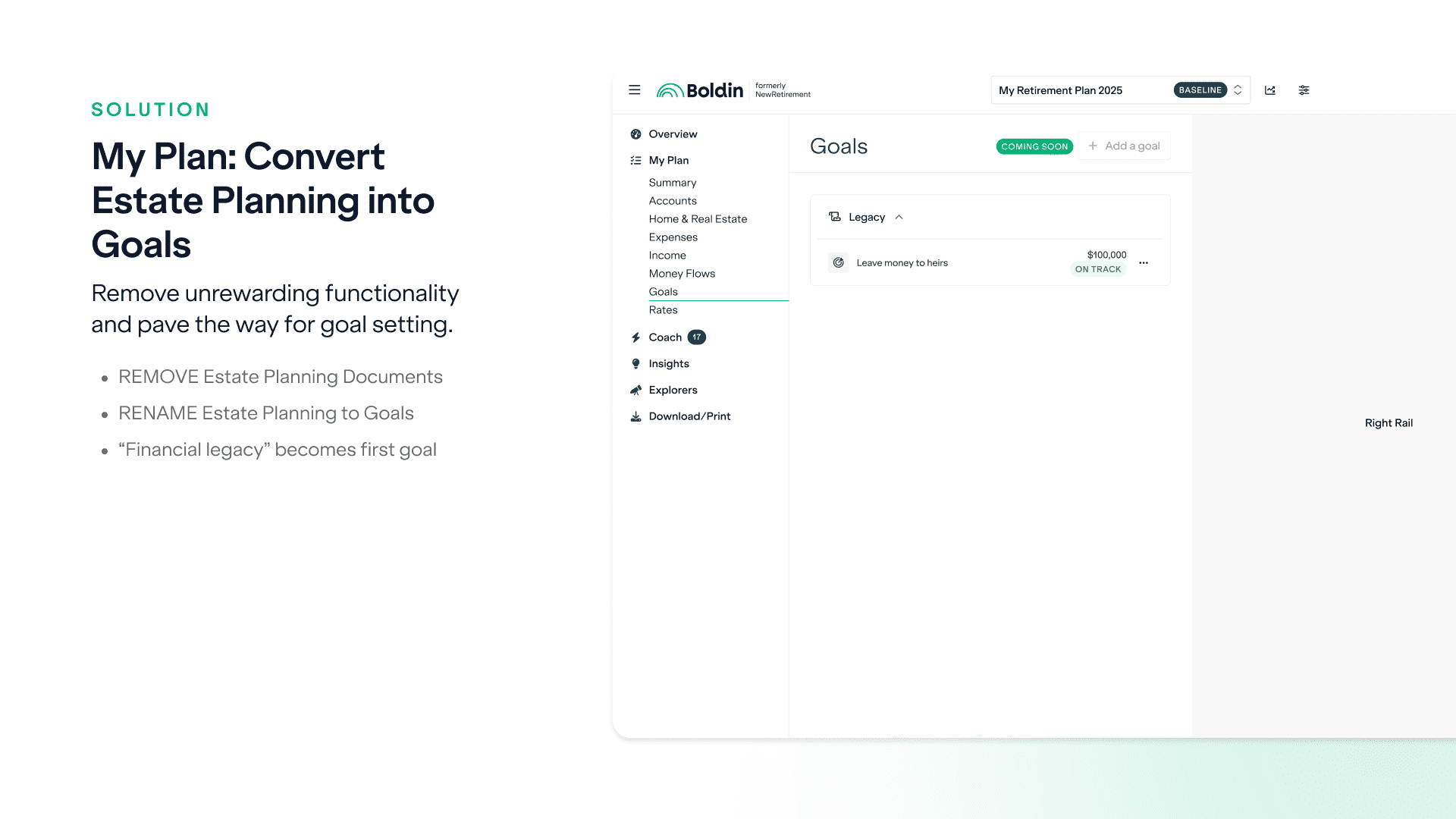
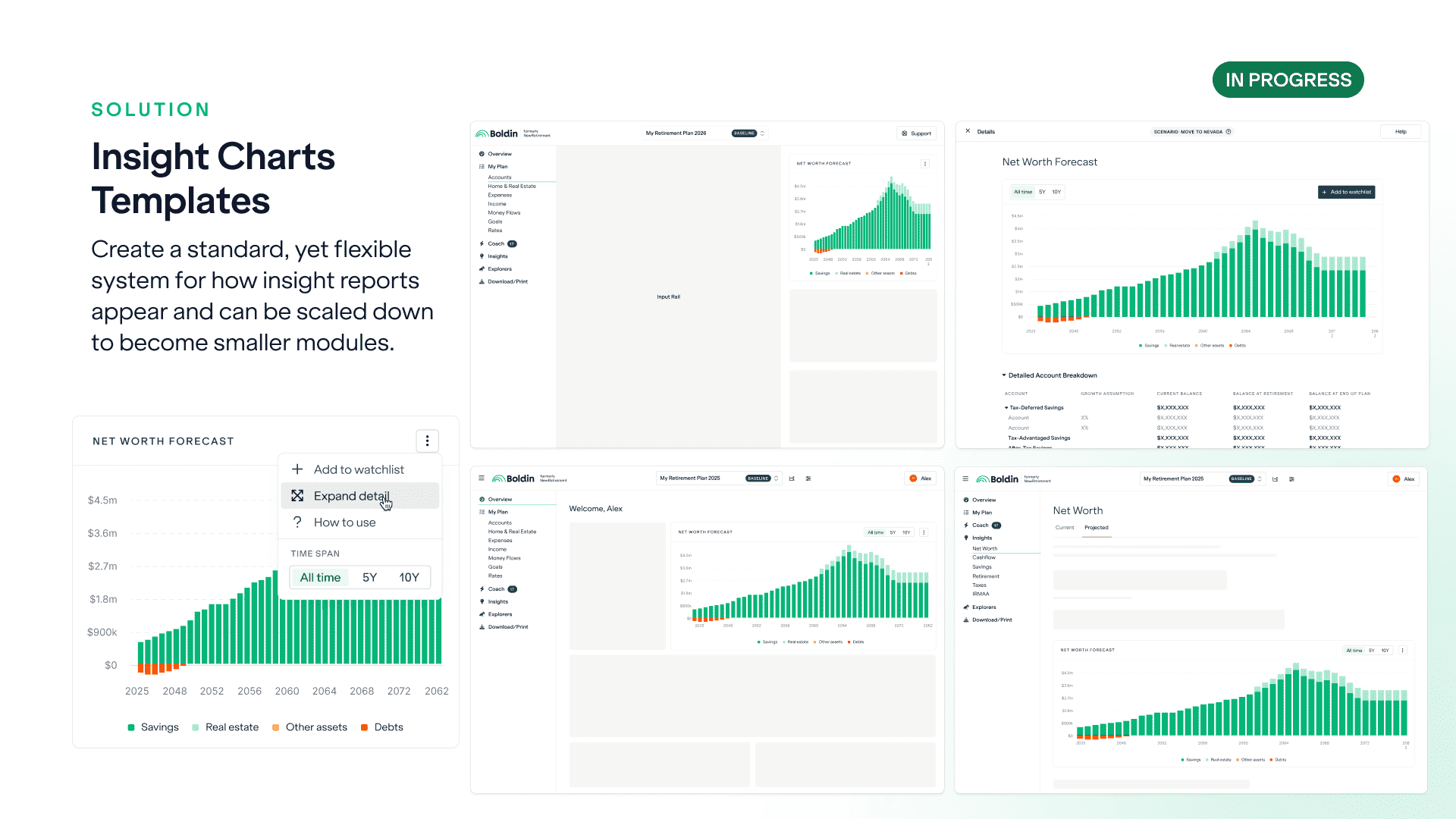
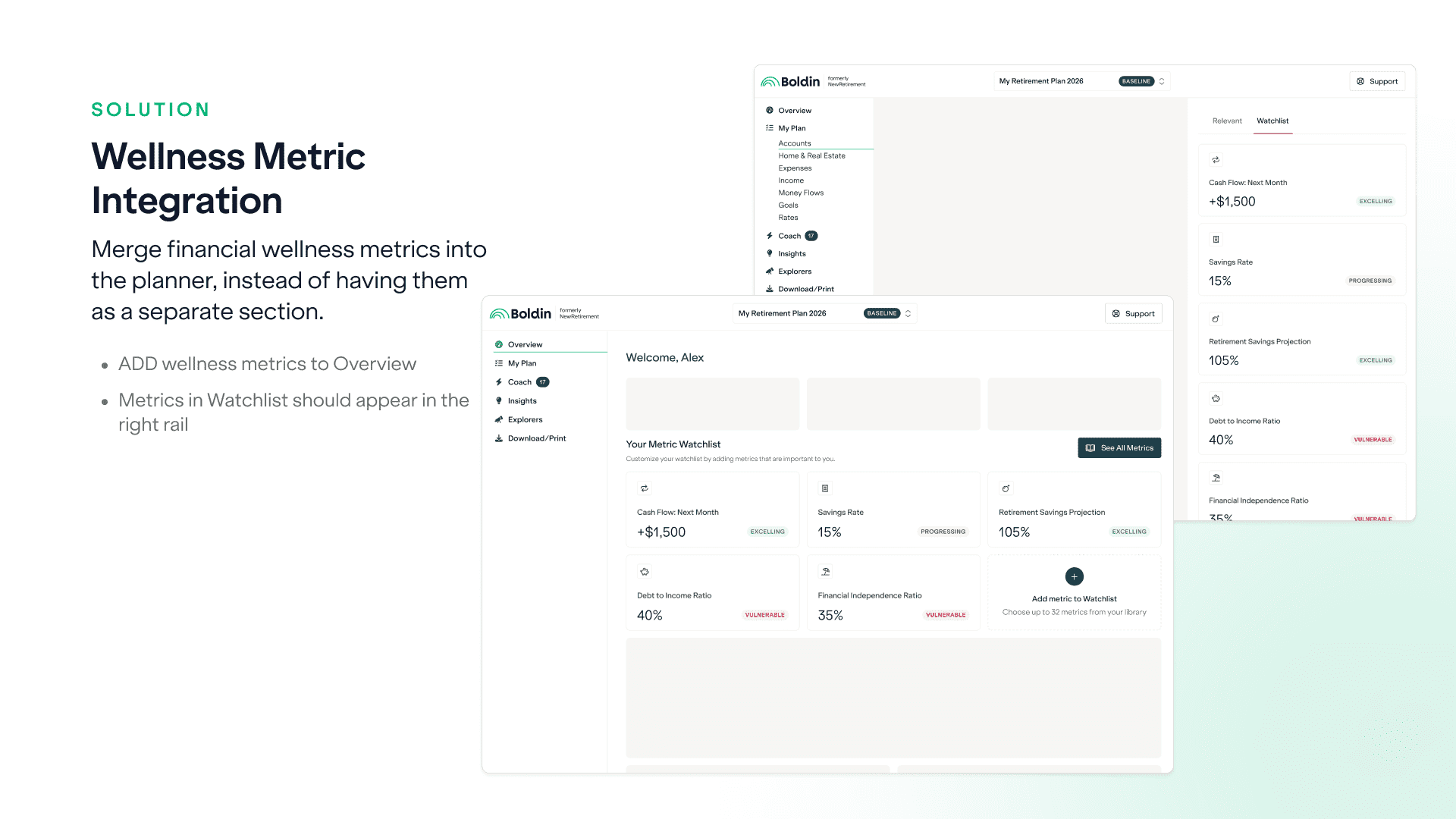
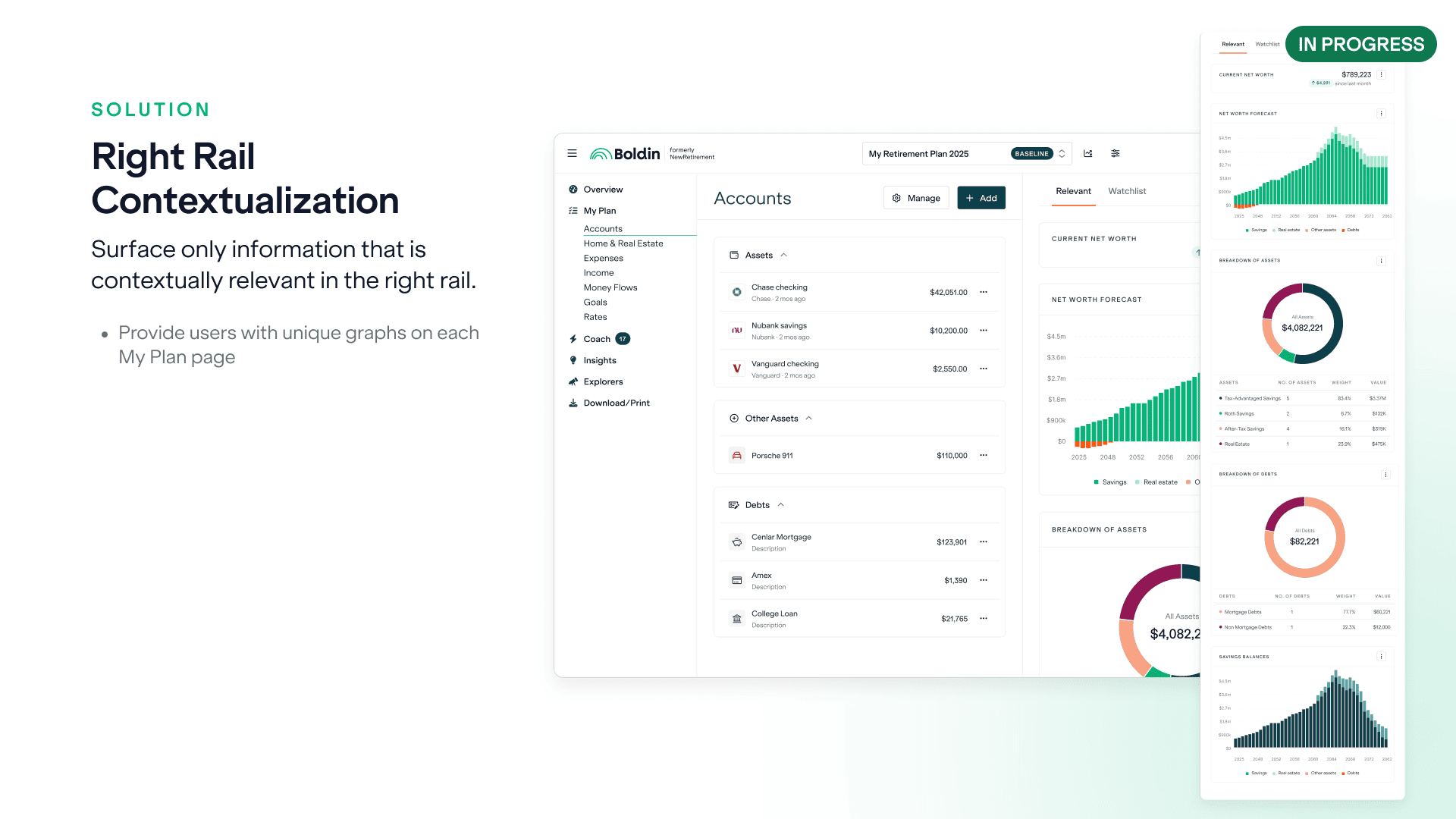
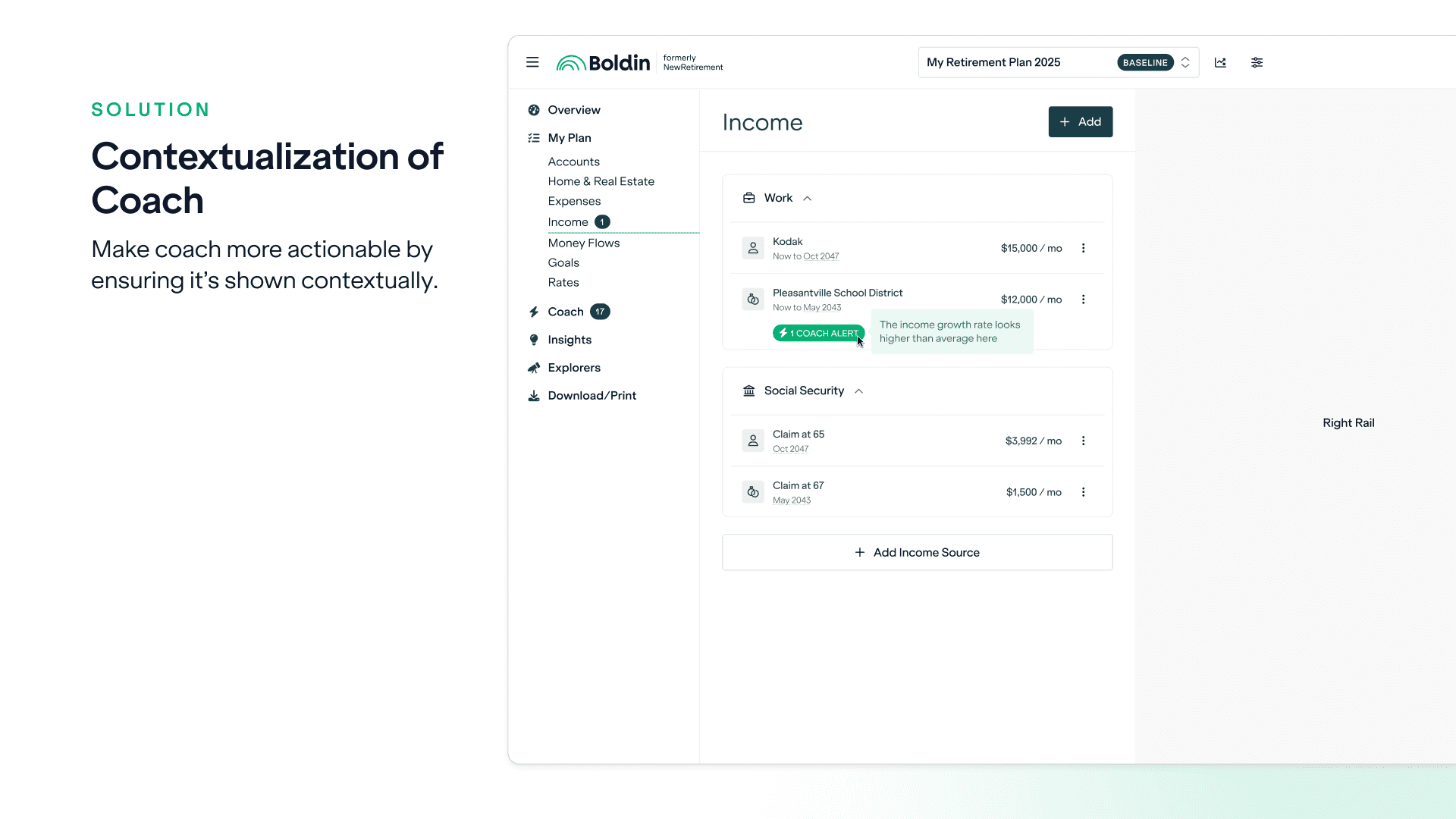
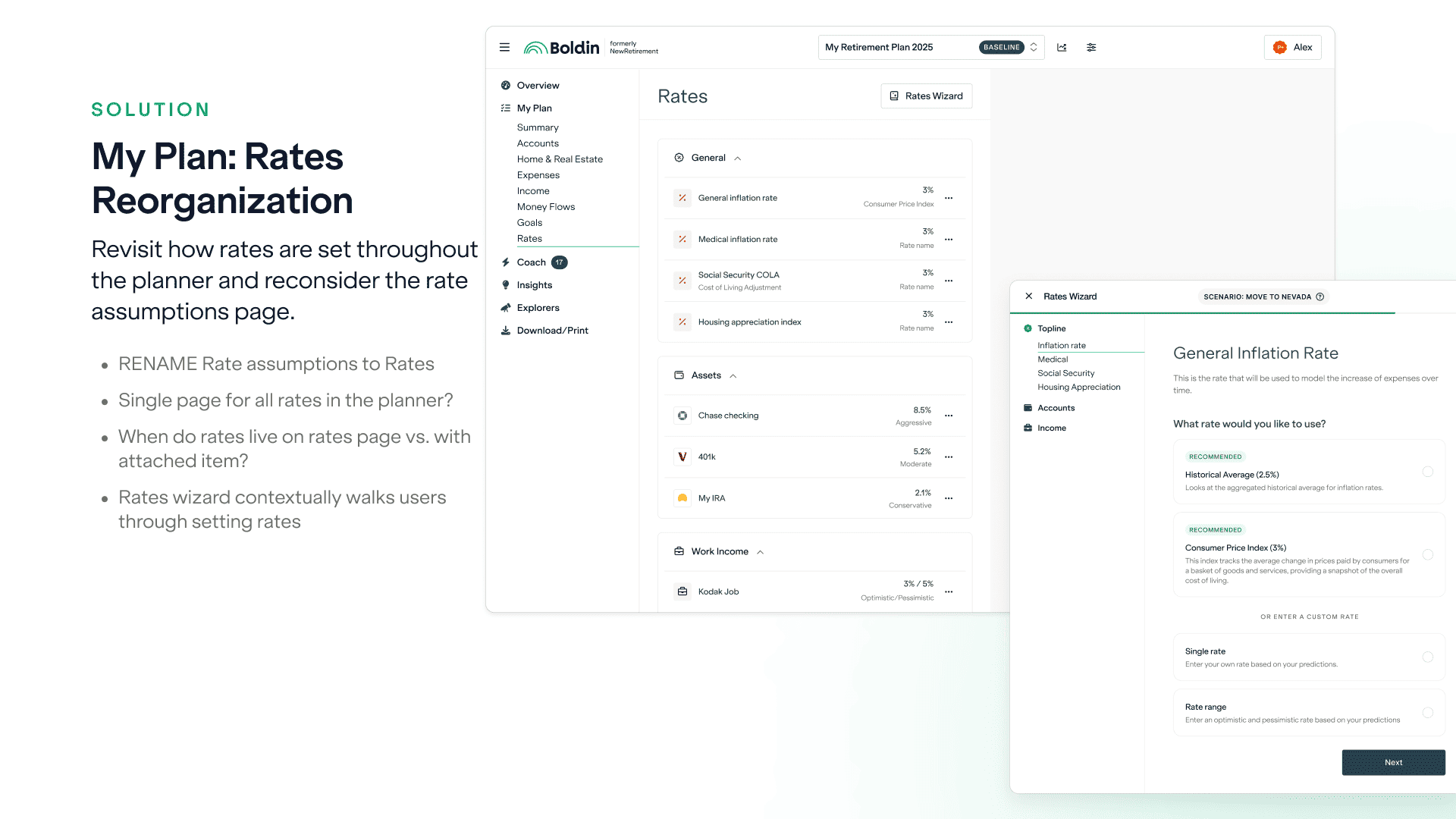
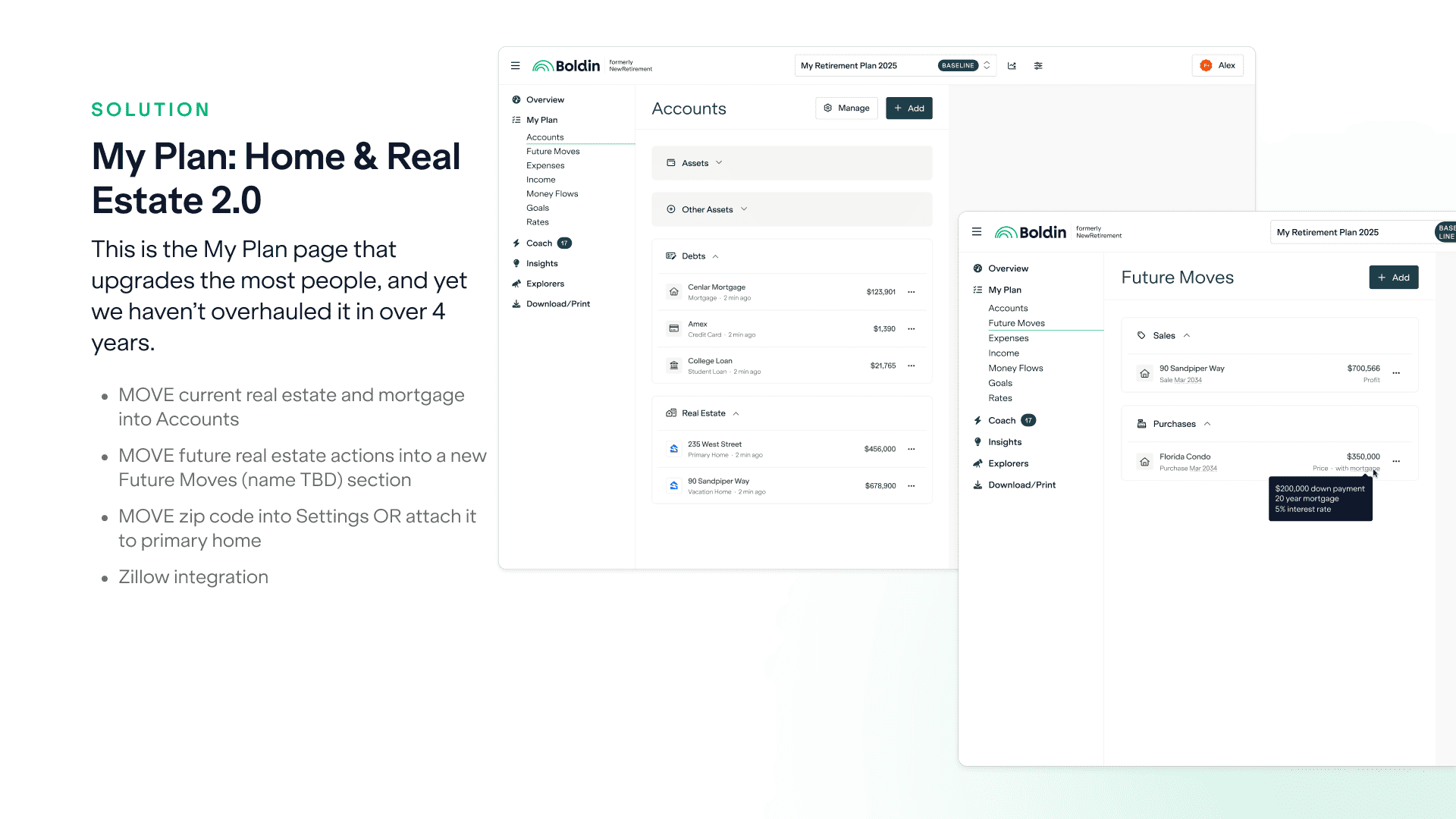
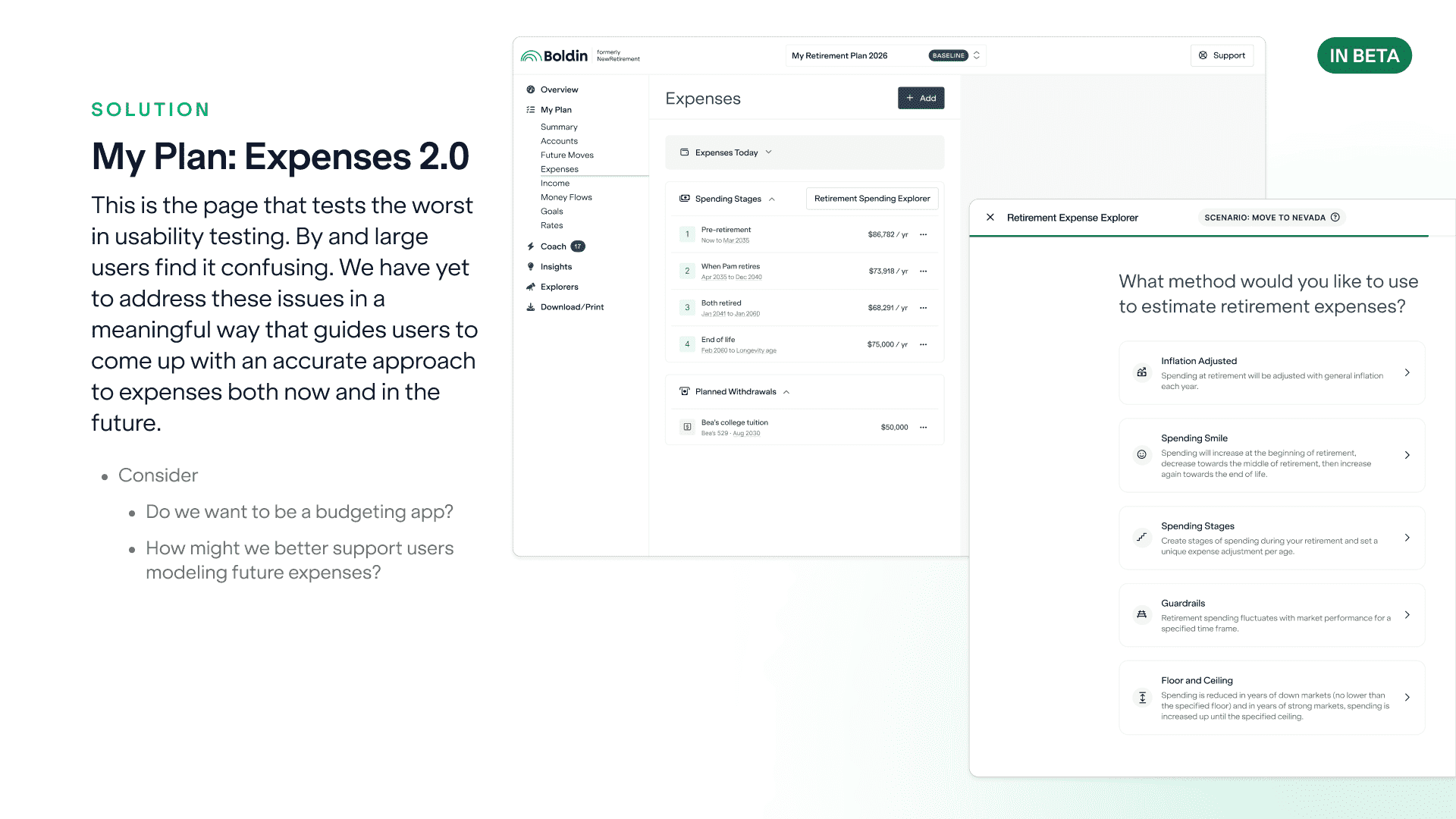
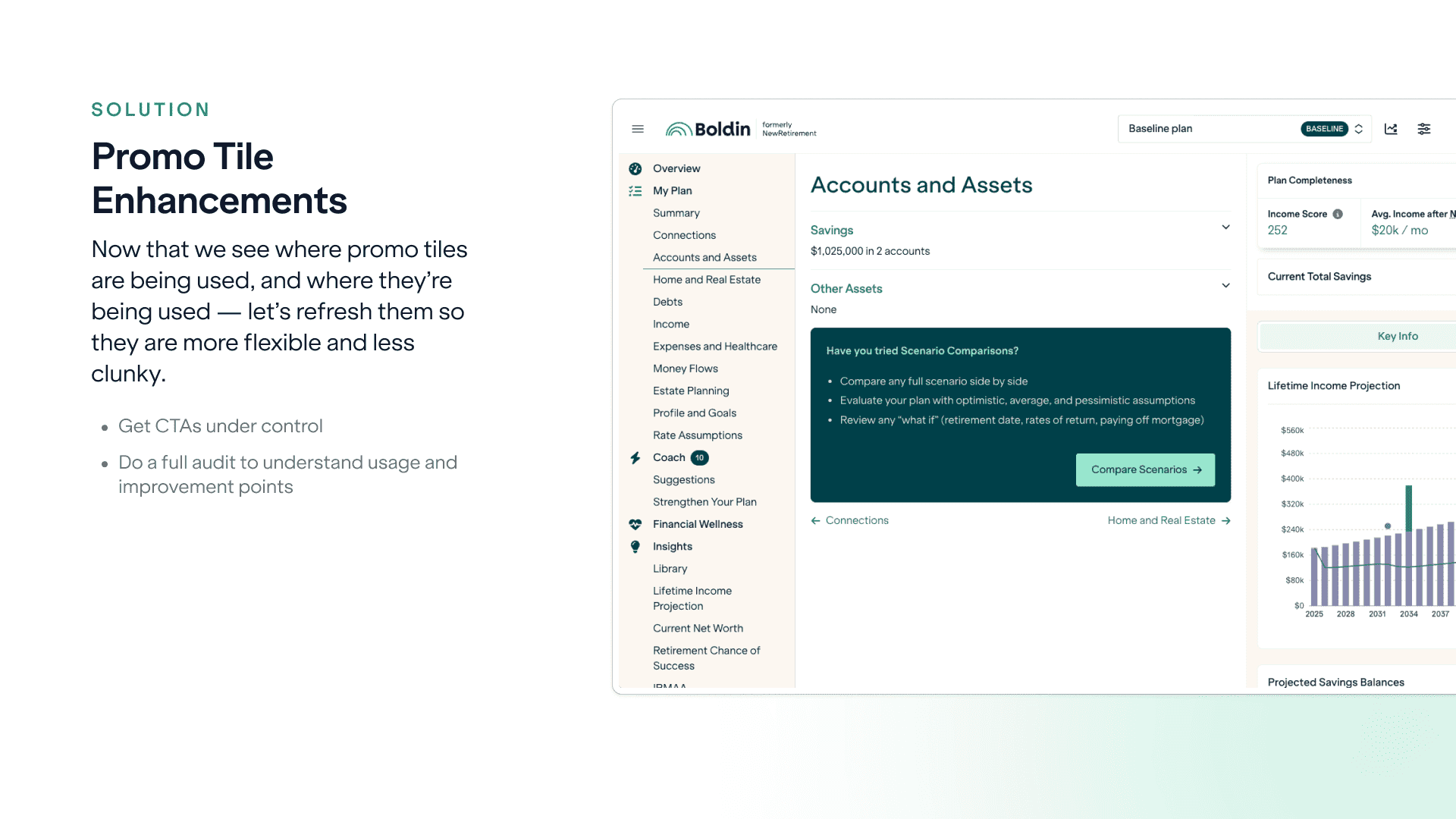
Everyone also came prepared to share something they’d learned—spec work, Amplitude dashboards, and even a walkthrough of how our financial projection engine worked. Conversations ran long, but in the best way: people were engaged, curious, and visibly more optimistic about where we were headed.
Day 2: Workshops + a draft Q2 roadmap
Day 2 was workshop-driven. With the CPO and VP of Engineering, I designed two sessions to (1) establish the teams and (2) leave with a draft Q2 roadmap.
Workshop 1
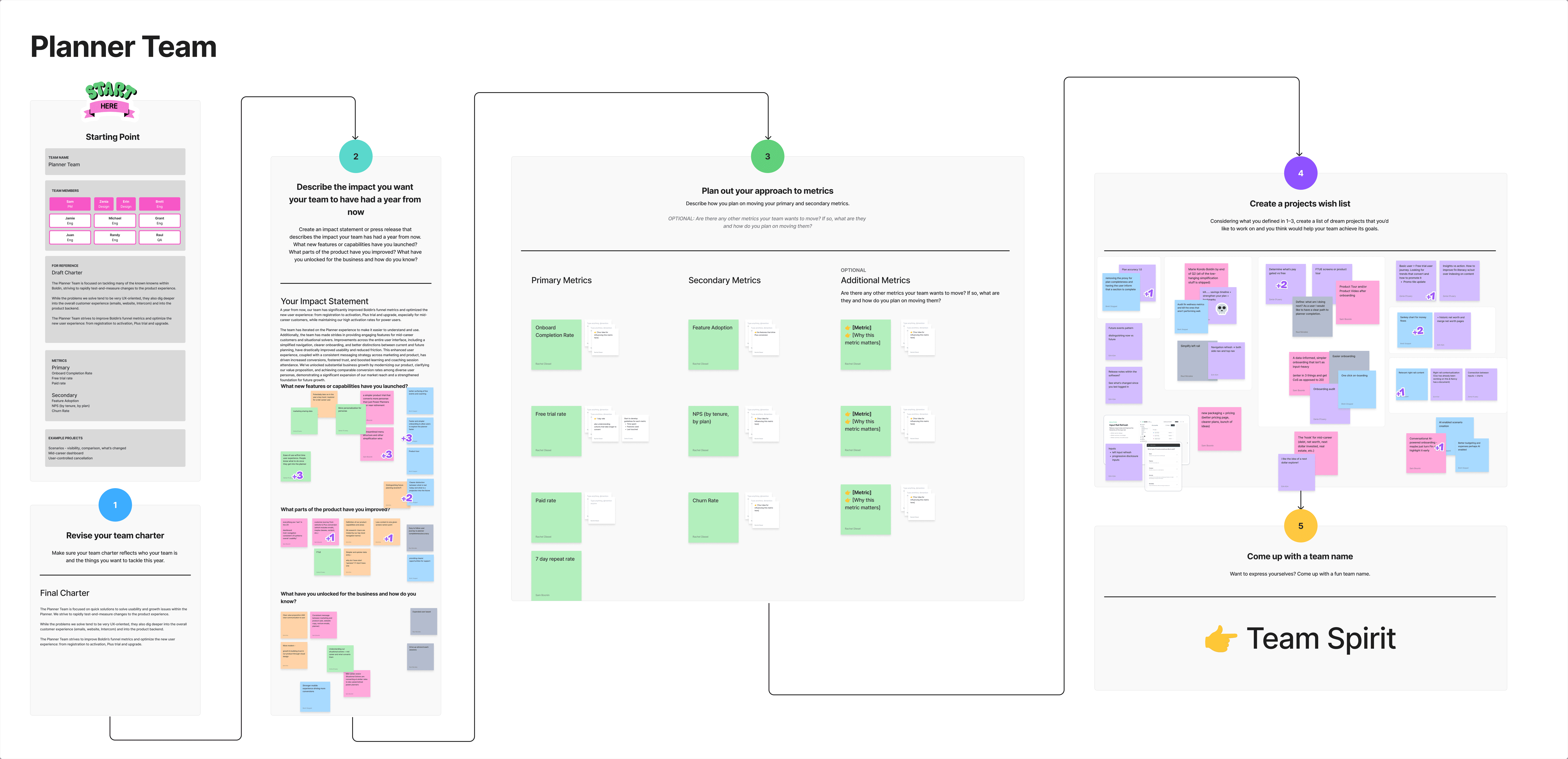
Team Definition
We split PDE into two teams. Each team produced:
A team charter
A one-year impact statement
A metrics approach (how they’d move the needle)
A project wishlist
A team name
Teams had 90 minutes, then shared out—surfacing overlap and dependencies early.
Workshop 2
Roadmapping
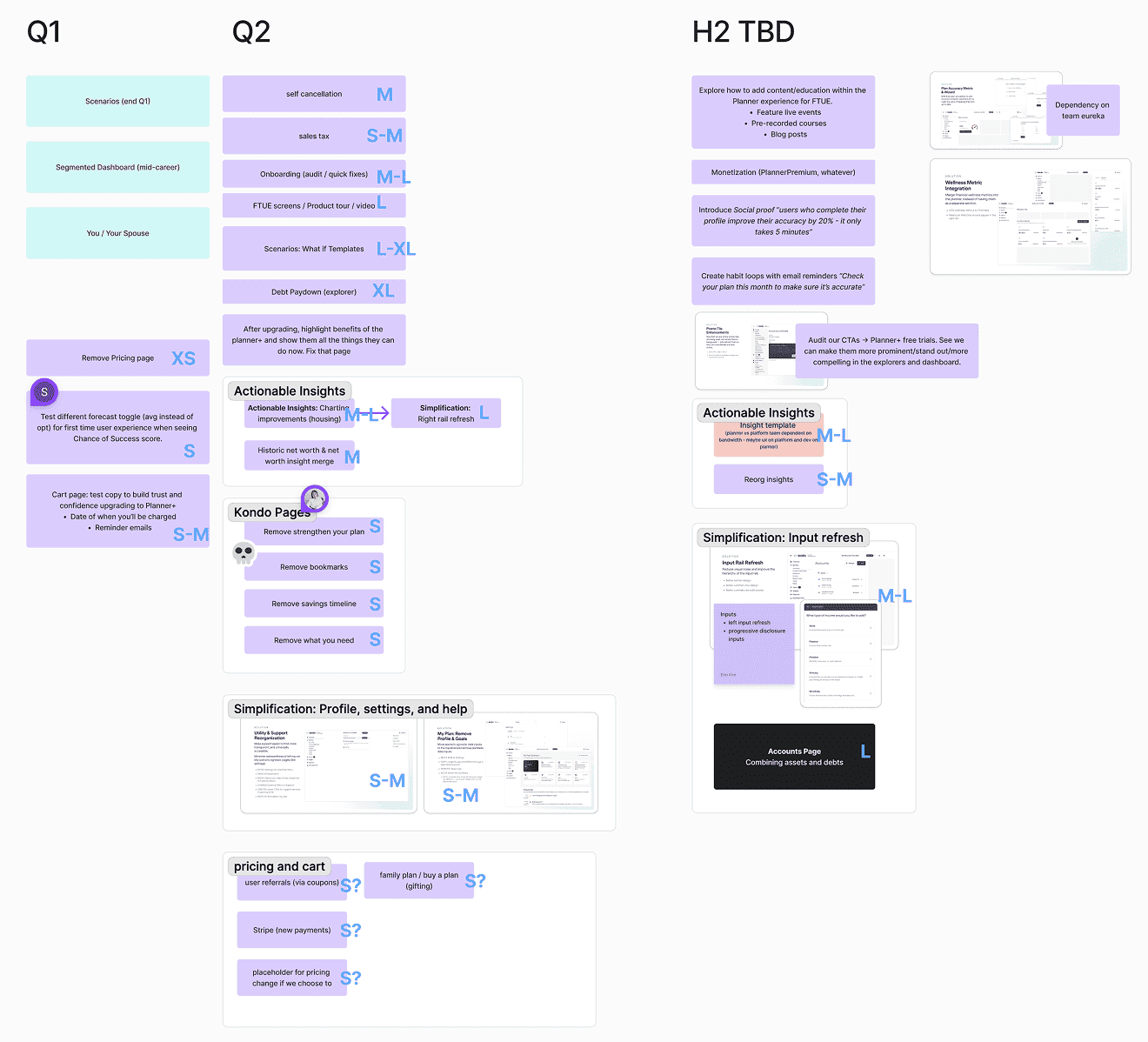
After lunch, teams worked independently to build their Q2 plans. The simplification initiatives acted as a menu of options, and because we were together in the same room, teams could quickly trade work, negotiate ownership, and resolve interdependencies in real time.
The CARES principles served as the filter: teams could prioritize anything, but anything included needed to align with the Simplification North Star.
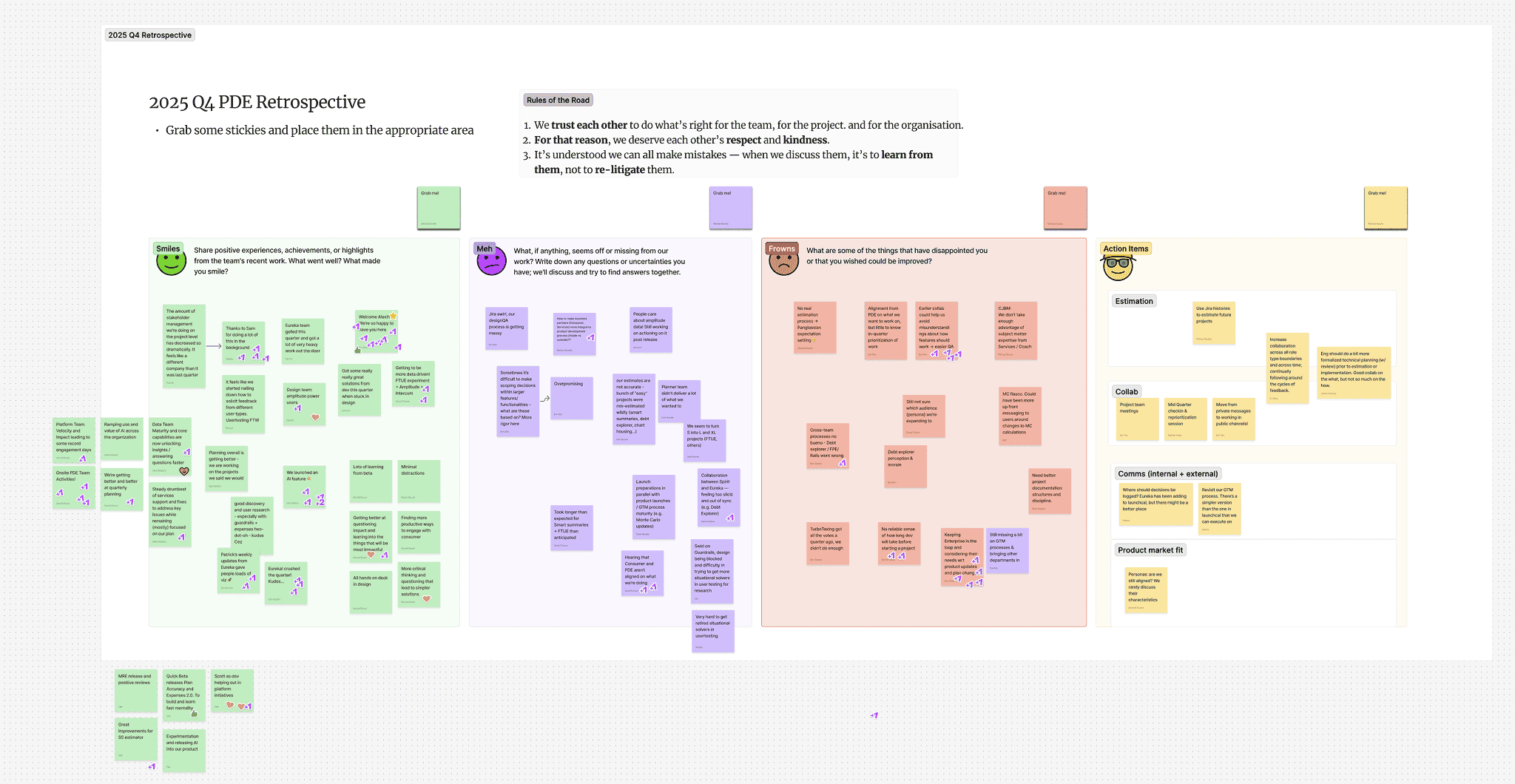
Teams shared their draft roadmaps. We held one follow-up remote session the next week to refine based on additional fact-finding. The outcome was a finalized Q2 roadmap—the first time in my tenure that PDE had a clear, team-owned roadmap ready that early.
Lessons learned
While this approach might be standard elsewhere, it was a first for Boldin. Q2 planning proved a few things to PDE—and to the broader org:
Clear strategy makes alignment dramatically easier
Before this, leadership struggled to articulate a durable vision beyond a running list of projects and enhancements. The CPO’s first major deliverable—a Boldin 10x strategy—gave the company a shared “why” and “where,” not just a “what.” It aligned everyone around what we were trying to accomplish, not merely what we planned to build.
Bottom-up beats top-down
Re-engaging the team took encouragement—and the tripod (CPO, VP Eng, and me) actively “flying cover” to create psychological safety and remove blockers. Because the strategy was clear and founder-aligned, teams could build a roadmap they genuinely owned—and were excited to deliver.
Seeing is believing
Personal takeaway: I typically push for alignment on concepts before investing in visuals. With the Simplification North Star, I saw resistance fade the moment people could see the future state. The visuals made the tradeoffs tangible and the potential obvious.
Evolving our roadmapping process
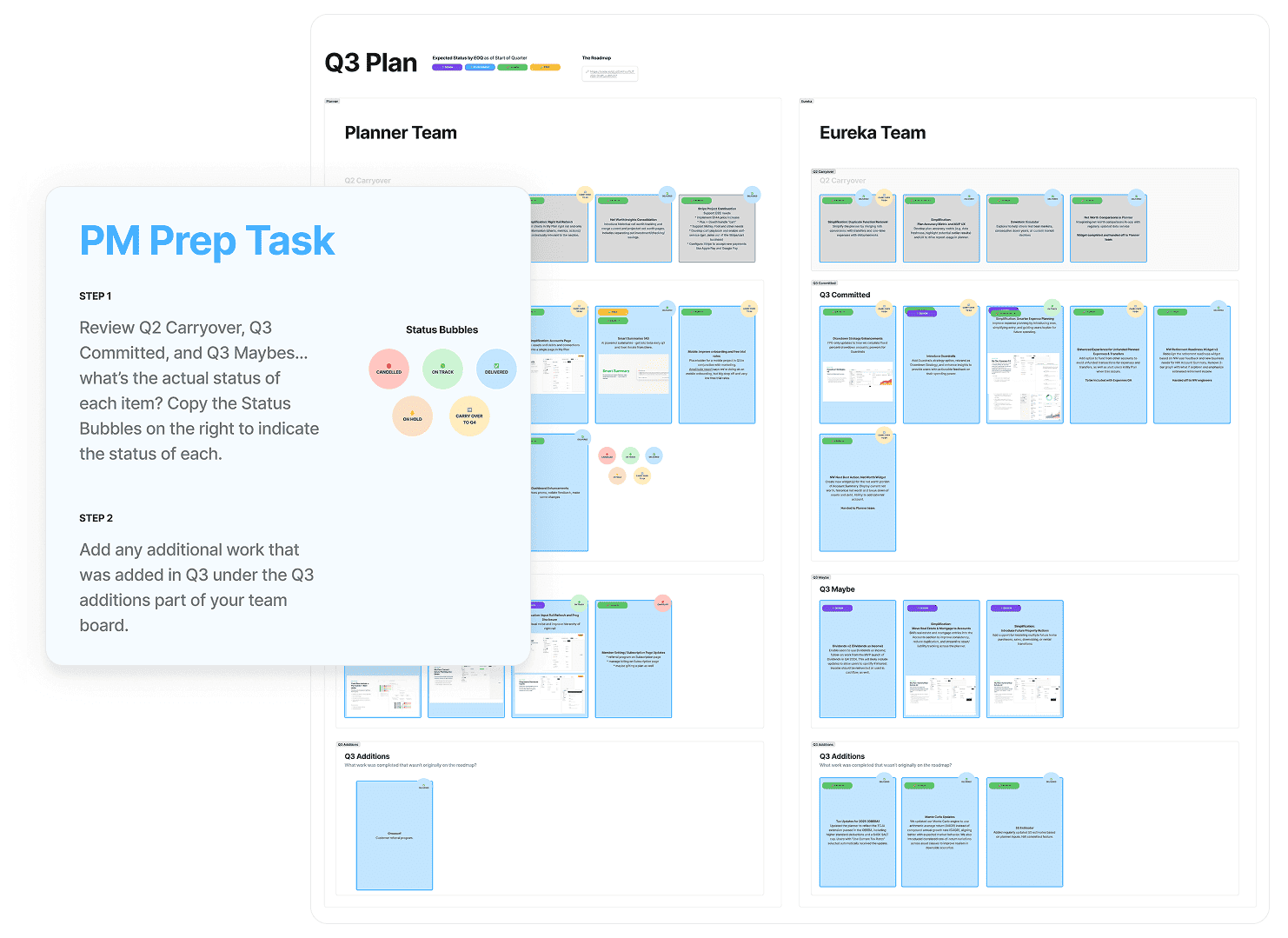
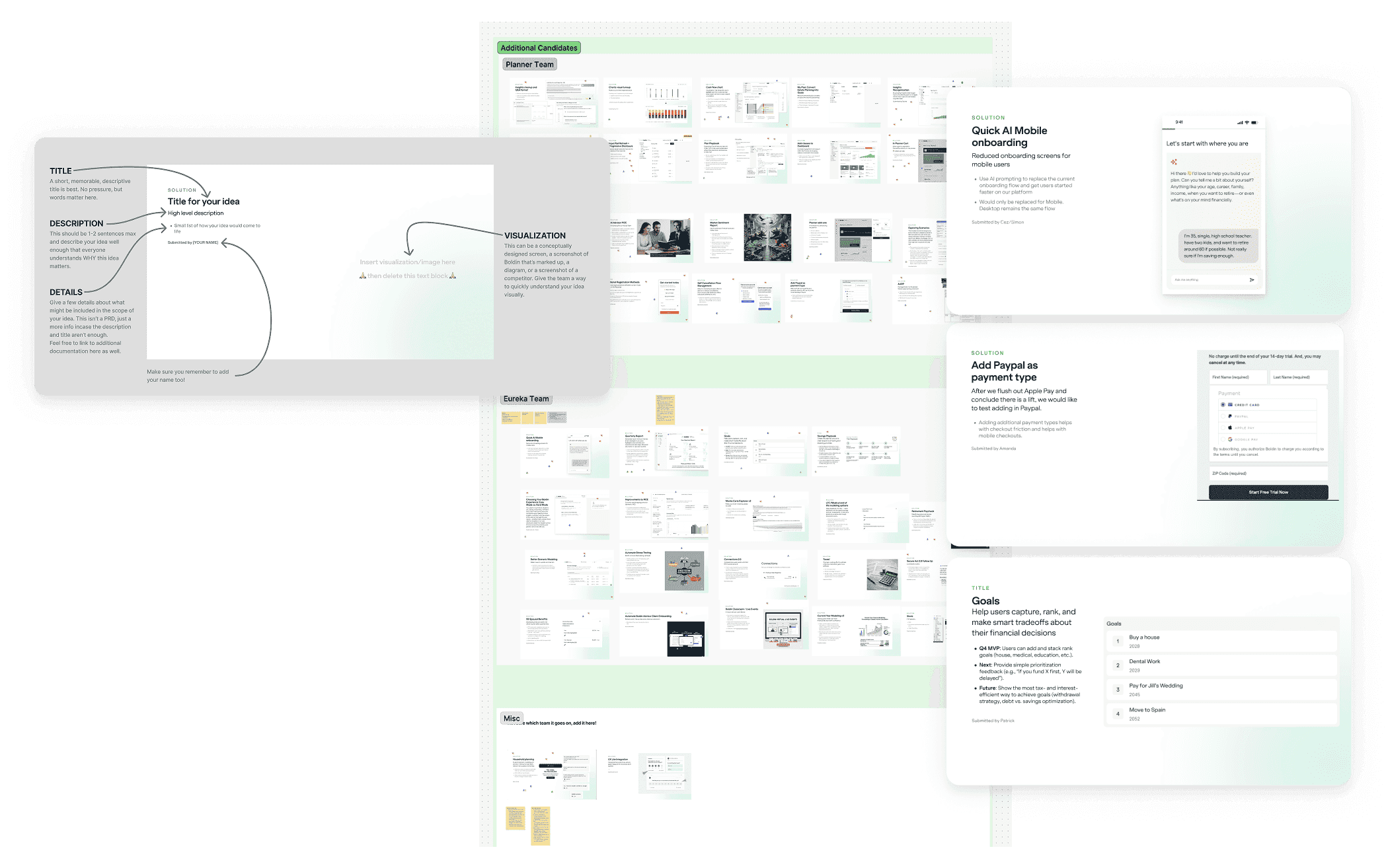
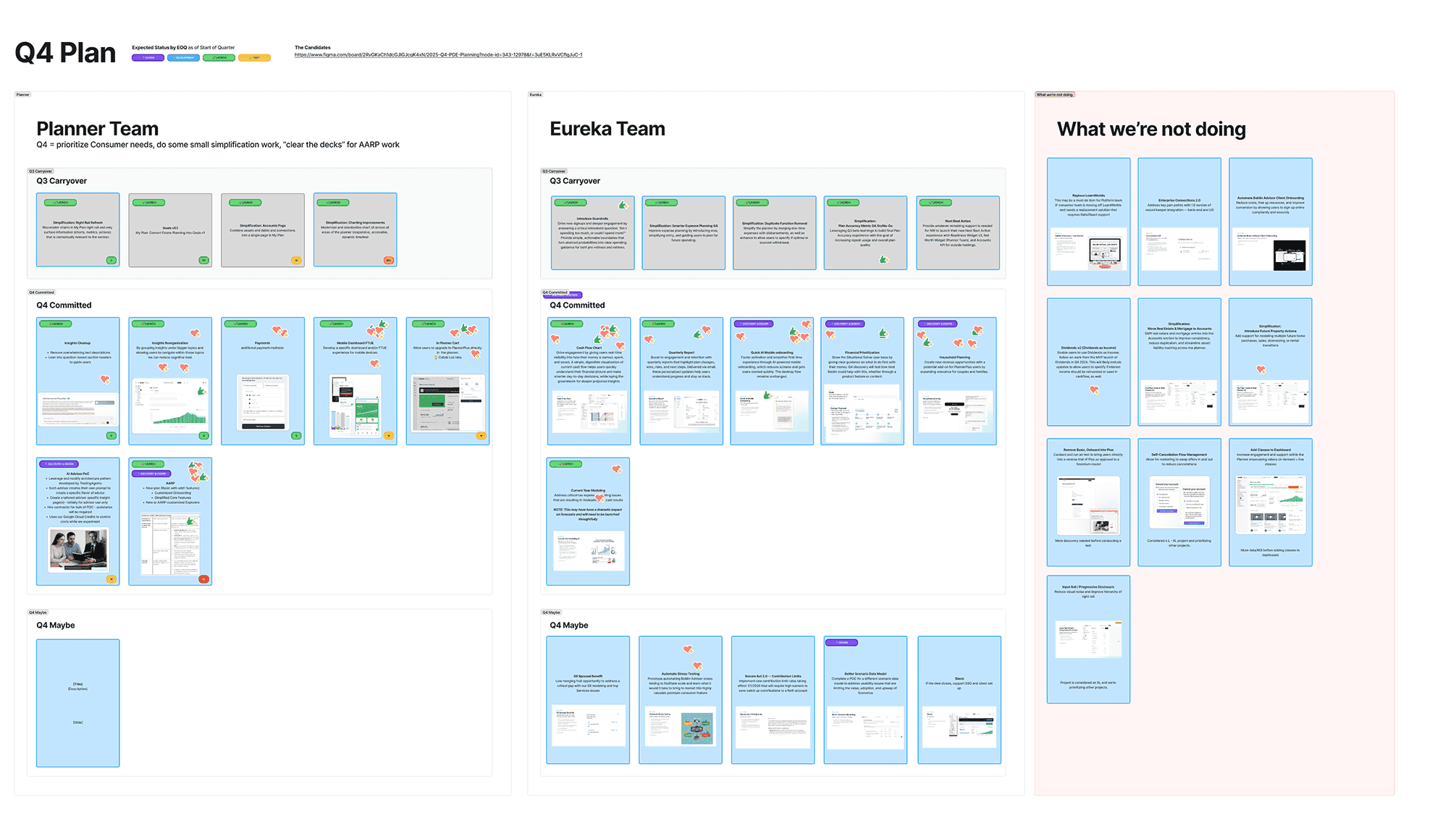
Q2 planning was great, and we wanted to take what we learned and evolve it for Q3. The big shift for Q3 was that every roadmap candidate needed to have a visual and small description attached. Q3 kept planning to 1 PM, 1 designer, 1 engineering manager per team. The cards allowed everyone to easily imagine what team members were proposing and discuss the merits of each idea with a little more nuance.
Because we felt like we had a good motion in place, we were ready to evolve this further. We invited all of engineering and a couple members of our coaching and marketing teams to participate in Q4. The final structure we ended up with is as follows.
Results
In the end the team shipped the same amount of work as the previous year with half the team size. The feedback from our Q4 retro spoke to how much the team culture had turned around. And we had built a repeatable motion for delivering the simplified product work.